
Storm Cat clone could be the first of many as horse cloning starts production
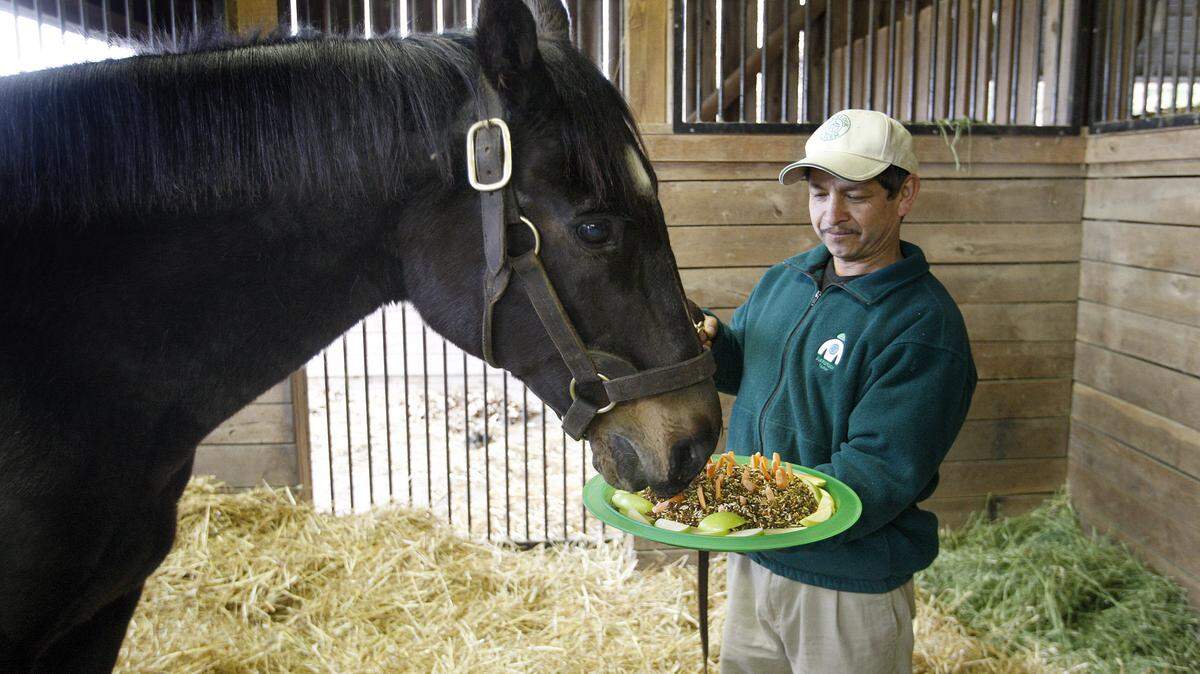
Someday in the not-too-distant future, fans of great Thoroughbreds might look out on a Bluegrass pasture and think they are seeing double. And they might be.
Texas financier and polo enthusiast Alan Meeker has cloned the late, great Storm Cat. One is living now in Aiken, S.C., and Meeker has more embryos in storage.
A second Storm Cat clone, also born this year, had to be euthanized a few weeks ago after the colt broke a leg when he stepped into a hole in his paddock.
"We may try to produce more," Meeker said. "We have many, many clone embryos in our deep freezers."
The Storm Cat clone came about when Meeker met Chris Young, grandson of the late William T. Young and general manager of Overbrook Farm. Young stood the stallion at his Overbrook Farm in Lexington. Before Storm Cat was euthanized on April 24, 2013, Chris Young said, "we decided to store his genetic material." So they took tissue and blood samples.
One sample went to Gluck Equine Research Center at the University of Kentucky, and the other went to Meeker's Argentine lab.
As Storm Cat's fertility began declining a few years earlier, there had been attempts to use advanced reproductive techniques to artificially inseminate quarter horses, with only one success: a colt bred for country singer Lyle Lovett named Stray Cat. (The horse won a race just weeks after Storm Cat died.)
It seemed that they had waited too long to try for more. Until Meeker came along. He suggested they look into cloning Storm Cat for polo ponies, and Young was intrigued.
Now Meeker's company, Crestview Genetics, has re-created one of the top Thoroughbred sires of all time: at the height of his career, Storm Cat's stud fee was $500,000. And he was worth every penny to owners of 110 graded stakes winners he sired.
The genetic duplicate is on the ground in Aiken; he might be shipped to Kentucky to grow up to further mimic Storm Cat's biology, Meeker said.
When the colt is mature, Crestview plans to use him to artificially inseminate eggs harvested from clones of top polo mares including Cuartetera, who already has been cloned multiple times.
Unlike the Thoroughbred world, the polo world has accepted alternative forms of reproduction. Crestview has created about 200 cloned horses, according to a recent article in Vanity Fair magazine.
"We've done a '180' on breeding," Meeker said. "In the past, the stallion is the one who proliferates his genes, covering 10 to 100 mares a year, whereas a mare can only have one or two babies a year. But if you have 10 clones of a certain mare, it's all the same exact DNA."
By superovulating each mare, they can harvest five to six eggs from each, fertilize them and then place the embryos in surrogate mares. Bingo, you can have 60 babies, all with half the genetics of the original mare.
With this technique, a mare with superior genes now can become as influential in breeding as a stallion, Meeker said.
For the Thoroughbred world, where only foals born from direct mating of stallion and mare may be registered with The Jockey Club for racing or breeding, cloning might seem pointless. But other breeds don't have the same restrictions, and Thoroughbred genes are good for more than racing.
There is demand for Storm Cat's athleticism in polo, Meeker said. The Youngs retain a financial interest, so this could open a new revenue stream for breeders.
How much does it cost to create a clone? "We charge $150,000 to clone."
Meeker has had inquiries from farms in Kentucky, New Jersey and elsewhere, he said. And the possibilities aren't confined to polo: Other sport-horse fields have potential. Crestview has cloned dressage horses and jumpers and is starting on eventers.
"For certain stallions that have athletic ability and have proven themselves in other sports like eventing or jumping, ... this could renew the economic life of the stallions for other kinds breeding," Meeker said.
So who might Crestview clone next?
Meeker said he's not ready to talk about that yet. "Any Thoroughbreds we are cloning now, we'd want to keep to ourselves until we decide to make an announcement."
Young, who learned about the successful cloning right before the August issue of Vanity Fair article came out, said he thinks it will be years before anything more than a single horse comes of the Storm Cat cloning.
"There's not going to be a fleet of Storm Cat clones out there," Young said. "That's not the intent."
And it will be years before they find out whether the cloned Storm Cat's offspring are any good on the polo field, he said.
Young is on the fence about whether cloning top stallions will be a good thing.
"I don't know, now that reality's hit," he said. "I don't think we need a fleet of each cloned stallion, but I'm comfortable with the existence of one clone as a source of genetic material for the polo market."