Desperate for PPE, docs use jockey goggles. And look what Derby hatmakers are doing.
Kroop’s, a North Carolina company that makes equipment for horse racing and other high-impact sports, noticed a funny thing in February: A certain less-popular jockey goggle was suddenly a really hot seller.
Orders began pouring in for a very particular version: the “ventless” kind. By the thousands.
“We saw a 300 to 400 percent increase in that specific goggle,” said Andrew Tremblay, president of Kroop’s in Monroe, N.C., just outside of Charlotte.
As the orders came in on Amazon or their website, they could see where they were coming from.
“A lot of times it says ‘hospital.’ And a lot of doctors and nurses were contacting us asking us to expedite their orders,” he said. Medical professionals were using their goggles as personal protective equipment, something in very short supply.
“This is not something … we’ve seen a lot of,” he said.
Until the coronavirus pandemic.
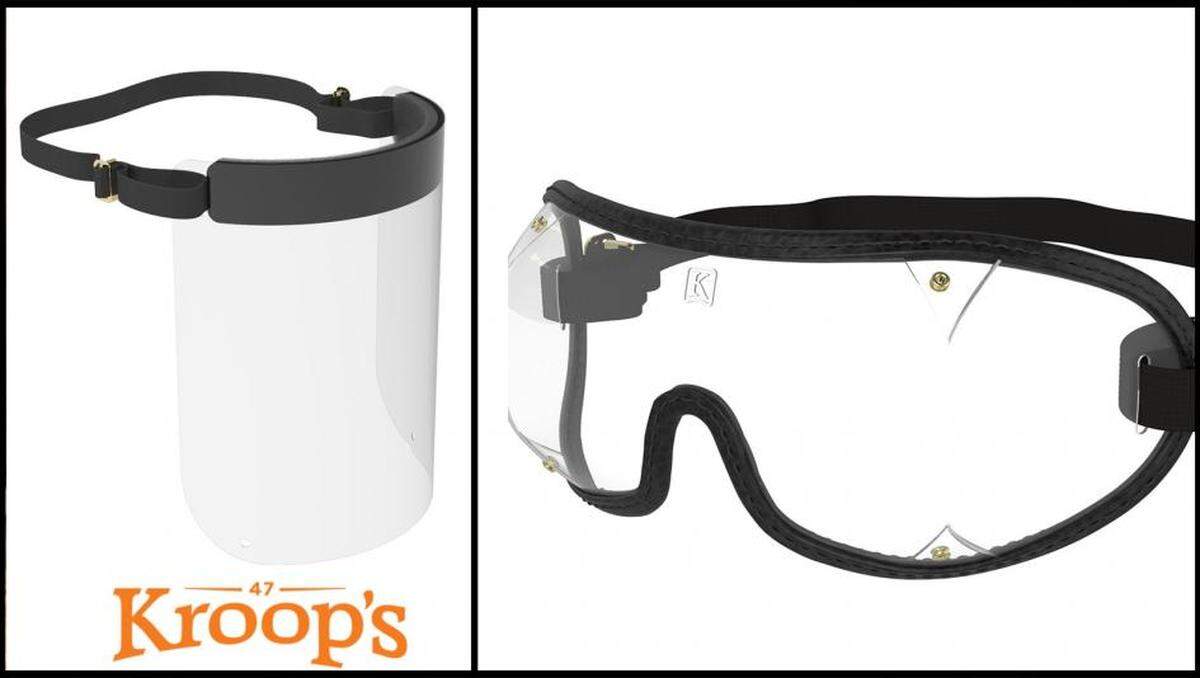
Before that, Kroop’s was known for the jockey goggles company founder and Maryland bootmaker Israel Kroop created in the 1940s, with a brass vent on either side, and still has about 75 percent of that market, according to the company’s website. They also make goggles for skydiving, cycling and other air sports.
But now the company is ramping up production of the ventless ones for medical needs.
And pivoting to a new product: Face shields. On Monday, Kroop’s started taking orders for a full face shield and will begin making those immediately.
“It’s not something we will sell after this. Just trying to help out,” he said. “And keep our people busy.”
The Jockey Club Safety Net Foundation has already ordered 1,000 of Kroop’s face shields to donate to the New York Racing Association (NYRA) racetrack community. NYRA’s Aqueduct Racetrack will house a temporary medical facility being constructed to help during the pandemic.
Other horse racing industry makers also are turning to creating supplies for those on the front lines of the fight against COVID-19.
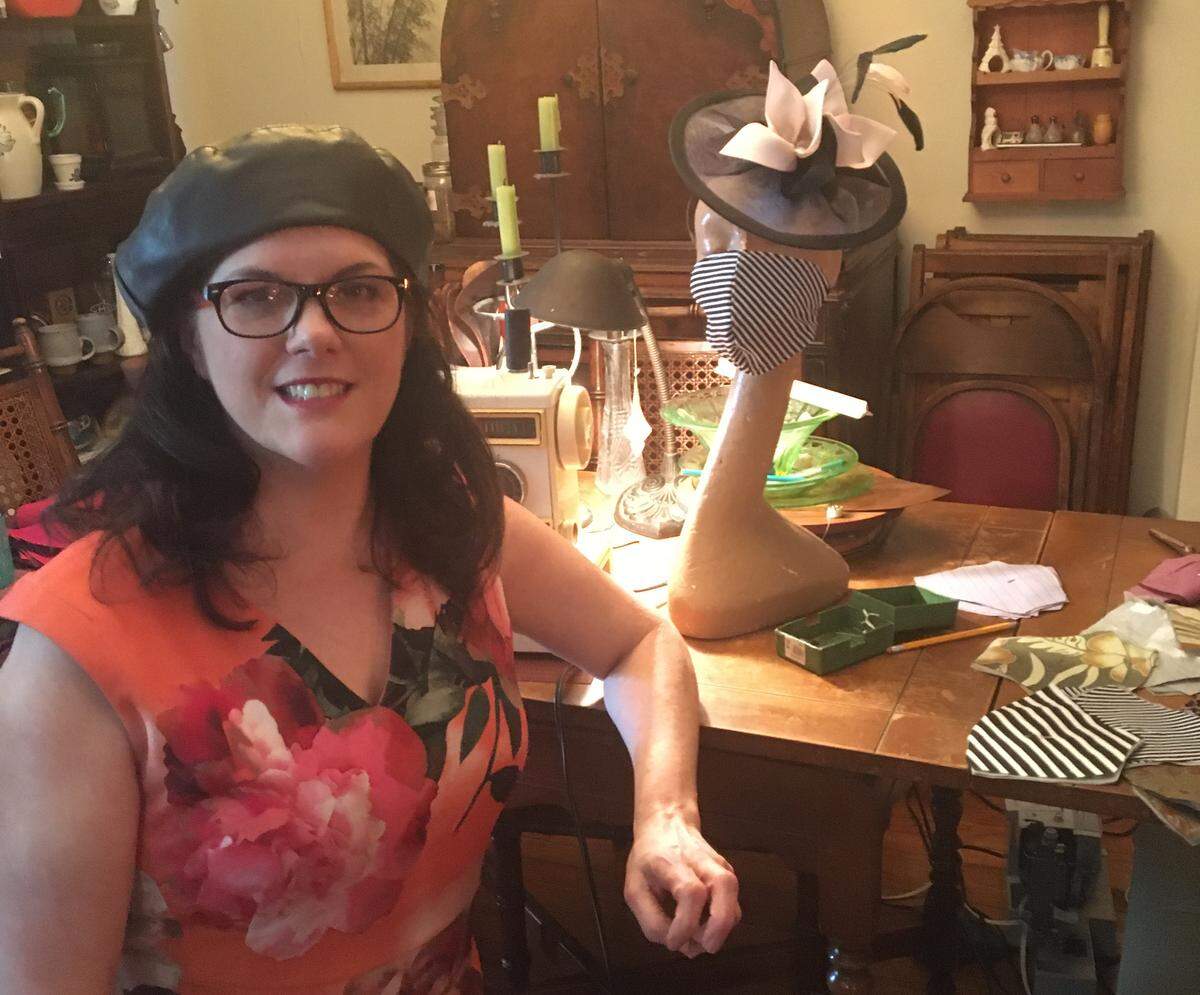
▪ Christine A. Moore, a Kentucky Derby-featured milliner whose gorgeous hats are usually worn at Churchill Downs that first weekend in May, is making a new kind of headgear this year: Face masks for hospital workers.
She’s made versions that can be washed and reused, with a special slit so the N95 filter material can be inserted. She’s also taking donations for her mask relief fund, which will enable her seamstresses to make even more.
Moore said that as she was flying back to New York from Kentucky on March 6, she began noticing people wearing face masks. With the cancellation of Keeneland’s Spring Meet, and the Derby pushed to September, Moore and those who work for her packed up materials to close down their Manhattan space. During that move, Moore made a crucial decision: She brought along some thin wire. That has turned out to be key for her fitted masks, enabling them to pinch onto the nose and keep glasses and goggles from fogging up.
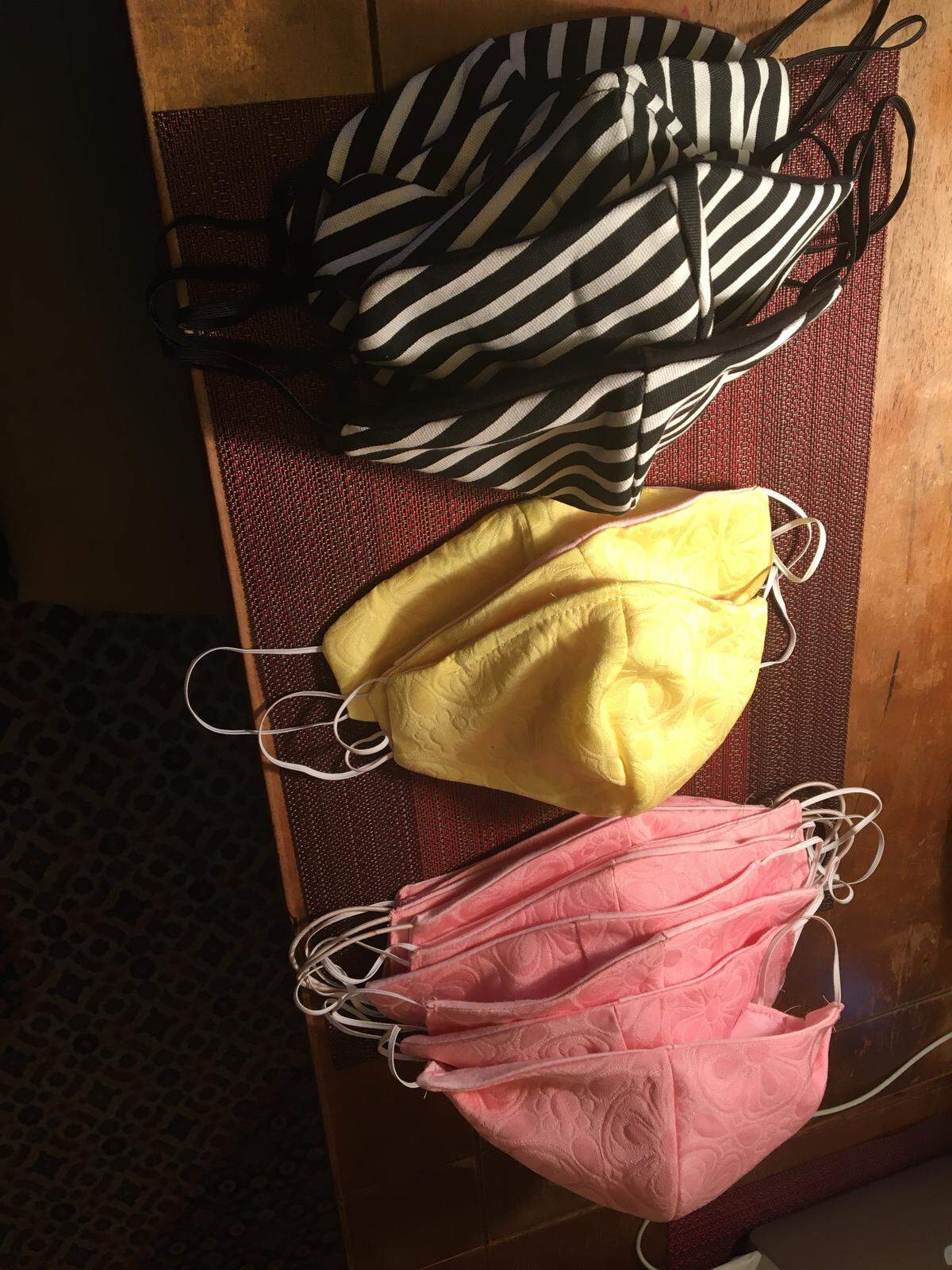
So far, Moore’s team has delivered masks to hospitals in Long Island and Nassau County. But through a friend at Churchill Downs, Moore is in contact with a hospital in Louisville, where she will be sending a batch.
“I think this will become part of our culture, like it is in Asia. Especially when people are sick,” Moore said. For now, this “lets me be part of a lifeline for the hospitals and for the network of artists who I’ve worked with. ... I miss Keeneland so much, I love Kentucky …. I’m so sad, but it’s such a great place it’s going to come back and be as special as it was before.”
▪ Bloodline Products, based in Lexington, normally makes jockey silks. But in March the seamstresses, who are scattered across the country, began creating surgical masks, including some that provide protection equivalent to the N95 masks in desperately short supply.
Adiclere Evans, who lives in Charleston, S.C., said told America’s Best Racing that they are making 6,000 to 12,000 masks a week, and plan to ramp up to 30,000.
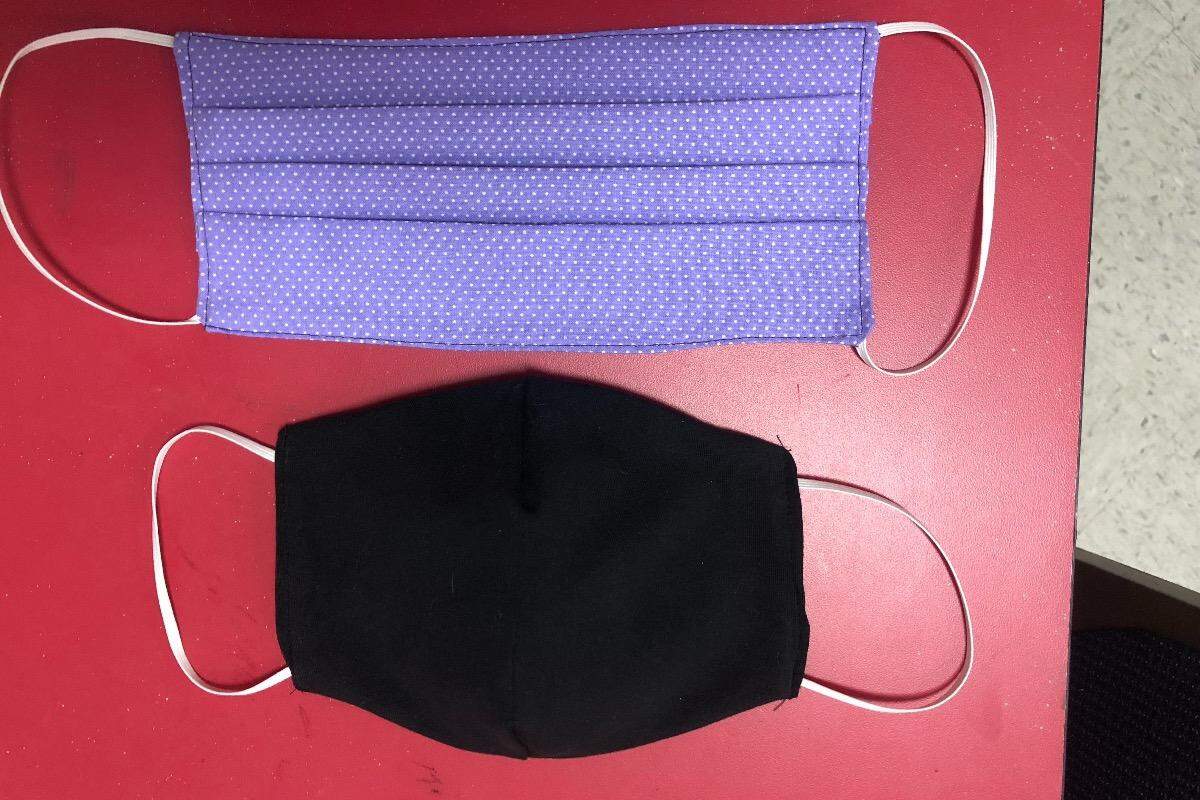
“At first we wanted to just get going,” Evans said. “But there are costs. We created a Go Fund Me account to try and get some initial capital.”
Bloodline also is working on gowns and face shields. Evans said that meeting FDA and CDC guidelines is crucial; most homemade masks don’t meet that standard. But she said she is working to get an emergency-use application that would allow the masks made by the jockey silks’ seamstresses to qualify.
▪ And Major League Baseball teamed with Fanatics apparel CEO Michael Rubin to make masks and gowns rather than jerseys.
This story was originally published April 2, 2020 at 7:26 AM.