Need a coronavirus face mask? Here are 15 tips to make a better one at home
Now that the CDC has recommended wearing face masks in public, my Facebook feed is suddenly full of my friends showing off their crafting skills, with some pretty amazing results.
I began working on making masks for myself and my family a couple of weeks ago, after reading how face mask use in other countries has cut down on the spread of the coronavirus and other infectious diseases like the flu.
Even a few weeks ago stores were all sold out already.
And with health care providers desperate for personal protective equipment, many people would rather leave the masks to those on the front lines of the fight against COVID-19.
So I began looking for the best way to make some. I ended up making several versions, starting with my own basic prototype (double layers of fabric, with ponytail holders sewn in for to loop over our ears) before moving on to more fitted and more comfortable versions.
There different types, from fitted to pleated, with ties or with elastic. Any of these styles will probably work for “home use,” which is designed to protect you in necessary outings and to protect others in case you have coronavirus and may not know it.
And that’s the thing: Simple masks are designed to protect other people from you. Not you from other people.
Research has shown you can be infected with coronavirus for days without getting sick but still infect other people. So if everyone is wearing a mask, we are all better protected from each other. And remember, masks don’t replace social distancing, hand washing and other practices designed to stop virus transfer, they just add onto it.
But there are ways to beef up the easy masks to make them a bit more effective at preventing you from breathing in virus.
Tips to make coronavirus mask
▪ Use multiple layers of fabric but not so many you can’t breathe through the mask.
▪ Use a liner of non-woven interfacing if you have some. If you don’t, use a piece from a cloth reusable grocery bag. It’s water-resistant and yet breathable. A piece of this inside a simple mask could help block droplets of virus.
▪ Add a strip of fabric or bias tape on the top of the mask to slide in a wire or doubled-up pipe cleaner so you can pinch the mask over your nose. If you can’t even hand sew, tape the pipe cleaner onto the outside of the mask. Being able to pinch the mask onto your nose makes wearing it much easier if you wear glasses. Just remember to remove the tape before you wash the mask.
▪ Last week Surgeon General Dr. Jerome Adams released a video showing his method for using a square of cloth (or a bandana) and two large rubber bands. You fold the cloth over a couple of times, put the rubber bands on the folded piece, tuck the ends into the middle and loop the rubber bands around your face.
Try adding a rectangle of shopping bag material inside for extra protection.
▪ No rubber bands? I used ponytail hair bands. But they can hurt after a while, even if you use extra large ones. Another variation from a friend of mine: Use the stretchy fabric loops that kids use to make loomed potholders. Or cut a piece off of old pantyhose. Any stretchy soft loop will work. Or elastic headbands, cut into two pieces, then sew the pieces onto the sides of the mask.
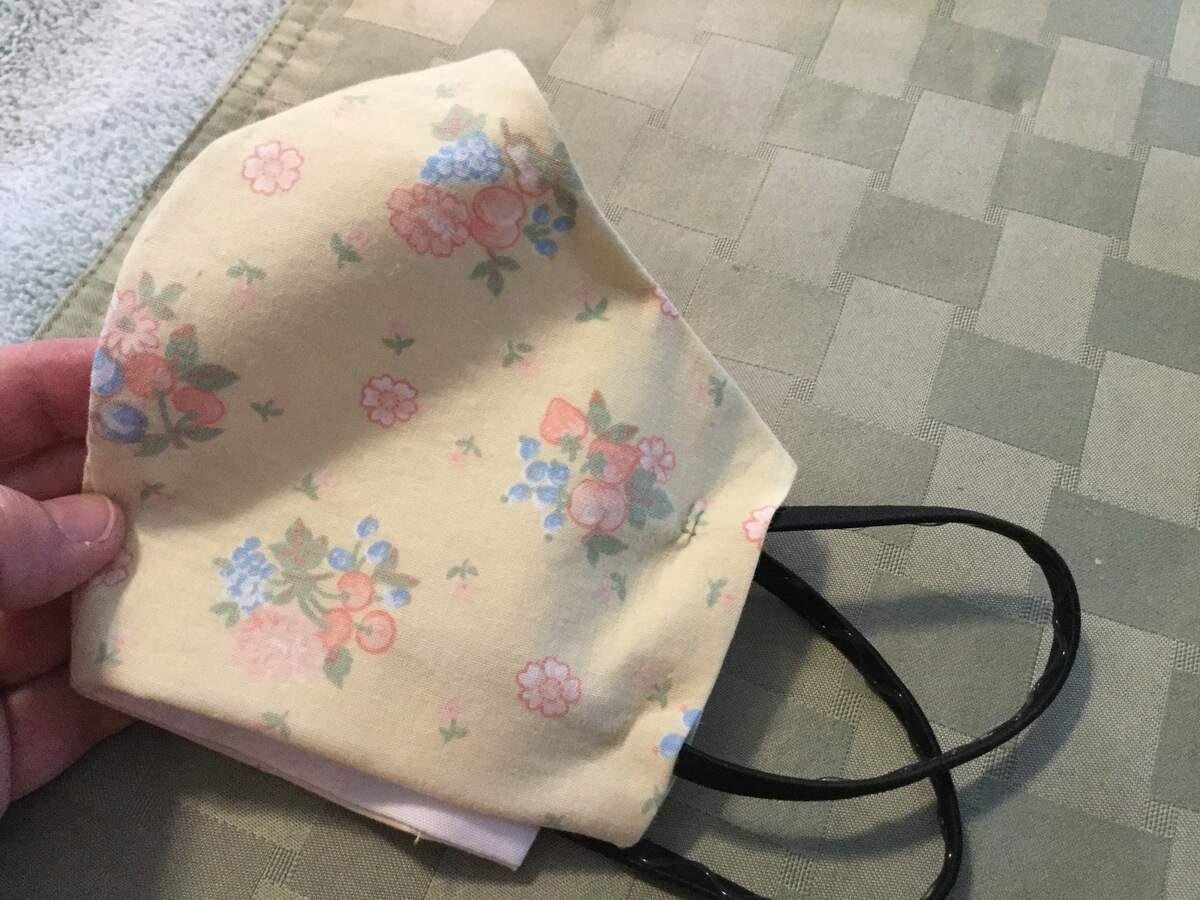
▪ No elastic? Many stores are completely out, so masks with ties may be a better option. You can make ties for a mask using shoelaces, ribbon or bias tape.
▪ No fabric? You can actually make a disposable mask using paper towels lined with a tissue, staples and elastic. If you have to go this route, make a bunch to carry in a plastic bag so you can swap out as soon as the paper becomes damp.
▪ There’s another super-easy method using a T-shirt: Cut about a handwidth of fabric off the bottom of the shirt, lay flat and cut off the side seam. From the side of the shirt without a seam, measure in about a handwidth from the folded side and mark the fabric about an inch from the top and an inch from the bottom. Starting from the side of the shirt that you’ve already cut vertically, cut horizontally toward the folded side.
You want to end up with two long strips of fabric that link to the uncut patch. Once you unfold it, that’s your face mask, tied on with one strip behind your head and another reaching up to the top of your head from underneath your chin. The advantage of this mask? The ties. But the disadvantage is it is only one layer.
▪ If you have a sewing machine, there lots of free mask patterns online. Joann Fabrics offered free face mask kits but the stores have come under fire for possibly giving out ineffective fabric and equipment. However, their online tutorial page does have lots of resources, including free patterns to print.
▪ The one at turbanproject.com is one of the easiest I’ve seen, with a 10-minute tutorial video. It’s so simple there isn’t even a pattern. While their version uses flannel, you could use any fabric, and even add another non-woven layer.
▪ If you need more help, try fabricpatch.net, a Washington quilters fabric store, run by a nurse, who has lots of videos, tips and advice on how to make masks for medical personnel, so it should suffice for your grocery store run.
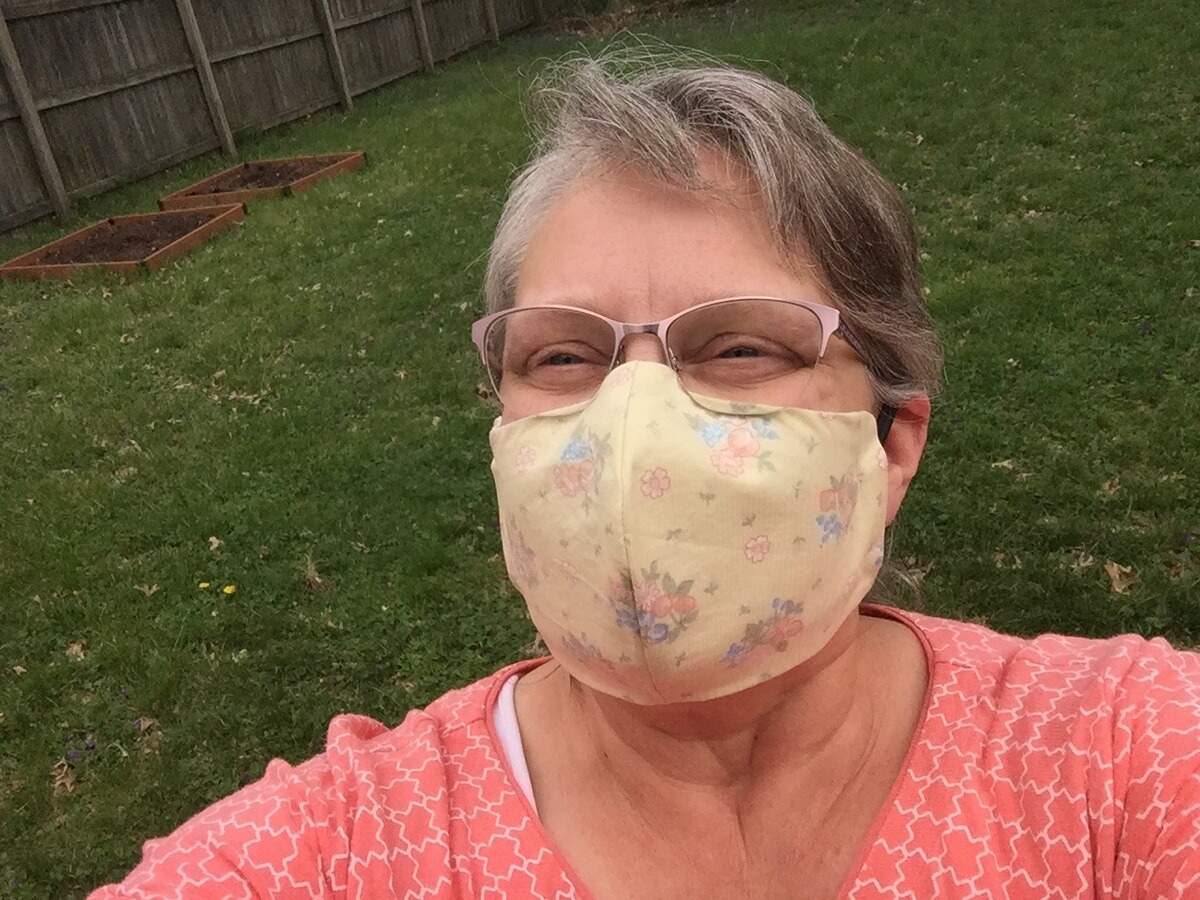
▪ UK HealthCare, which is accepting donations of handmade face masks to cover N95 respirator masks, says to use “tight-weave cotton fabric (such as quilting cotton) purchased within the past year, that has not been used before. Wash and dry fabric without fragrance or dyes prior to sewing.”
UK recommends masks tutorials on thestitchingscientist.com for a pleated mask with ear elastics and on instructables.com for a slightly fitted pleated mask with ties, designed by a nurse.
▪ Operationwecansewit.com, a site that sends you a pattern to sew for Denver hospitals, has a great free patterns and tutorials. Or try makermask.org.
▪ Make multiple sets of masks so you can swap them out and wash them frequently. And mark each mask with the wearer’s name, so you don’t mix up masks.
▪ One last tip: If, like me, you need something to make your masks (I broke my one sewing machine needle) try to find a small store to buy it. If they are open (thank you, Sew-A-Lot in Hamburg) they will have curbside delivery. And you won’t have to risk the big box store trying to save your life.
This story was originally published April 7, 2020 at 5:00 PM.