An eerie silence for weeks, then a phone call from prison: ‘Your Dad has COVID-19.’
Stephanie Collins Holloway’s 70-year-old father is serving time at the Federal Medical Center, a federal prison on Leestown Road in Lexington where at least 113 inmates and five staff have been infected by the novel coronavirus.
Holloway didn’t know about the prison’s virus outbreak at first. She just worried because she hadn’t heard from her father, Julius Pinkston, since his last email April 22. It was unlike him to let more than a few days pass without contacting his family.
Two weeks later, on Thursday, a prison chaplain called Holloway at her home near Savannah, Ga., to explain the silence. Pinkston had the coronavirus. The prison transferred him to a local hospital, where he was placed on a ventilator in critical care. He was not expected to survive, especially given his history of chronic obstructive pulmonary disease.
Holloway nearly hit the floor.
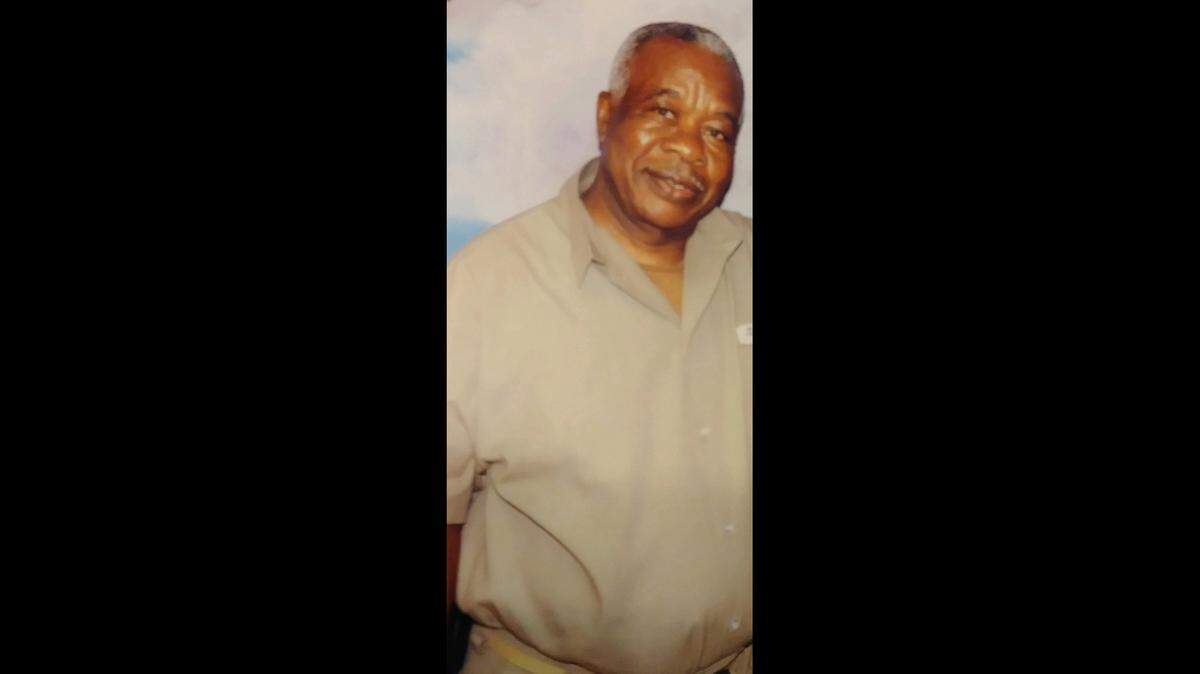
“I was so upset, I didn’t sleep at all last night,” she said Friday. “All this time I knew something was wrong, but I had no idea this was happening. When I would call the prison to get information about him, all they would tell me is, ‘We can tell you that your father is still here at this facility. We cannot tell you anything more than that.’”
As COVID-19 races through Lexington’s federal prison, sickening scores of people, inmates’ loved ones say they can get little information about the health of their relatives, and they are terrified.
Federal Medical Centers — there are six nationwide — house prisoners with health problems, many of them older. It’s a terrible place for the coronavirus.
Nationally, 45 federal prisoners have died since March after testing positive for the virus, six of those at other Federal Medical Centers.
“I am so afraid for my husband,” said Linda Gowder. She is married to a 73-year-old inmate at the Lexington prison who received a heart transplant in 2016 and takes immune-suppressive medications to prevent rejection. On Friday, Gowder said she hadn’t heard from him in nearly a week.
Inmates’ access to phones and computers has been severely curtailed, Gowder said. The official story is that inmates must stay apart and avoid touching communal objects, she added, but the result is that talking to the outside world is becoming impossible for them even when they are healthy. Once they are sick, their families are left in the dark, she said.
“The decreasing communication comes just as the situation out there at the prison is totally deteriorating,” Gowder said. “I’m a nurse of 35 years, so I know what this virus can do.”
Lexington’s Federal Medical Center holds 1,248 inmates inside a complex of five buildings, with 208 more housed at an adjoining minimum-security camp, according to the U.S. Bureau of Prisons. About 480 prison employees have contact with the inmates.
Prison officials did not respond Friday to the Herald-Leader’s request for comment.
Earlier this week, the Lexington mayor’s office and the Lexington-Fayette County Health Department publicly expressed frustration that the prison was unresponsive to their concerns as the outbreak spread at the facility. Later in the week, after news coverage and phone calls from Kentucky’s two U.S. senators, the Bureau of Prisons announced it would expand COVID-19 testing at the prison.
On Monday, Nicki Combs-Morgan got her own shocking phone call from a chaplain at the prison. Her father, 56-year-old Peter Combs, had tested positive for the coronavirus and he was hospitalized in critical condition.
“He was just like, ‘I can’t tell you any more about it because I’m not a medical professional. You’ll need to call back and talk to someone who knows more about your father’s case,’” Combs-Morgan said.
But when she called the prison about 30 times over the next few hours to speak to a doctor, a case manager, the warden’s office — anyone — she could not get a live person on the phone, she said. She finally rang through to someone and asked to talk to a doctor about her father’s condition. “That’s not how that works,” the person snapped, and he hung up on her, she said.
Eventually, on Tuesday, she reached a case manager who told her that her father was intubated — had a tube placed down his trachea — to assist with his breathing. She suspects he was transferred to a local hospital, but the prison wouldn’t confirm that, she said.
“And that’s the last we’ve heard,” she said Friday. “We haven’t been able to get through to find out anything more. Nobody is calling us to tell us what’s going on. It’s so stressful. You get a call telling you that your Dad has COVID-19 — we’re just walking on eggshells.”
Holloway, in Georgia, later was able to reconstruct her father’s decline with the help of a prison case manager.
The story as she heard it, she said: Pinkston was tested for the coronavirus on April 28. The result evidently was positive because he was moved to the segregated housing unit, where he could be isolated and staff “kept an eye on him,” she said. On May 5, Pinkston visibly became ill. Within the next day or so, he was transferred to a hospital.
Throughout his ordeal, Pinkston’s 10 children wondered about the eerie silence on his end.
Welcome news came Friday, Holloway said: She persistently called the prison and learned that her father’s condition had just been upgraded from critical to stable. The intubation tube was replaced with a far less intrusive oxygen tube in his nose. It looked like he might live.
“I’ll feel better when I actually hear his voice,” she said. “That’s what we’re waiting for now. We’re waiting to hear from him.”
This story was originally published May 9, 2020 at 10:34 AM.