COVID-19 sweeps through another Kentucky prison, killing 3 and infecting 182
A COVID-19 outbreak over the last two weeks has ravaged the Kentucky State Reformatory, a state prison in Oldham County, killing three inmates and infecting at least 168 inmates and 14 employees.
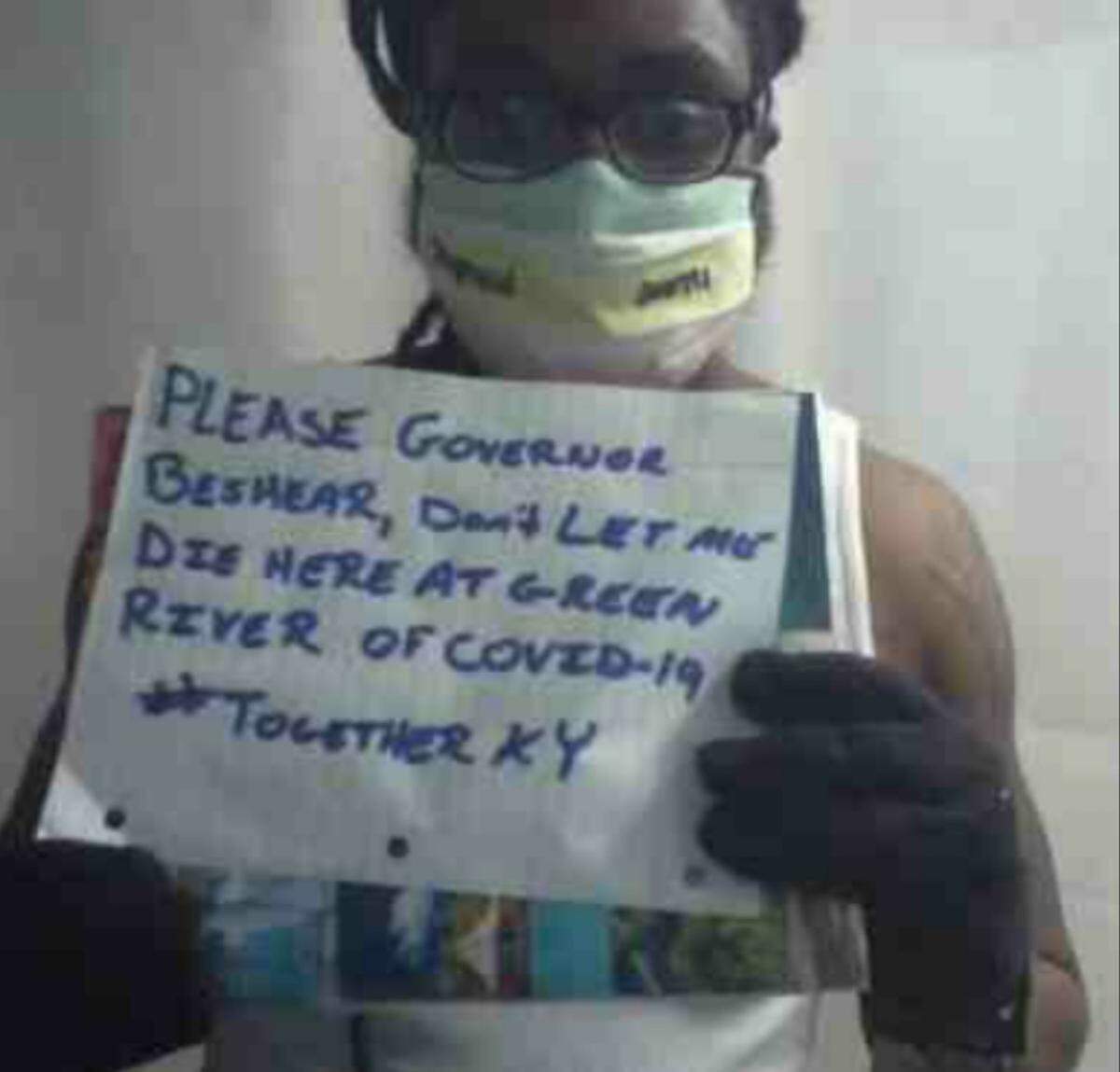
The prison — which is primarily meant to hold medically vulnerable inmates — is Kentucky’s third state prison to have a major COVID-19 outbreak this year, following the Green River Correctional Complex in Muhlenberg County and the Kentucky Correctional Institution for Women in Shelby County.
Overall, at least six inmates have died after testing positive for COVID-19 while at least 770 inmates and 108 employees have been infected across the state’s 13 adult prisons, according to the Department of Corrections’ website.
Additionally, at least seven inmates have died and at least 337 inmates and 10 employees have been infected during a COVID-19 outbreak at the Federal Medical Center, a federal prison on Leestown Road in Lexington. But that outbreak appears to have abated, according to the U.S. Bureau of Prisons.
The COVID-positive deaths at the Kentucky State Reformatory include:
▪ A 55-year-old man on July 12. His exact cause of death is still under review pending an autopsy due to his underlying medical condition, but he did receive a positive test result for COVID-19 on July 11, said Corrections Department spokeswoman Lisa Lamb. He was serving a 40-year sentence for robbery, wanton endangerment and arson.
▪ A 58-year-old man on July 14. He was serving a 17-year sentence for criminal possession of a forged instrument, two counts of fraudulent use of a credit card and escape, Lamb said.
▪ A 66-year-old man on July 19. He was serving an eight-year sentence for robbery and possession of a handgun by a convicted felon, Lamb said.
Gov. Andy Beshear’s administration has declined to identify inmates dying in its custody during the pandemic.
“The first case at KSR was an inmate who was scheduled for surgery and was tested at the hospital as part of the pre-op procedure,” Lamb said. “The prison received the test results on July 5.”
Because KSR houses inmates who have medical and mental health issues, the Department of Corrections and the Department of Public Health ”acted aggressively and initially tested the entire unit where the inmate was housed, along with all staff who had contact in the unit. Based on those results, mass testing is underway,” Lamb said.
Inmates are suing the Department of Corrections in federal court for what they describe as a slow, clumsy response to the novel coronavirus. They allege that inadequate cleaning, masking and social distancing have allowed the virus to race around inside prison walls, putting lives unnecessarily at risk.
In response, Lamb said Tuesday that prison officials are carefully screening anyone who enters the prisons for symptoms of COVID-19; they have increased cleaning of the facilities using a germicide and bleach solution; and they have provided masks for all inmates and employees, for mandatory usage.
“All medically-vulnerable inmates are closely monitored and checked regularly throughout the day,” Lamb said. “If any inmate becomes symptomatic for any illness, not just COVID-19, and the prison medical staff cannot handle their care adequately, they are transferred to the hospital.”
Last month, the ACLU of Kentucky wrote a letter urging Corrections Commissioner Cookie Crews to test all state inmates in every prison for the coronavirus in order to get ahead of the next outbreak.
Instead, the department waited until COVID-19 outbreaks were underway to begin mass testing at Green River and KCIW. Only then were prison officials able to segregate inmates into different housing units based on whether they had tested positive or negative or had been exposed to someone who tested positive.
“While everyone else in the commonwealth is able to get tested as they choose, incarcerated people — who live in tight quarters where social distancing is impossible — do not have that same opportunity,” said ACLU Legal Fellow Aaron Tucek.
“Early detection is a crucial aspect of any containment strategy,” Tucek said. “The current approach has not worked to prevent outbreaks at DOC facilities, and universal testing would be an important step forward to protect incarcerated people, prison staff and Kentucky communities.”
Raising the potential for additional COVID-19 outbreaks, the Department of Corrections website confirms a recent scattering of employee infections at prisons including Bell County Forestry Camp, Kentucky State Penitentiary, Lee Adjustment Center, Northpoint Training Center and Roederer Correctional Complex.
With inmate visitation canceled due to the coronavirus pandemic, prison staff are the primary people moving between the institutions and outside communities each day, potentially carrying the virus with them. At Green River and KCIW, prison staff tested positive for the coronavirus before inmates did.
However, the Department of Corrections has decided that mass testing is unnecessary in prisons not experiencing outbreaks, Lamb said.
“As with every positive COVID-19 test result at any state prison, contact tracing is immediately undertaken and the Department of Corrections consults with the Department for Public Health to determine next steps,” Lamb said. “At this time, mass testing has not been conducted at other facilities due to the lack of any positive cases, lack of symptomatic staff or inmates, or negative test results received after contact tracing.”
The ACLU also wants medically vulnerable inmates to be released from prison during the pandemic, at least to home confinement, Tucek said.
Since the pandemic began, Beshear has signed three executive orders approving the early release of 1,236 state inmates serving their time in local jails and state prisons, out of a then-current total of roughly 24,000 inmates. With the inmate population now at about 20,100, Beshear has not talked about additional inmate releases.
The medium-security Kentucky State Reformatory houses 932 inmates, 21 of them in the prison’s hospital as of Monday.
KSR’s “primary mission is to be a specialized institution to provide extensive mental health and medical services to inmates within the system,” according to the Department of Corrections website. For example, “the medical department provides on-site chemotherapy and dialysis treatments.”