KY Supreme Court weighs Beshear’s COVID-19 regulations, from masks to daycare classes
The Kentucky Supreme Court heard arguments about the legality of Gov. Andy Beshear’s emergency COVID-19 regulations for more than an hour Thursday morning, trying to determine if they should uphold or strike down rules that Beshear contends have saved thousands of lives.
At stake are dozens of emergency orders from the Democratic governor ranging from a requirement for most Kentuckians to wear a mask in public to class sizes in child care centers.
La Tasha Buckner, general counsel and chief of staff for the governor, said Beshear has the responsibility and legal authority to respond quickly to emergencies. If that were not the case, the governor could not respond immediately to floods, ice storms or any other emergency, she said.
Chad Meredith, solicitor general for Attorney General Daniel Cameron, said Beshear has “created his own legal code” in issuing voluminous regulations dealing with the coronavirus without following the process of issuing administrative regulations that the public and legislature can review.
Chris Wiest, an attorney for a Northern Kentucky child care center, an auto race track and a bakery challenging Beshear’s COVID-19 orders, told the state’s highest court that no one wants to deprive Beshear of his ability to deal with COVID-19, but he has failed to follow administrative procedures.
“Ours is a government of laws and not men,” said Wiest.
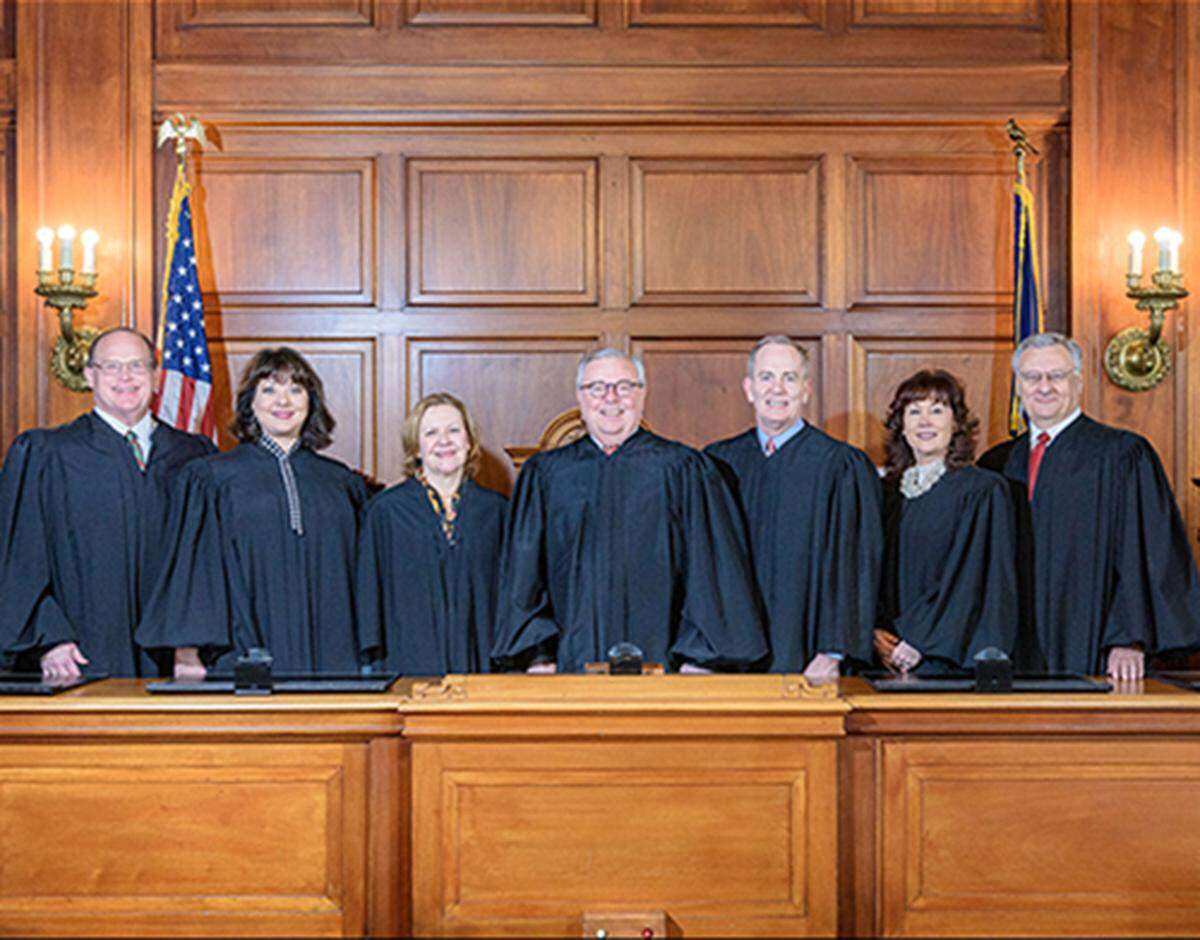
All seven justices except Chief Justice John D. Minton Jr. peppered the attorneys with questions. All participants in the hearing in the Supreme Court chamber wore masks except when speaking.
It is not known when the court will issue its decision.
After the hearing, Beshear said at a news conference with Buckner that the high court’s decision is “one of life and death.” He said a court win by Cameron that would remove his tools to fight the coronavirus would be “reckless and irresponsible.”
A mask mandate is necessary, he said, noting that most of about 200 people protesting his orders outside the Capitol Thursday morning were not wearing masks. Some did have guns.
Asked why he has not obtained more input from legislators or called a special session to consider his regulations, Beshear said the legislature already has passed laws for emergencies and that it would not be a good idea to have more than 100 legislators in session during a pandemic.
He said the legislature already has provided means for governors to react swiftly to emergencies and that is what he has done and will continue to do.
Cameron, a Republican, said after the hearing that Beshear has “without any input from the elected members of the General Assembly, built a new legal framework for the commonwealth centered around COVID-19, which he continues to add to even now, more than six months after the emergency declaration was filed.”
“While some new policies and guidelines are needed to to slow the spread of the disease and ensure Kentuckians adhere to recommended health guidelines, these policies must strike a necessary balance between public health and protecting the constitutional rights of Kentuckians,” Cameron said. “Our Constitution and state laws do not allow for the broad, arbitrary and long-term actions put in place by the governor since early March.”
In arguing before the Supreme Court for Beshear, Buckner said the governor’s regulations have saved lives in Kentucky and that his state of emergency was properly declared in March.
Meredith and Wiest countered that the governor cannot do whatever he wants.
Justice Michelle Keller said the court has to be careful to consider that much less was known about COVID-19 at the start of the pandemic, when most of the regulations were promulgated.
She asked whether the governor should react quickly or wait for legislative approval in the event of a Sarin gas leak or a nuclear incident?
Justice Laurance VanMeter noted that the attorney general was arguing that some of the governor’s regulations were arbitrary.
Several justices asked why the governor allowed daycare centers to operate for the children of emergency responders but closed all others.
Buckner said decisions had to be made quickly to curb the coronavirus and that all child care centers can now open.
Temporary restraining orders against some of Beshear’s orders were issued this summer by circuit judges in Boone and Scott counties. The Supreme Court took up only the Boone County case because it is the only case in which a lower court judge issued a final order. It will deal with the Scott County case later.
Cameron joined the plaintiffs in both Boone and Scott counties. State Agriculture Commissioner Ryan Quarles joined an agritourism business against Beshear in the Scott County case.
Kentucky Court of Appeals Judge Glenn Acree in July declined to stop the restraining orders and combined the two cases into one and assigned it to a three-judge appellate panel.
The governor’s attorneys then asked the Supreme Court to tell Acree to order the circuit courts to dissolve the restraining orders. The Supreme Court put a hold on the restraining orders, leaving all of Beshear’s regulations in effect, and had the cases transferred to the high court.
That set the stage for Thursday’s high court hearing in the case styled Andrew Beshear v. Glenn E. Acree.
This story was originally published September 17, 2020 at 12:47 PM.