KY chief justice orders courts to go virtual after some judges keep their doors open
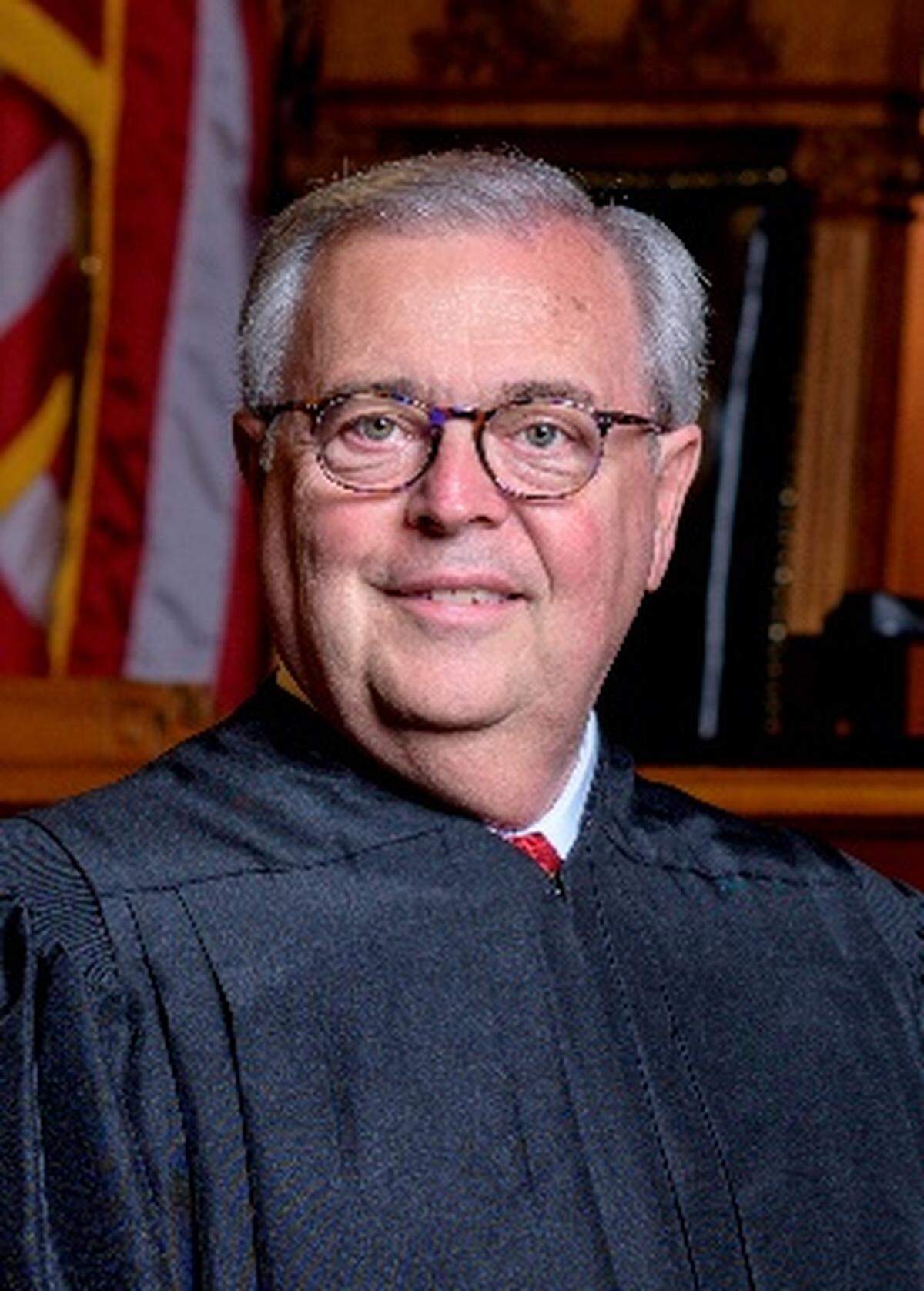
Kentucky Chief Justice John Minton Jr. on Friday tightened his COVID-19 restrictions on the state courts because some judges were still holding in-person proceedings in “red zone” counties where virus transmission is pervasive.
Among the virus-related problems in recent days: a COVID-19 outbreak among Boyle County courthouse employees and infected Daviess County deputy court clerks. Both counties are in red zones, which means they average more than 25 coronavirus cases per 100,000 residents over seven days.
As of Nov. 30, all state courts will be limited to remote court proceedings conducted by computer video, according to Minton’s new order. All jury trials will be postponed until at least Feb. 1. Grand juries will be conducted remotely or suspended for the duration.
With circuit court clerks’ offices temporarily closed to the public, court filings must be done electronically or by mail or drop box. Payments for court costs, fines, fees and restitution either can be mailed by money order or paid by cash or credit card by calling ahead to the clerk’s office. Pre-payable citations can be paid online through ePay at kycourts.gov.
Minton’s last order, issued Oct. 29, recommended that state courts in red zone counties switch to remote court proceedings to limit the number of people in courthouses. This new order is a mandate, not a recommendation, and it covers all counties, although all but eight counties now fall in a red zone, anyway.
“As I’ve said many times over the last few months, one of our guiding truths has been the involuntary nature of most court proceedings,” Minton wrote Friday in a letter to court officials.
“People can choose whether to eat at a restaurant or go shopping, but in most instances they don’t get to choose whether they go to court,” Minton wrote. “We have a responsibility to do all we can to keep people from being exposed to a potentially fatal virus.”
On Tuesday, the Kentucky Department of Public Advocacy sent a letter to Minton expressing its concern over two dozen red zone counties where it believed in-person court proceedings continued to be held. The DPA employs lawyers who represent low-income criminal defendants in court.
“While we know you respect the autonomy of locally elected judges to determine the best way to conduct their dockets, we believe the current spike in COVID cases creates an unacceptable risk for DPA employees and clients who are being required to risk their health and their families’ health to appear in-person when other alternatives are available,” chief public advocate Damon Preston wrote to Minton.
‘I want them to look me in the face and know that I mean it’
Court officials who were continuing to hold in-person proceedings in red zone counties told the Herald-Leader they were taking safety precautions such as requiring masks and limiting the number of people who could be in a courtroom.
Chief Daviess Circuit Judge Jay Wethington said he limited courtroom attendance to six people at a time for his criminal docket on Thursday. While he can conduct some tasks by computer, Wethington said, certain proceedings should be held face-to-face, such as sentencing and probation revocation.
There are times when a judge needs to have defendants sign important documents, or he just wants to make sure they understand what is being told to them, Wethington said.
“When I’m sentencing someone and explaining the terms, I want them to look me in the face and know that I mean it,” the judge said.
In some rural parts of Kentucky, with high rates of poverty and mountainous terrain, court officials said many local residents don’t have reliable Internet access at home, so switching to remote court proceedings all but locks them out of the courthouse.
“The population we have here, so many people do not even have computers,” said Floyd Chief District Judge Eric Hall. “When you talk about going to remote operations, we’ve just not been in a position to do that.”
Hall said his courthouse has strictly followed all U.S. Centers for Disease Control and Prevention guidelines for limiting COVID-19 transmission, restricting how many people can enter the courtroom and how closely to each other they can sit. Masks are worn by everyone, Hall said.
“I think we’ve done as good a job as any person could do and still have in-person contacts,” Hall said. “We’re just kind of holding our breath and hoping we don’t have an outbreak. So far, we’ve been lucky.”
Backlog of cases growing
Court officials across Kentucky say they worry about the growing backlog of criminal and civil cases that have been piling up since March, when the pandemic first closed courthouses.
Although the COVID-19 restrictions loosened for a while, having to limit courthouse crowds, postpone trials and schedule hearings based on technological availability means that cases are taking far longer to dispose of than they should, officials said.
In Kenton County, someone arrested on a felony charge last January shouldn’t count on his case being resolved until well into 2021, said Kenton Commonwealth’s Attorney Rob Sanders. If he’s especially unlucky, Sanders added, he doesn’t qualify for the early release from jail that is being awarded to so many pre-trial defendants during the pandemic to reduce inmate populations.
“We’ve got a lot of people locked up who are dangerous and so we can’t just let them loose, but we also can’t just delay their trial indefinitely,” Sanders said. “I mean, I’m a prosecutor, but I have a sense of fairness, and we can’t simply hold people forever while their case is pending.”
After the pandemic, the state courts will need to employ additional judges and lawyers for perhaps two years to tackle the stacks of cases, Sanders said.
“My three circuit judges working alone are never going to be able to dig out from this hole,” he said.
In his letter to court officials on Friday, Minton reminded them that although Kentucky likely faces a difficult winter with rising numbers of infections and deaths, things will get better.
“The good news is that a vaccine is on the horizon and we’re starting to see a path out of this deep crisis,” Minton said. “In the meantime, we must continue to ensure justice for the commonwealth while protecting the health of our employees and the public.”
This story was originally published November 20, 2020 at 11:19 AM.