They served their country. Now they’re dying of COVID-19, isolated from loved ones.
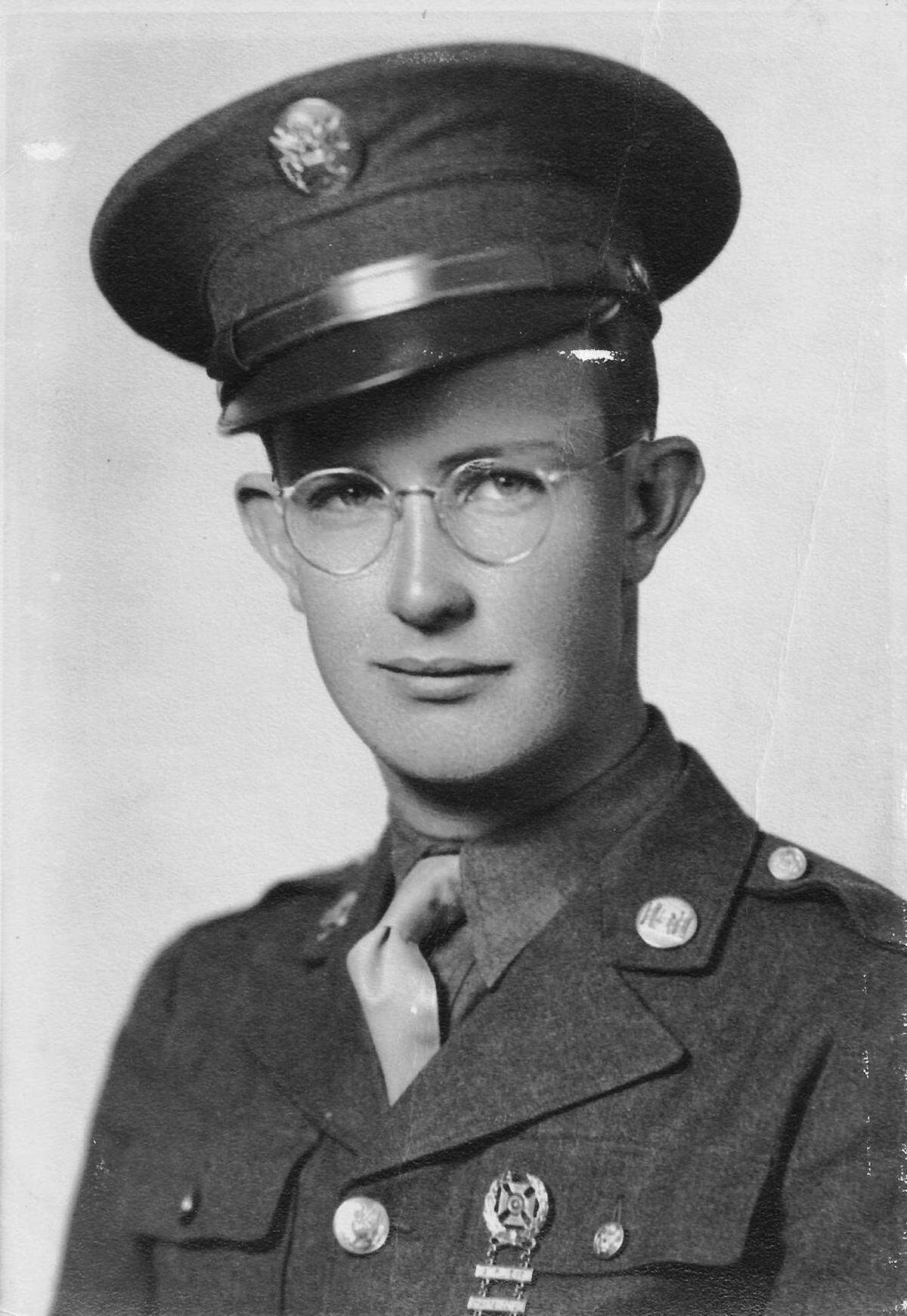
Strong hands saved Bobby Rorer in 1943. His friends surrounded him and pulled him from the sand and debris that buried him after a Japanese bomber crashed into a Papua New Guinea airfield in the South Pacific, where he served for three years with the Army’s 871st Airborne Engineers.
But when Rorer died on Oct. 16 of COVID-19, at the age of 96, he was in isolation. His loved ones were not allowed to be there.
Rorer is among the scores of former servicemen to die during this year’s novel coronavirus pandemic at state and federal nursing facilities operated for Kentucky veterans.
The worst devastation so far has been at the state-run Thomson-Hood Veterans Center in Jessamine County. Twenty percent of its 154 residents died during a COVID-19 outbreak over the last three months, including Rorer.
At his daily news conferences, Gov. Andy Beshear has blamed the Thomson-Hood casualties on “community spread,” with COVID-19 racing ever faster through the state’s population.
Beshear made a public appeal to patriotism Nov. 30. He argued that Kentuckians are dooming aged veterans by allowing the virus to infect the health care workers with whom veterans have contact and who unwittingly pass the virus along to them.
“Let’s fight harder for them. Let’s wear our masks for them, whether we like wearing a mask or not. These veterans, they went through a lot harder times and they sacrificed a lot more for us. So if you claim to be a patriot, recognize and fight for these patriots,” Beshear said.
This week, Rorer’s family said they are grateful he had a long life. But the novel coronavirus made his death — and his final months — a misery. To prevent the spread of the virus, Thomson-Hood closed its doors to visitors in March, and it quarantined residents in their rooms during the recent outbreak.
“I think that was driving him as crazy as anything,” said Ken Jorette, Rorer’s step-son.
“He was really a social guy. He liked to be around people,” Jorette said. “That last week or so, we didn’t even hear from him. He was stuck in his room, in bed. The nurse would hold a phone to his ear so we could at least talk to him. He would sort of mumble. That’s how we had to say goodbye.”
State officials say they understand the frustration.
While the nurses and aides do their best to comfort residents, it’s not the same as having family and close friends by your side, said Mark Bowman, executive director of the state Office of Veterans Centers. And nobody expected this to drag on for so long, Bowman said.
“Early on we thought, ‘OK, we can do this for a month or two and it’s not going to be a big deal.’ But it is a big deal for anyone in a long-term care setting,” Bowman said.
“The detrimental effect of that isolation and that lack of social interaction is absolutely impacting our veterans and every other person in a long-term care facility and it will continue to do so. It’s proven that it contributes to decline because that is such an integral part of all of our lives,” he said. “Our veterans that we serve are no different.”
‘This is their home’
Statewide, the Office of Kentucky Veterans Centers reports 33 COVID-19 deaths since March at three of its four nursing facilities — 31 at Thomson-Hood and one each at the Paul E. Patton Eastern Kentucky Veterans Center in Perry County and the Joseph “Eddie” Ballard Western Kentucky Veterans Center in Hopkins County.
Separately, the U.S. Department of Veterans Affairs this week reported 73 known COVID-19 deaths at its Kentucky centers, although that includes veterans living in VA long-term care facilities; being treated in one of the VA’s specially created COVID-19 units; and living in the community but receiving medical care at a VA clinic.
State officials say the staggering number of deaths at Thomson-Hood proved especially upsetting. Few of Kentucky’s long-term care facilities have lost such a high percentage of their residents to COVID-19.
“It’s tragic,” Bowman said. “We deeply mourn the loss of our veterans. This is their home. Our staff is as close to them as their family. So to them, it’s like losing family members.”
Testing helps but not foolproof
Thomson-Hood opened in 1991 on a 60-acre campus in the small town of Wilmore. The U.S. Centers for Medicare and Medicaid Services last year awarded it five stars, recognizing it as “much above average” for its quality of care.
The center kept the virus out for six months because it screened employees for symptoms and used personal protective equipment, such as masks and gloves, to prevent the transmission of COVID-19, Bowman said.
Staff members coming to work are checked daily with a quick antigen test and twice-weekly with a more sensitive but slower PCR test that can detect minuscule amounts of the SARS-CoV-2 virus that causes COVID-19.
But none of this is foolproof when all it takes for a calamity is for one infected person to enter the building. And Jessamine and Fayette counties, where many of the center’s roughly 250 employees live, began to see a spike in COVID-19 cases as summer neared an end.
Initially, a handful of employees tested positive. The first resident infection arrived the week of Sept. 13, according to data Thomson-Hood reported to the U.S. Centers for Disease Control and Prevention. The numbers mushroomed over the next month. Eventually, 88 residents and 74 staff members would be infected.
So many infected employees had to be quarantined that the VA sent emergency medical personnel to Thomson-Hood in order to keep the center running. The local and state health departments and the Cabinet for Health and Family Services also rushed to respond to the crisis.
The outbreak exploded “in the blink of an eye,” Bowman said.
“Because of the asymptomatic nature of this thing, the spread is already done before you’re seeing the numbers,” Bowman said.
“There is no perfect system,” he said. “Once it gets in there, I’ve never seen anything like it in my almost 30 years in health care.”
Active infections appeared to be all but eliminated at the center as of this week, Bowman added.
“Hopefully we’re on the backside of this, at least in terms of getting it back under control,” he said.
Crowded buildings spread virus
There may be a reason that Thomson-Hood suffered so badly compared to other veterans centers the state of Kentucky operates, Bowman said.
It was built on the “medical model” of a large building with central nursing stations and long corridors lined with shared “semi-private” bedrooms and bathrooms. These older institutions keep everyone closer together in smaller spaces, which is the last thing you want when a highly infectious virus comes sweeping through, Bowman said.
The veterans center in Perry County, which so far has had 10 resident infections and one death, also was built on the medical model. The other two, in Hopkins and Hardin counties, are newer. They offer small homes around their campuses that separate veterans into individual household units.
When resident infections are detected at the newer centers — as they were in recent days in Hopkins County — testing hopefully will determine that the problem is limited to one small home, not spread throughout a campus, Bowman said. So far, the Hardin County center has reported no resident infections this year.
“The ability to spread those veterans out really makes a difference,” he said. “Hopefully there isn’t an outbreak, but if there is, at least the veterans are not so concentrated.”
‘It was like prison’
Local health officials say they agree with Beshear: The virus that kills veterans inside nursing facilities starts outside, in the community.
“It wasn’t the veterans who went into Thomson-Hood with COVID, right?” said Randy Gooch, director of the Jessamine County Health Department.
“They live in there, they’re not going out anymore,” Gooch said. “So it was the staff or maybe vendors who go into the building every day, not knowing they’re infected. It was us out here who are spreading the virus to the staff.”
On Wednesday, the state reported a COVID-19 current incident rate in Jessamine County of 54.9 daily cases per 100,000 population, making it — like most of Kentucky — a red zone. After making some efforts to wear masks and socially distance earlier this year, much of the community has grown weary of virus precautions, Gooch said.
“We’re at a point now where it has become very, very difficult to keep it out of any congregate setting, whether that’s our detention center or a nursing home,” he said. “Certainly having testing strategies in place helps. Testing will catch a lot of it. But it’s still difficult to keep it out even with all the testing in the world.”
That leaves another possible defense, which is cutting off veterans’ physical contact with most other people.
Jorette, the step-son of Rorer, said isolating a senior citizen is a preventative nearly as bad as the disease. Rorer went from having weekly lunches in town with his family and regular events around the veterans center to almost no social connections at all, Jorette said.
The last time Rorer saw his family without a window between them was from a distance, on his birthday in May, when he was allowed to come outside the center while his loved ones participated in a vehicle parade.
“I know they were doing the best they could trying to keep them safe, but you know, they kept the families out, they kept them in their rooms. They were even feeding them in their rooms,” Jorette said.
“It was like prison except that in prison you get to talk to the other prisoners. You get out into the rec yard for an hour every day,” Jorette said. “In this case, you’re just stuck by yourself in your room 24/7.”