Health workers in Lexington among the first to get COVID-19 vaccines in Kentucky
Clad in full protective gear, Dr. Yuri Villaran held an iPad in front of his patient while she lay in her intensive care unit bed in Lexington, where she was dying from COVID-19.
The patient was a woman in her 80s. On the screen in Dr. Villaran’s hands was her daughter, talking and crying, saying all of the things people say to those they love before they die. The mother and daughter had agreed she wouldn’t be put on a ventilator; this disease was what would kill her, and a few days later, it did.
“And as I’m holding the tablet, with her seeing her mom, she starts saying how proud she was of her, for her being her mom. How much she loved her. I’m there with the nurse, and we just witnessed this tender moment between a mother and a daughter knowing we are the only ones who can be here,” said Dr. Villaran, who works at Baptist Health Lexington.
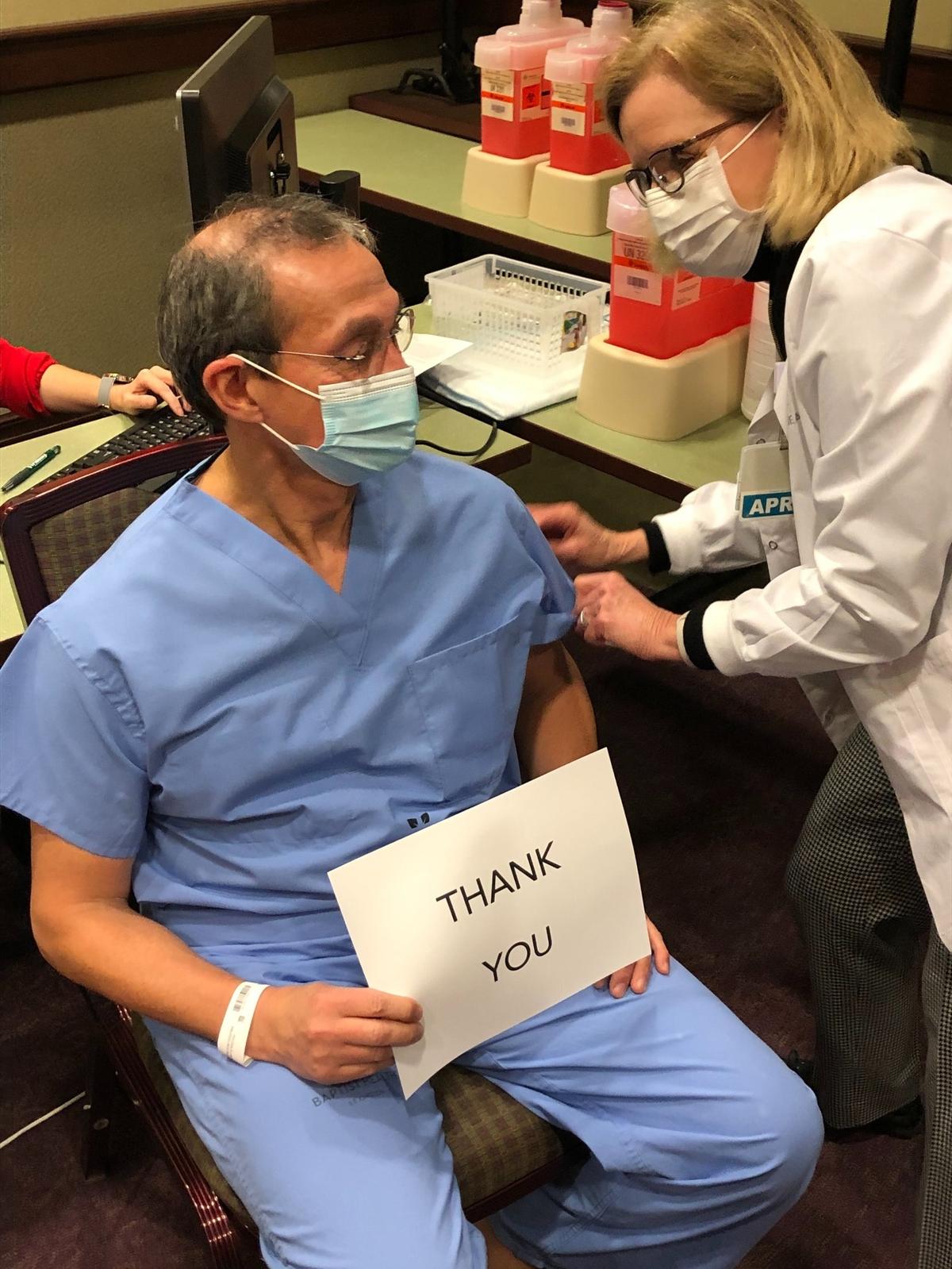
On Monday, he was one of the first frontline health care workers in Lexington, and among the first in Kentucky, to receive a dose of the Pfizer vaccine to protect against the novel coronavirus, which has killed more than 2,220 people statewide and infected nearly 225,000
“The reason I’m getting vaccinated is to be in that room to take care of my patients,” he said. “That’s what it’s allowing me to do.”
Villaran was immunized alongside four others at Baptist, including a member of the hospital’s housekeeping staff, a nurse, an emergency room nursing assistant, and an ER physician.
Five health care staff at the University of Louisville were the first to be vaccinated in Kentucky earlier on Monday. Dr. Valerie Briones-Pryor, who works primarily at Jewish Hospital, was one of them. Earlier in the day, she lost her 27th patient to COVID-19 since March. “The vaccine I took today was for her family and for the 26 I’ve lost,” Dr. Briones-Pryor said.
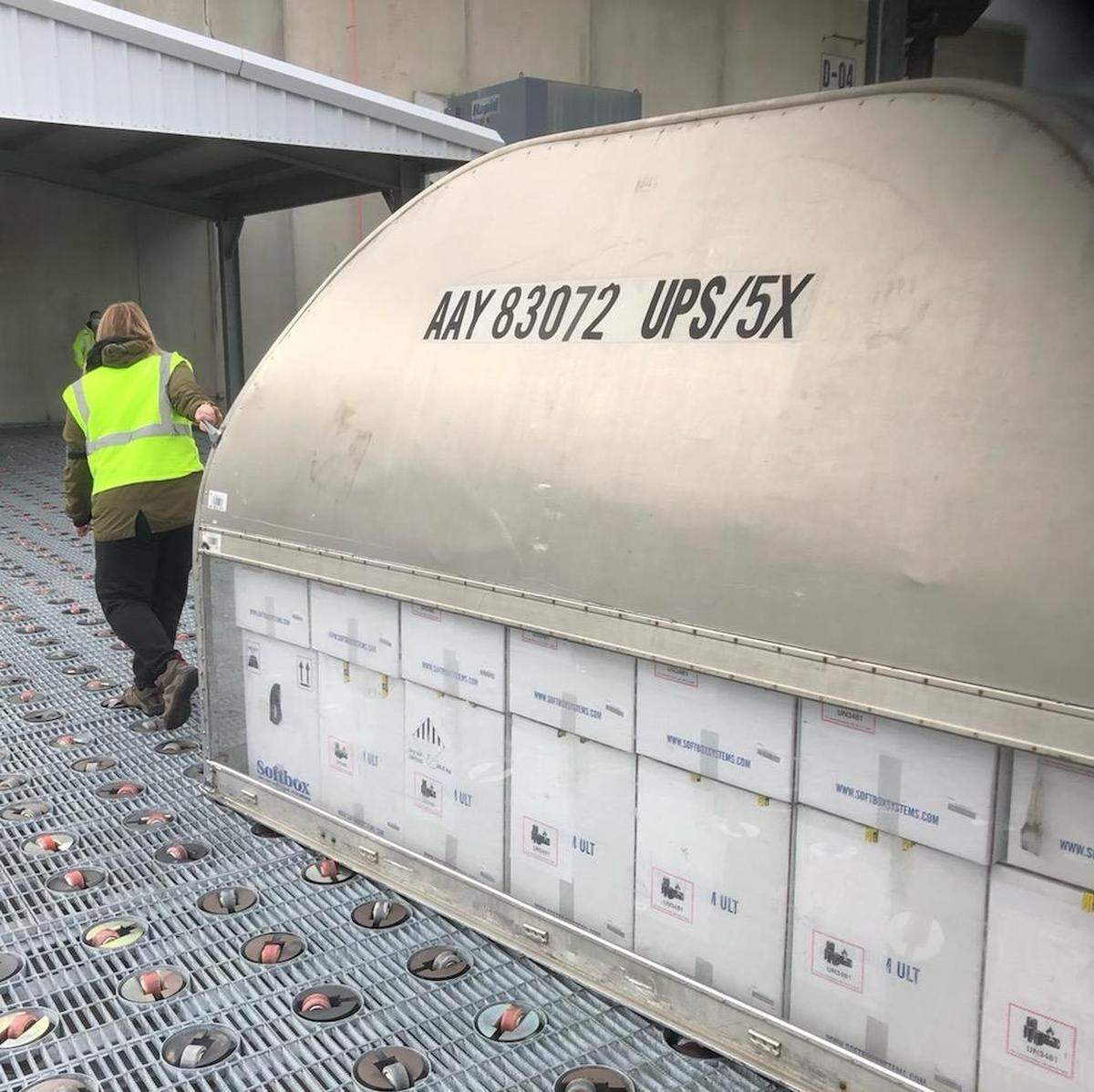
Monday’s doses were administered less than a day after planes carrying roughly 38,000 initial doses of the two-part Pfizer/BioNTech vaccine landed in Louisville. This coronavirus vaccine was the first in the country to be approved for emergency use over the weekend by the U.S. Food and Drug Administration, and almost immediately, trucks and planes with hundreds of thousands of vials in tow departed for different states around the country. If the FDA grants the same emergency authorization to Moderna, Kentucky can expect as many as 150,000 doses by the end of the month.
Gov. Andy Beshear called it “a historic day, a day that we have hoped and prayed for for over nine months of sacrifice, pain and loss.” Monday marks “the true beginning of the end of this pandemic,” he said. In addition to Baptist, a small group of health care workers at the Medical Center at Bowling Green got the vaccine Monday. The booster, or second dose, should arrive within the next three weeks, Beshear said.
More than 12,500 doses are en route to 11 regional hospitals around the state, including UK HealthCare in Lexington, which expects to administer the first of its 1,950 doses Tuesday afternoon. Additional hospitals who can expect to receive vaccine shipments on Tuesday include Baptist Health hospitals in Corbin, Madisonville and Louisville, Norton Healthcare in Louisville, Pikeville Medical Center, and St. Elizabeth Edgewood Hospital.
Over 25,000 doses are being distributed to CVS and Walgreens, which will dole them out to nursing homes. Vaccinations of nursing home staff and residents are expected to begin December 21, Beshear said. The goal is to inoculate all long-term care populations in two months, before the beginning of March.
To those reluctant to receive a vaccine that was developed at warp speed, Dr. Briones-Pryor urged people to inform themselves: “I understand it’s scary to get something new. Read about it. Get yourself comfortable with it.”
Getting this vaccine, she said, was as much for her protection as it was to better protect those around her. “Think about your loved ones. Think about the ones who had it, the ones who could get it, and what you can do to protect them,” she said. “If you’re not going to do it for yourself, do it for your loved ones.”
For months, frontline health care workers like Dr. Villaran and Dr. Briones-Pryor have acted as surrogates for mothers, fathers, spouses, brothers sisters, daughters and sons for those dying alone in hospital beds.
Dr. Villaran often finds himself relying on the same words and phrases to comfort the family members of his sickest patients: “They’re comfortable, they’re not suffering, we’re in the room keeping them company. They will not be alone when they die,” he said. “That’s the most we can tell them.”
This has been the norm at his job since March. But he hasn’t become accustomed to it. “Actually, it gets more difficult every time,” he said.
Though Monday is historic, it doesn’t change anything in the immediate for Dr. Villaran and others in health care. He will still return to work taking the same precautions, wearing the same protective equipment and continuing to treat a very sick, very isolated patient population, which, despite early waves of a vaccine, is only projected to grow in December and January, he said.
“It’s exciting because we have one more layer of protection that’s finally available,” he said, but “it’s not going to change anything that we do today.”
This story was originally published December 14, 2020 at 11:30 AM.