Omicron variant of COVID-19 confirmed in Fayette, three other Kentucky counties
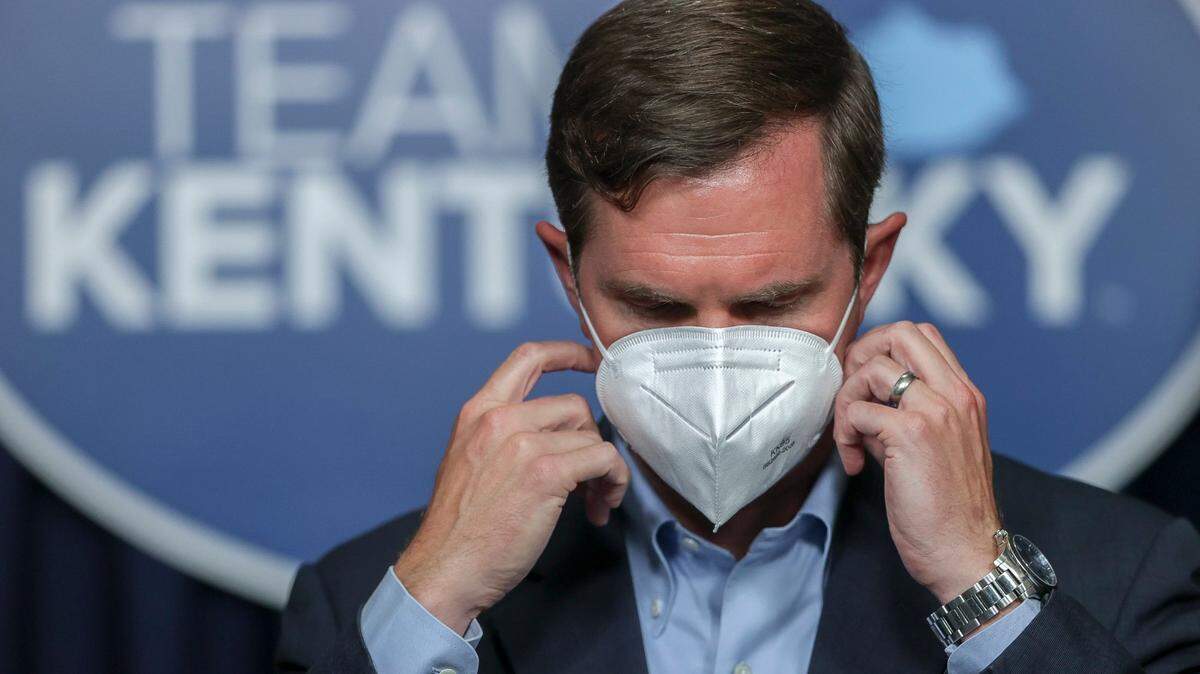
The highly contagious omicron variant of the COVID-19 virus has been confirmed in four Kentucky counties, Gov. Andy Beshear said in a briefing Saturday afternoon.
Beshear said the variant was confirmed in patients in Fayette, Kenton and Campbell counties Friday, and was confirmed in Jefferson County through wastewater testing Saturday morning.
Beshear urged people to wear masks in public settings.
“This thing is going to spread so fast that any school that is not doing mandatory masking, any business that is not having their folks wear masks, could see entire schools, entire shifts get infected very, very quickly,” he said. “If we don’t make the decision to put back on that mask in these situations, it’s going to disrupt everything we have worked so hard to get back up and going.”
The omicron variant is thought to cause less severe illness than earlier waves of the coronavirus, but it appears to be more contagious.
In South Africa and in the United Kingdom, hospitalization rates did not spike as might have been expected after a surge in omicron variant COVID-19 cases, said Dr. Steven Stack, Kentucky’s public health commissioner.
But, he said, the omicron variant is one of the most contagious infections of the last century.
While someone with the flu might infect one or two other people, and someone with the delta variant of COVID-19 might infect up to five others under some conditions, Stack said a person with omicron might be able to infect up to 18 or 20 more people.
“It is clearly a different chapter in this journey,” he said.
Stack also pointed out that monoclonal antibody treatments don’t seem to work as well against the omicron variant.
He reiterated the importance of booster shots or a first dose of the vaccine for those who are unvaccinated.
Only 17 percent of Kentucky’s population is fully vaccinated and has received a booster, Stack said.
“We need more people to go out and get boosted,” he said.
He said anyone at least 16 years old who had their second dose of Moderna or Pfizer vaccine at least six months ago should get a booster.
Those who received the Johnson & Johnson vaccine should get a Moderna or Pfizer booster two months after their J&J shot, Stack said.
Stack said “breakthrough cases are going to go up” among the vaccinated, but “the vaccines, if they keep you from ending up in the hospital and they keep you from dying, they have done their job.”
In some Kentucky counties, Stack said fewer than one in three people have been vaccinated, and he urged people to get the jab if they haven’t. He said prior COVID-19 infection is unlikely to provide sufficient protection against reinfection.
“If it sweeps through your community, it’ll hit everybody, hit quickly, and that’s a recipe for disaster,” he said. “I hope you’ll be open to going and getting vaccinated.”
Beshear also provided an update on tornado recovery efforts during the briefing.
This story was originally published December 18, 2021 at 3:30 PM.