
Vaccines key for children during surge, KY officials say. What parents should know.
Kentucky officials are looking to continued vaccinations and boosters to help better protect children and stem a potential uptick in severe infections among youth during the latest COVID-19 surge.
“We have 23 pediatric patients – kids – in the hospital, four in pediatric ICUs,” Gov. Andy Beshear noted in his Monday update.
Those children were among 1,873 individuals hospitalized with COVID statewide that day. The number ticked up to 1,953 Tuesday, the same day the state reported more than 2,300 new cases of COVID in individuals ages 18 and under.
“We have heard from many children’s hospitals that they are experiencing an increase in hospitalizations,” noted Dr. Lindsay Ragsdale, interim chief medical officer at Kentucky Children’s Hospital. “Even though we think omicron has a lot more mild illness for some, there is a population that we are seeing still needing to be hospitalized. So we are bracing for an influx in patients into our children’s hospital.”
That facility’s COVID patient census sat at five Tuesday evening.
Hospitalizations are just one of several metrics creeping up in recent weeks. Some school districts have already returned to remote instruction due to COVID-related staffing shortages, including the state’s largest school district, Jefferson County Public Schools. Fayette County schools are open, though officials say they are monitoring the situation.
Here’s what parents should know as omicron continues to spread.
What are common COVID symptoms in children 12 and under?
Ragsdale said children with omicron are exhibiting many of the same symptoms as those who with the delta variant, including fever, runny nose, sore throat, cough and headache.
“I think what we’re seeing is this (omicron) is more contagious, probably more contagious than we’ve seen in a lot of viruses in our history, and kids are just more apt to spread germs in general,” she said.
School-aged children are also likely to spend time in congregate settings, like classrooms and social events.
What children are eligible for the COVID vaccine and where can they get their shot?
The U.S. Food and Drug Administration has authorized the Pfizer-BioNTech two-shot series for all individuals ages 5 and up. Additionally, the Centers for Disease Control and Prevention recommends boosters for all individuals age 12 and up.
The FDA has also authorized children ages 5 to 11 who are immunocompromised to receive a third dose of vaccine 28 days from their second shot.
Those looking to locate a vaccination site can search by zip code, shot type and availability through the CDC.
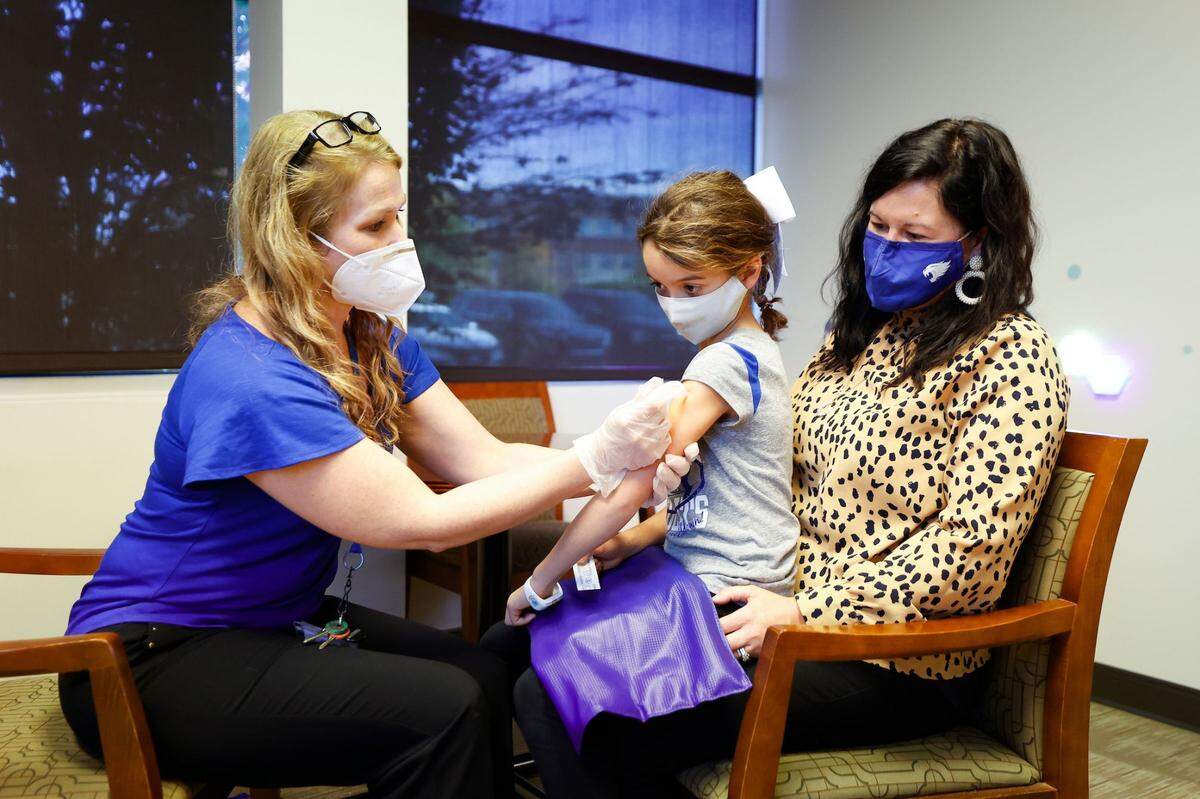
What side effects from the vaccine or booster can parents expect in children ages 5 to 12?
Like adults, children who receive their vaccine or booster typically feel soreness at the injection, along with fatigue. But Ragsdale noted the benefits of vaccination far outweigh side effects.
“I just want to assure people, millions of doses have been given very safely and effectively for kids in this age range,” Ragsdale said.
Many of the pediatric ICU cases are among unvaccinated children, she reported.
What is the best option for children under 5?
Widespread vaccination in any community is key to curbing the coronavirus and protecting children too young for vaccination, but Ragsdale said there are steps parents can take as well. Good handwashing, mask wearing in public, masking by parents or other children experiencing symptoms and keeping sick individuals away from young children are all ways families can protect younger children.
“I know sometimes that’s hard, to quarantine in your own house, but if we can just decrease how close you get to” the younger child, you decrease risk of transmission, she noted.
The CDC recommends unvaccinated children ages 2 and older wear a mask in public when possible.