
From a 4th-grade classroom in Ohio to my life today, Jimmy Carter always inspired | Opinion
“He’s running for president,” said Mrs. Siegrist, my social studies teacher at Conesville Elementary. “That’s about all I know about him.”
I was a fourth-grader back in my native Coshocton County, smack dab between Columbus and Wheeling, West Virginia. It was a quiet slice of America at a simpler time in the farm belt of east-central Ohio.
Once a week, our teacher with the short brown hair and thick, black-rimmed glasses would allow us to sift through shelves of history-themed books in the back of her classroom. We would then either write a book report or talk to classmates about what we had read.
I don’t know what attracted me to it, but I picked up a book written by a smiling man named Jimmy Carter. It read, “Why one man is optimistic about America’s Third Century.”
The title was four simple words: “Why Not the Best?”
I asked Mrs. Siegrist about Carter, and I can scarcely recall her reply. But that book, written 50 years ago, has never left me. It has strongly influenced my life in ways that skinny, blonde-haired kid with an early love for history never could’ve imagined.
James Earl Carter, America’s 39th president, will be buried Thursday in his hometown of Plains, Georgia. He’ll be laid to rest next to Rosalynn, the love of his life for 77 years.
For the past week, a nation has mourned the passing of a good and decent man.
Tributes have poured forth from politicians, journalists, family members, international leaders, historians, friends and neighbors.
They have recalled Carter’s life as a peanut farmer, naval officer, engineer, nuclear physicist, governor, president, Nobel Prize winner, Sunday School teacher, author and public servant.
They’ve praised the global ambassador of goodwill whose accomplishments reached far beyond the White House.
But for me, it was the four paragraphs in the introduction to his very first book, his campaign autobiography written in 1976, that shaped so much of my personal life and my professional career, especially as a well-traveled editor in newsrooms across the country.
In it, Carter told of how he had applied for the Navy’s nuclear submarine program as a young man. It was a competitive process, and Carter was interviewed by a World War II admiral who became known as the “Father of the Nuclear Navy.”
For two hours, Admiral Hyman Rickover sat with Carter in a large room and peppered the future president with questions about current events, music, literature, military maneuvers and seamanship.
“In each instance, he soon proved that I knew relatively little about the subject I had chosen,” Carter wrote. “He always looked right into my eyes, and he never smiled. I was saturated with cold sweat.”
“How did you stand in your class at the Naval Academy,” Rickover asked.
Carter felt a surge of enthusiasm.
“Sir, I stood 59th in a class of 820!” he replied. The congratulations never came.
Instead, Rickover asked a simple question: “Did you do your very best?”
Carter wanted to say yes.
However, “I recalled several of the many times when I could have learned more about our allies, our enemies, weapons, strategy and so forth. I finally gulped and said, ‘No, sir. I didn’t always do my best.”
Rickover stared at Carter for a long time. He returned his chair and ended the interview with a final question: “Why not?”
And he left a shaken Carter alone.
To this day, I cannot explain why that passage never left me. From childhood to college; to my first job to fatherhood; from Ohio to journalism jobs in six other states. It has resonated with me for a half-century.
I wasn’t a great student, but I worked hard in the classroom and gave it my best.
I was unpolished as a cub reporter, but I vowed to improve and sharpened my skills.
I’ve stumbled often as a father, son, husband and friend, but I’ve offered my best efforts and to this day, strive to learn from my shortcomings.
And as an editor and leader of fellow journalists, someone who’s blessed to pursue a career that took root at my hometown Coshocton Tribune four decades ago, I’ve made countless missteps over the years.
But I’ve never forgotten Rickover’s challenge to Carter. I’ve embraced my career with passion and commitment, while pledging to my staff: I promise you’ll get my very best.
In early 2004, after a 16-year career at the Cincinnati Enquirer, I earned my first big editing promotion: I was leaving my native Ohio for the first time for Southern California to become managing editor of the Palm Springs newspaper.
At a staff-wide farewell party, I got the gift of a lifetime: A letter from Carter.
A colleague told a staffer friend at the Carter Center in Atlanta that I was an admirer of the former president and used “Why Not the Best?” as a battle cry in the Enquirer newsroom.
I had even created a monthly award in honor of Carter that celebrated a staffer’s best work. (By the way, that tradition is still alive and well here in our Herald-Leader newsroom.)
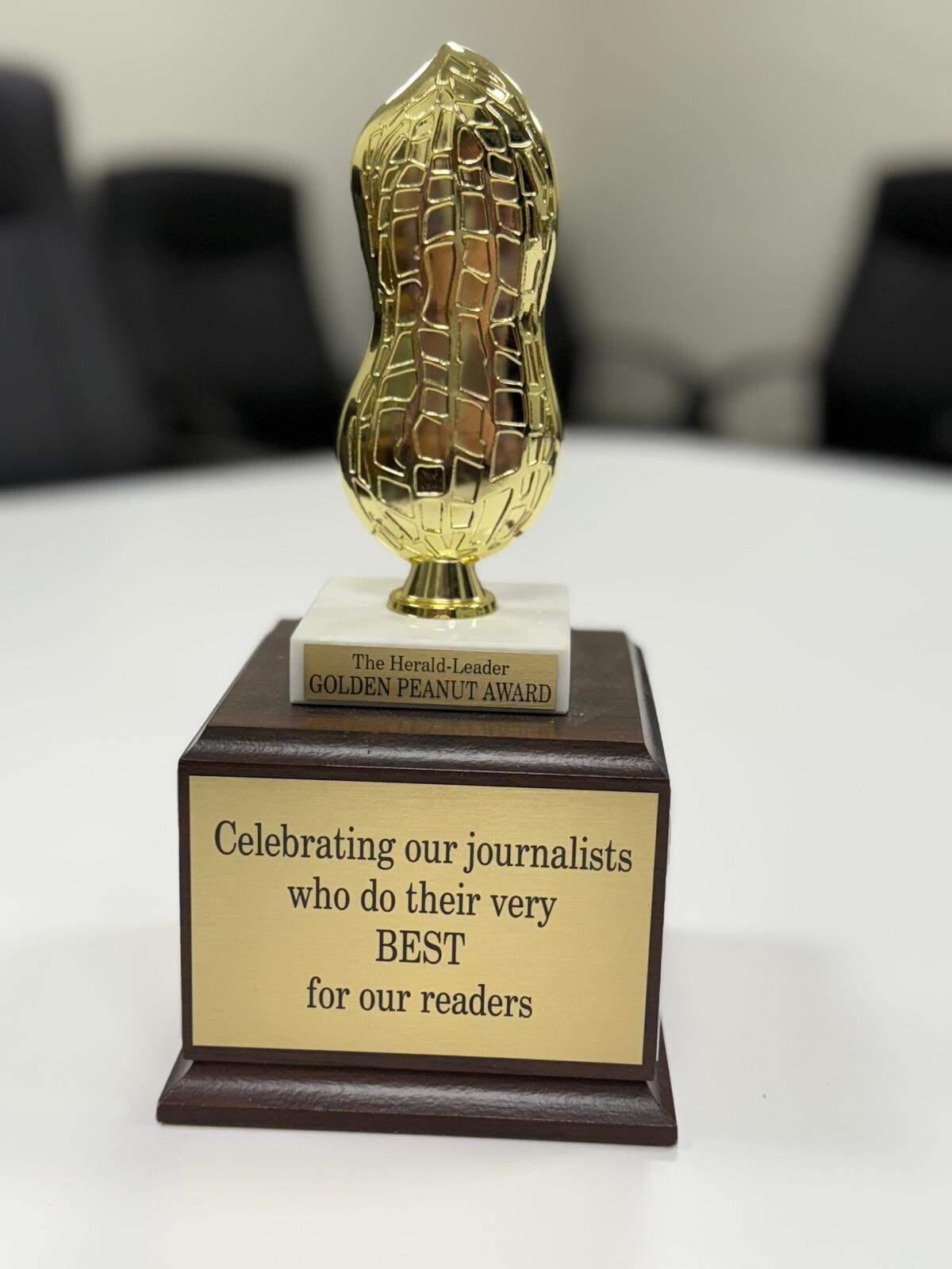
In a March 8, 2004, letter, the former president wrote: “Rosalynn and I are pleased to congratulate you on your new promotion. Your 16 years of service to the Cincinnati Enquirer have prepared you well for this new leadership promotion. However, I know your colleagues will miss your ‘Why Not the Best?’ entreaty and Golden Peanut award.”
It came with a signed photo.
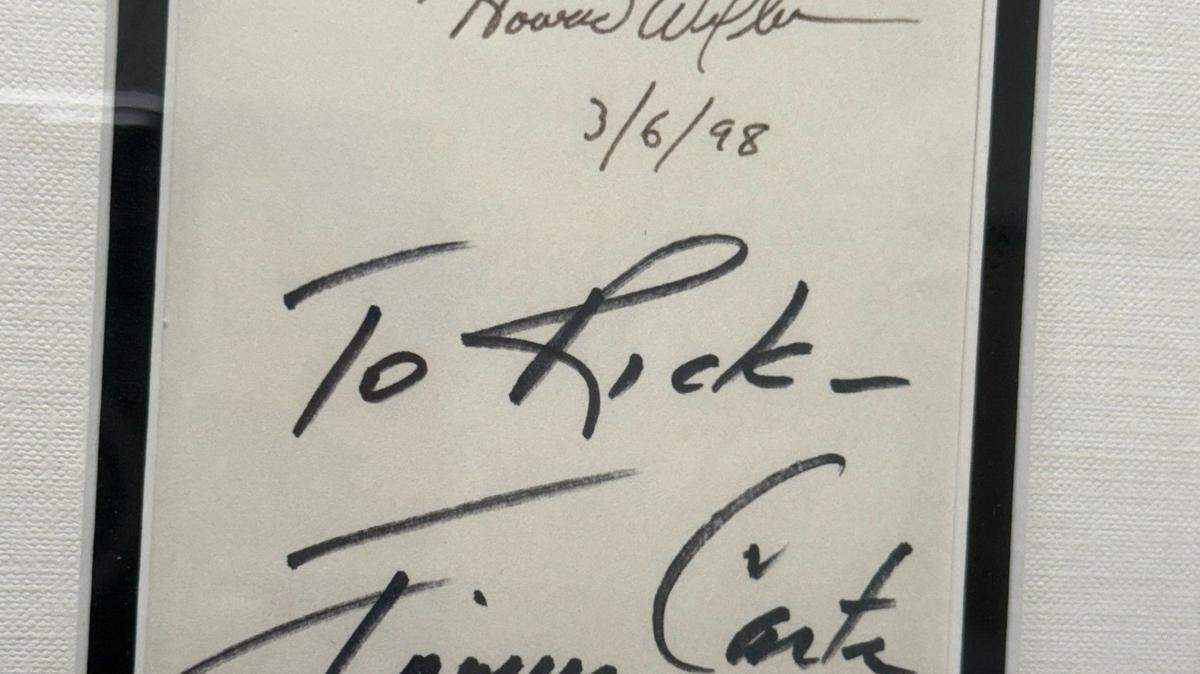
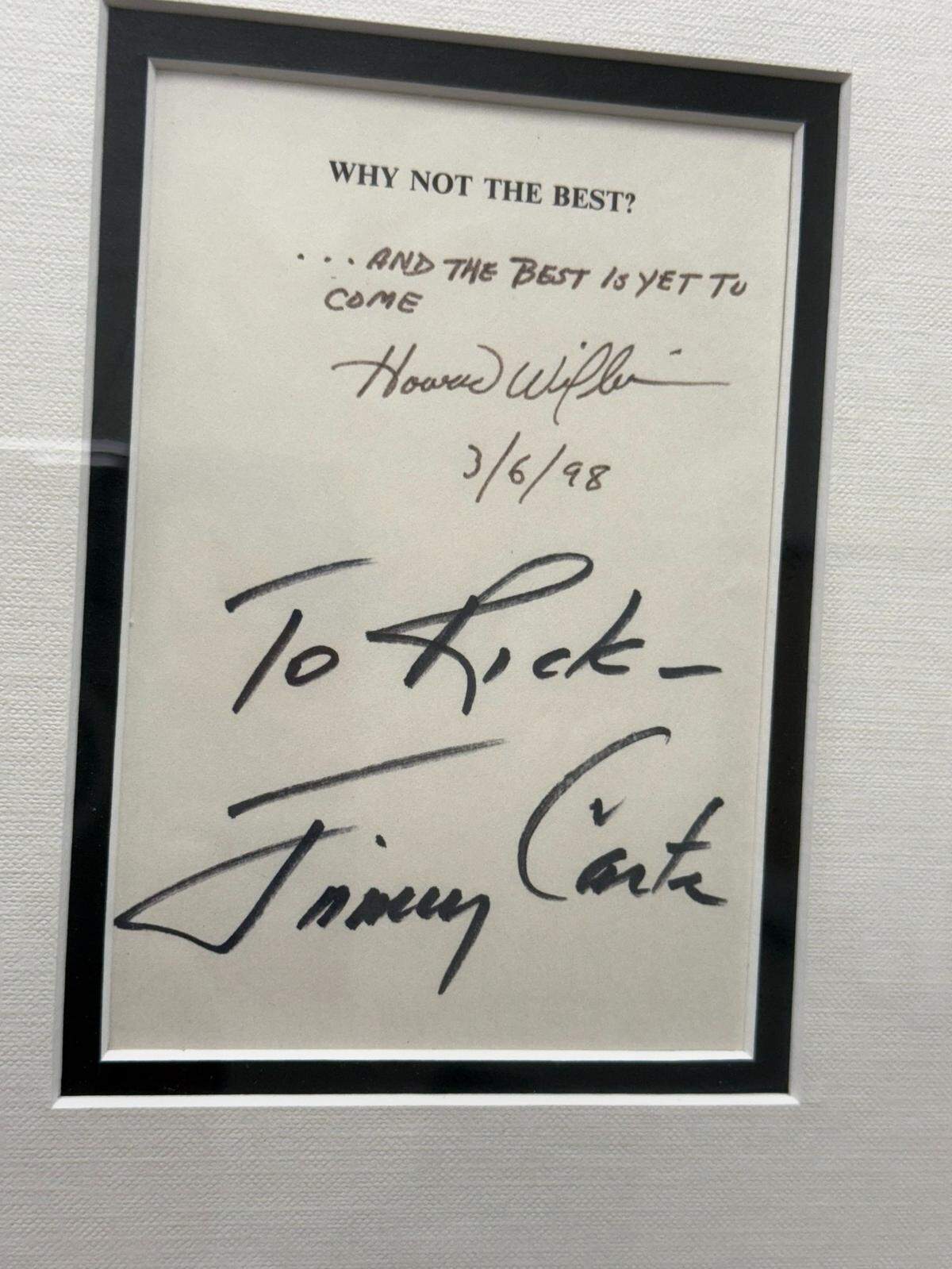
Over the years, I wrote Carter and got a nice note or two in reply. He signed a copy of that 1976 autobiography that inspired me so many years ago back in fourth grade.
And later, as editor of the Des Moines Register, I found a photo of him campaigning before the Iowa caucuses and sent it to Atlanta, hoping he would sign it.
He did.
Those autographed photos, book and his 2004 note are framed and occupy a prominent spot on my wall in my Herald-Leader office.
His smile and signature still inspire me. Every day.
As the world says goodbye to the simple man from Plains who accomplished so much in 100 years, an editor in Kentucky who never personally met the 39th president will offer his own silent farewell Thursday.
Thank you, Jimmy.
I am incredibly grateful for your life and legacy, Mr. President. You undeniably gave the world your best.
And in your century of life, you inspired others to do the same.
Richard Green is executive editor of the Lexington Herald-Leader. Contact him at rgreen@herald-leader.com. Follow him on X at @EditorRAG or on Bluesky at @EditorRickGreen.bsky.social.
This story was originally published January 8, 2025 at 9:49 AM.