A family worries how Mom will cope as KY nursing homes bar visits to curb coronavirus
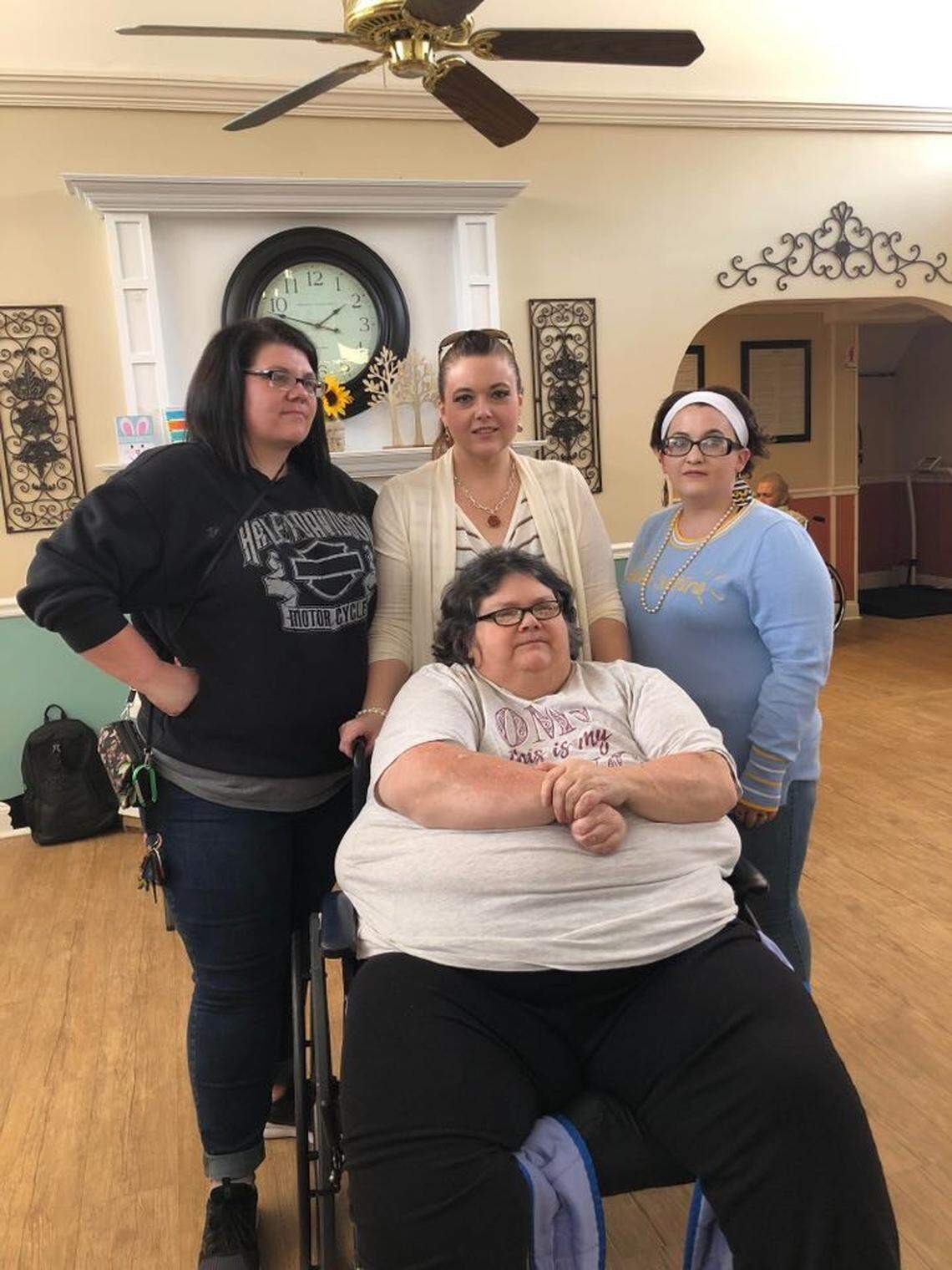
Jamie Smith tries to bring her mom lunch as often as she can at the Prestonsburg Health Care Center in Eastern Kentucky.
Her 61-year-old mom, Sharon Smith, who has lived at the facility since 2011, “depends on it,” said the younger Smith, who works as a pricing coordinator for the IGA in Saylersville.
But that routine is seemingly on temporary hold, Smith and her two sisters, Kayla Stephens and Kelly McElhose, learned on Wednesday, a day after Gov. Andy Beshear recommended long-term care facilities across Kentucky temporarily bar all visitors as a precaution against community spread of the novel coronavirus. The only exception is loved ones of patients receiving end-of-life care.
“I just don’t understand how she’s going to cope with this,” said Smith, 34, who hadn’t talked to her mom since she learned about the no visitation policy.
“Our mother is not going to accept this, and it’s hard. She thrives on visits from us,” said Stephens, 29, who lives in nearby Martin.
It’s an unnerving reality thousands of Kentuckians are facing as state officials try to mitigate further spread of the viral respiratory illness, known as COVID-19. As of Thursday morning, the state had confirmed eight cases — five people from Harrison County, and the others in Fayette and Jefferson counties.
Beshear has advised all Kentuckians to avoid large crowds, including church services and community gatherings; state prisons have temporarily restricted all inmate visitation; and schools are being asked to develop plans for closure on short notice.
People over the age of 60 and anyone living with underlying health issues are most susceptible to the illness, state health officials have said repeatedly, making residents of nursing homes and other long-term care facilities especially vulnerable.
“I understand there are Kentuckians out there who worry they might not be able to see their loved one,” Beshear said Tuesday. But “what could happen if this coronavirus gets into one of those facilities could be devastating.”
The Prestonsburg Health Care Center — owned by Louisville-based Signature HealthCare, which operates more than 30 similar facilities statewide — posted to its Facebook page Wednesday morning that “no individual, regardless of reason, will be allowed to enter a facility, except under certain and very specific circumstances, such as end-of-life situations, or when essential for a resident’s emotional well-being and care.”
A spokeswoman from Signature would not respond to specific questions but said in a separate statement that the facilities would offer “alternative means of communication for people who would otherwise visit,” like FaceTime or phone calls, and urged family members to call their facility for more details.
Stephens said she understands “why this ban has happened, because these facilities want to protect the health of our most fragile state residents.”
Still, her mother struggles emotionally. After being shot six times in Magoffin County in 2011, her mom had a stroke that left her with limited mobility and memory loss.
“We all have children, and sometimes it’s hard to visit her on days, even before the coronavirus situation and ban,” Stephens said. “I fear this will cause the depression she fights daily to weaken her physical health.”
This concern isn’t unusual, said Kentucky’s Long-term Care Ombudsman Sherry Culp, who’s been fielding calls and emails for the last two days from Kentuckians with similar anxieties.
Roughly 35,000 Kentuckians live in licensed long-term care facilities like skilled nursing homes, and personal and family care homes. Around 60 percent of nursing home residents don’t have any visitors at all, she said.
Of the 40 percent who do, many of them “have a family member coming almost every day.” Some bring meals, some help their loved one bathe, some may just come sit by their family member’s bedside and talk for several hours, Culp said.
Though she agrees with Beshear’s directive, “it still has implications” for a lot of these residents and their families. Part of her office’s role in the coming weeks will be to collect complaints about visitor restrictions “so we can understand what their concerns are,” in order to possibly propose a more compromising alternative for visitation to the governor’s office.
That process, for now, includes ensuring facilities aren’t turning people away they shouldn’t be.
Kentucky coronavirus restrictions cause fear
On Tuesday, Culp got a call from an 86-year-old man whose terminally ill wife is a new hospice care patient. He was worried that he wouldn’t be allowed to attend a pre-scheduled meeting with her and hospice providers at her new nursing home.
“He said, ‘Am I not going to be able to get in when I get there?’” Culp said. She told him he counted as an exception to the new rule, asked him to take his cell phone with him, and if for some reason he was turned away, to call her.
“‘If they don’t let you in, you call us right there from the parking lot and we’ll call and remind them that because your wife is dying, there’s an exception,’” she told him. He arrived and was allowed in, he later told her.
Since Culp started work with the department in 1996, “we’ve not been through anything like this before.”
But Culp has been preparing for this possibility for awhile, in part because of frequent guidance given by a longtime mentor of hers, Patricia Hunter. Hunter is the long-term care ombudsman in Washington state, which has seen devastating COVID-19 impacts on some of its long-term care facilities. At one Kirkland nursing home, where residents have been quarantined since mid February, a deadly outbreak of COVID-19 at the facility has so far killed 19 residents.
Hunter recently advised Culp to ask each of Kentucky’s long-term care facilities to provide lists of residents, their phone numbers, and contact information for each of their families, and vice versa, and to do so “before [a] COVID-19 crisis hits,” in case there’s a time in the future when in-person visits are restricted.
“The hope is there won’t be restrictions for a long period of time,” Culp said. Protecting the health of residents takes precedence, but it’s also important to understand “the worry of folks who normally visit all the time and are really a part of their loved one’s lives,” and how “distressing” it will be for families to have that taken away.
On Wednesday afternoon in Saylersville, Smith was nervous to call her mom but planned to after work.
“Having to tell her I won’t be able to visit will just cause her to be more depressed,” she worried.
“My mother is my life,” she said. “I hate to disappoint her.”
This story was originally published March 12, 2020 at 10:26 AM.