Know Your Kentucky

Kentucky Fried History: Remember UK basketball’s first NCAA championship in 1948?

This is the April 7, 2025, edition of Kentucky Fried History, the commonwealth’s premiere history-focused newsletter that takes you through the ink-stained pages of the Lexington Herald-Leader. Get this newsletter delivered to your inbox for free by signing up here.

Folks, you can’t win ‘em all! Kentucky basketball’s season ended at 24-12, in the Sweet 16 of the NCAA Tournament in a strong showing by coach Mark Pope in his first year. What was the most surprising to me about where Pope ended this season is it was, somehow (technically), the second-worst showing among Kentucky coaches in their first year coaching in the NCAA Tournament.

That speaks more to the caliber of coaches this storied program has had more than it does anything else. In 2008, Billy Gillispie lost in the round of 64, which is what makes Pope’s elimination in the Sweet 16 the second worst. Here’s a look at the others:

  • 1942 — Adolph Rupp: Final Four (in an eight-team tournament, that meant Kentucky won one game).
  • 1973 — Joe B. Hall: Elite Eight.
  • 1986 — Eddie Sutton: Elite Eight.
  • 1992 — Rick Pitino: Elite Eight.
  • 1998 — Tubby Smith: NCAA champion.
  • 2010 — John Calipari: Elite Eight.

While it’s true Pope played more games than Rupp, and the tournament looks vastly different than it did 60-odd years ago, the naming conventions for the rounds have persisted, and that gives us some kind of baseline to gauge so I’m running with it.

This year’s conclusion to March Madness will see a matchup between Houston and Florida to win the championship. With that in mind, let’s turn the clock back to UK’s first NCAA championship in 1948 with Adolph Rupp.
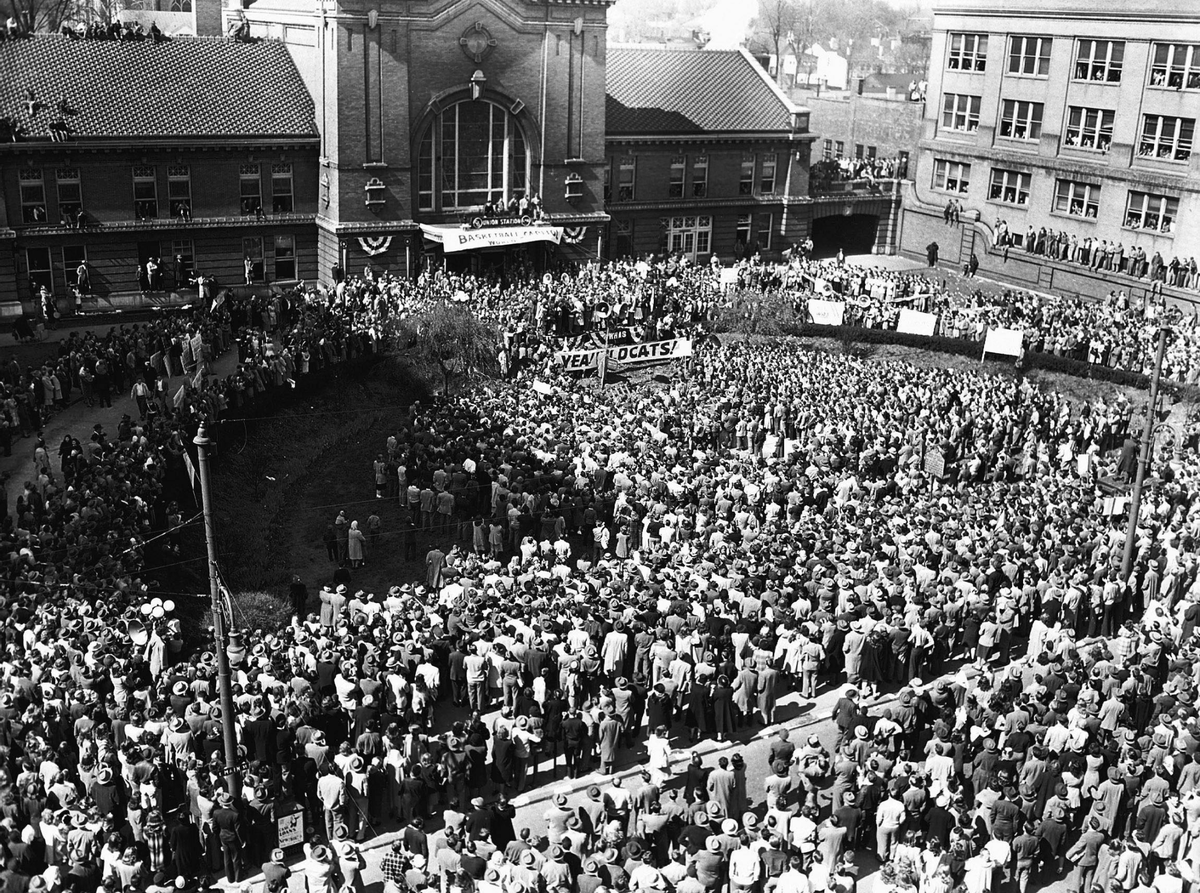
A crowd of 15,000 fans greeted the University of Kentucky’s 1948 NCAA national championship team, April 2, 1948 outside Lexington’s Union Station on Main Street after their arrival from New York. It was the schools’ first NCAA title and the team was met by politicians, three bands and football coach Paul “Bear” Bryant when they stepped of the train. Coach Adolph Rupp and members of the squad were assembled on a platform in front of the door of the station for a brief ceremony. The crowd overflowed all standing room on the ground level around the station, covered building roofs and filled windows furnishing vantage points. Center Alex Groza, the NCAA Tournament’s Most Outstanding Player, was met with a roar of approval after he told the vast crowd, “We said we’d bring home the bacon and we just hope we brought enough.” After the bands played “On, On, U of K,” the team climbed aboard a fire truck for a ride through a decorated downtown Lexington to campus before at least 5,000 more fans.
A crowd of 15,000 fans greeted the University of Kentucky’s 1948 NCAA national championship team, April 2, 1948 outside Lexington’s Union Station on Main Street after their arrival from New York. It was the schools’ first NCAA title and the team was met by politicians, three bands and football coach Paul “Bear” Bryant when they stepped of the train. Coach Adolph Rupp and members of the squad were assembled on a platform in front of the door of the station for a brief ceremony. The crowd overflowed all standing room on the ground level around the station, covered building roofs and filled windows furnishing vantage points. Center Alex Groza, the NCAA Tournament’s Most Outstanding Player, was met with a roar of approval after he told the vast crowd, “We said we’d bring home the bacon and we just hope we brought enough.” After the bands played “On, On, U of K,” the team climbed aboard a fire truck for a ride through a decorated downtown Lexington to campus before at least 5,000 more fans. John C. Wyatt

Madison Square Garden, New York - “Kentucky’s magnificent Wildcats heaped more laurels upon their already well-laden heads here tonight as they took the National Collegiate Athletic Association basketball crown by defeating Baylor University, Western regional champion, 58-42, before 16,174 fans.” - Babe Kimbrough, Sports Editor, Lexington Herald, March 24, 1948.

Alex Groza, captain and center of the “Fabulous Five” (more on that in a bit) was selected as the most valuable player in the tournament by a vote of sports writers.

To hear the reporters and editors in 1948 tell it, the outcome of this game was never in doubt and always looked like an easy win for Kentucky. The Baylor Bears were “surprised winners at Kansas City over favored Kansas State,” and while they fought valiantly, they “were no match for Coach Adolph Rupp’s great band of hoopsters.

The lead for the Cats piled up early in the game as they jumped to 7-0 at the end of the first five minutes and then increased their advantage to 13-1 before the Bears tallied their first fielder. On several occasions the Bears managed to close the gap with the Cats to a “point where they might become dangerous,” but the Cats gained back a comfortable lead each time.
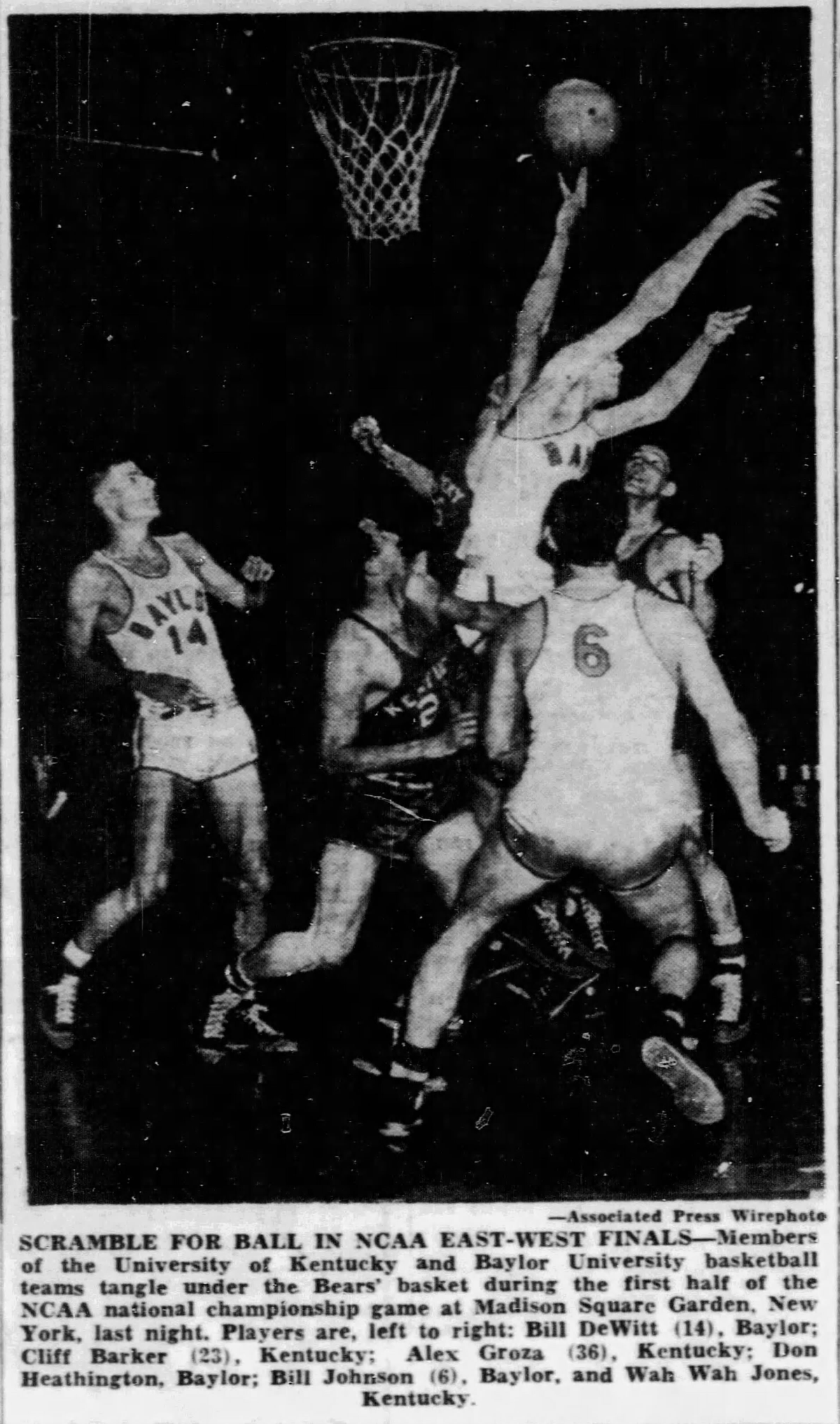
Associated Press wire photo of Kentucky playing Baylor in the 1948 NCAA Tournament.

Would you believe it wasn’t quite yet over for this team, or for the “Fabulous Five” I mentioned above?

Right after their win over Baylor, the Wildcats were due to face the University of Louisville in the first round of the Olympic Trials in Madison Square Garden that coming weekend. As luck would have it, my colleague, and our UK men’s basketball beat writer, Ben Roberts, wrote about this particular topic just a few years ago.

(Ben writes our Beyond the Arc newsletters focused solely on UK basketball. You can sign up for that here.)

The tournament for the trials consisted of two brackets — one for the top college teams, and another for the top squads in AAU basketball.

The USA Basketball Committee decided that the 1948 Olympic roster would consist of an equal number of players from each level, with the teams that won their respective brackets getting the most players on the final squad.

Kentucky breezed through its side, beating Louisville by 34 points and winning an NCAA title rematch with Baylor by 18 points. On the other side, the seven-time AAU champion Phillips 66ers (also known as the Phillips Oilers) made it through, setting the stage for a big game at the Garden.

A crowd of 18,475 watched the Phillips team — an Oklahoma-based roster of older players who had already exhausted their college basketball eligibility — defeat the younger Wildcats, 53-49.

Despite the loss, the Wildcats put five players — Cliff Barker, Ralph Beard, Groza, Wallace “Wah Wah” Jones and Kenny Rollins (aka the Fabulous Five) — on the 14-man Olympic roster.

The 1948 Olympics marked the first return of the Summer games since 1936, the games were not held in 1940 or 1944 due to World War II.

March was a busy month for the Wildcats in 1948 but before some of them could go off to London for the Olympics, they were due back home for a grand welcome.
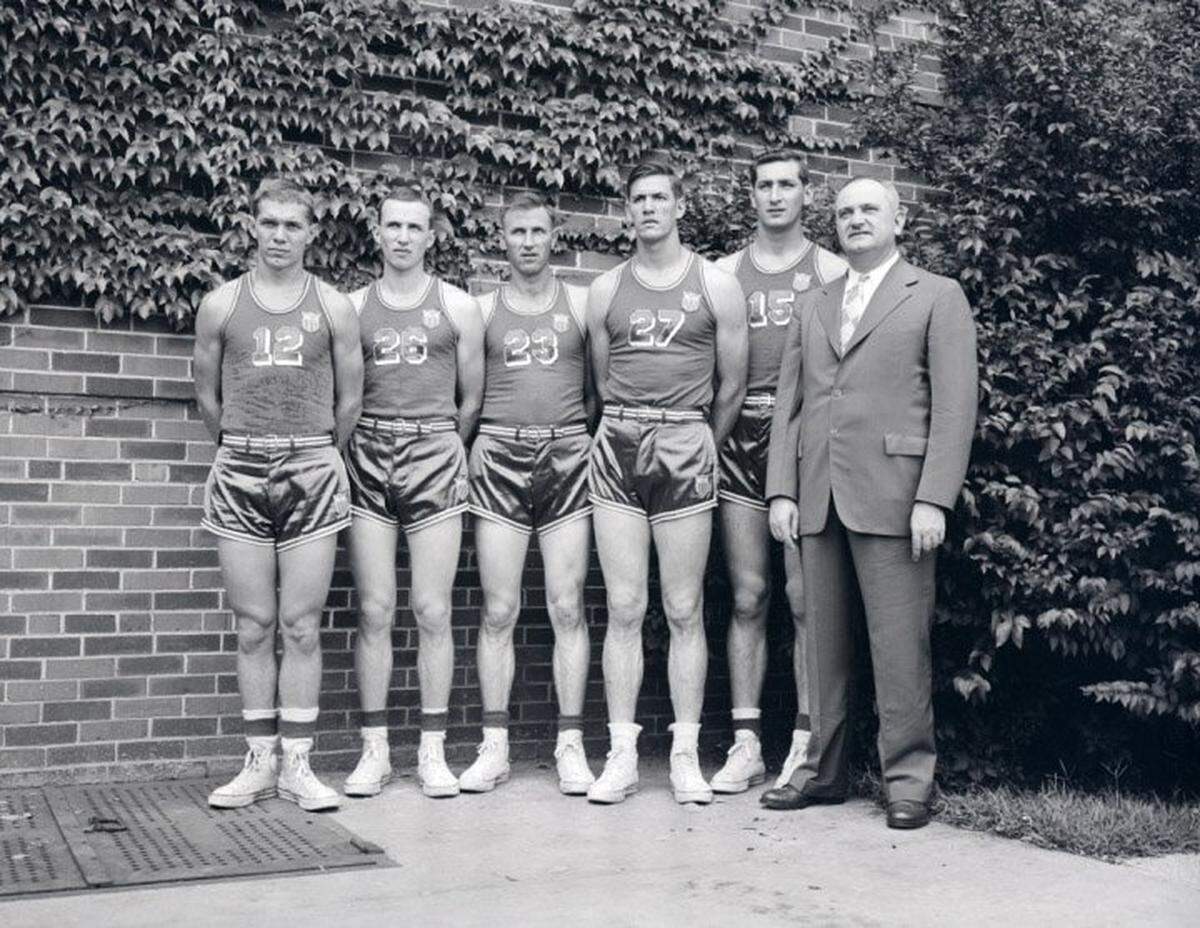
Kentucky men’s basketball players in their 1948 Olympic uniforms, from left: Ralph Beard, Kenny Rollins, Cliff Barker, Wallace “Wah Wah” Jones and Alex Groza, along with Coach Adolph Rupp
Kentucky men’s basketball players in their 1948 Olympic uniforms, from left: Ralph Beard, Kenny Rollins, Cliff Barker, Wallace “Wah Wah” Jones and Alex Groza, along with Coach Adolph Rupp Herald-Leader file photo

“Waiting for the train to come in seemed to be the major occupation in Lexington yesterday as more than 10,000 persons jammed the Union Station area to welcome the Blue Grass’ most famous sons — University of Kentucky’s national collegiate basketball champions.” - Tom Duncan, Lexington Herald, April 3, 1948.

Among those 10,000 souls waiting to greet the team at Union Station included Lt. Gov Lawrence Wetherby, Lexington Mayor Tom Mooney, acting UK President Leo Chamberlain, three bands, a “red-haired tot” who almost fell form the station roof while trying to catch the team’s attention and a partridge in a pear tree.

The throng of people then went from the station to Alumni Gym, where a more formal program was held and speeches were given. Following the playing of “On, On, U. of K.” by the band, the Wildcats climbed aboard a fire truck for a “triumphal ride through decorated downtown Lexington and on to the campus before at least 5,000 more Kentucky rooters.”

The university’s first NCAA win came in Rupp’s 18th season as coach. Rupp, who coached the team from 1930 to 1972, would go on to win four NCAA championships for Kentucky, appear in 20 NCAA tournaments and have six NCAA Final Four appearances. However, his tenure, and also the career of Alex Groza, would fall under the shadow of the 1951 point-shaving scandal.

It was uncovered that Groza, Ralph Bear and Dale Barnstable threw Kentucky’s first-round NIT game against Loyola at Madison Square Garden in 1949, and the three were arrested. Evidence indicated 11 of Kentucky’s games were fixed during the 1948-49 season.

That’s a story for a different time., perhaps

I’ll close us out today with a look back at some of Kentucky’s other NCAA wins, and losses alike. See you back here next week!

.
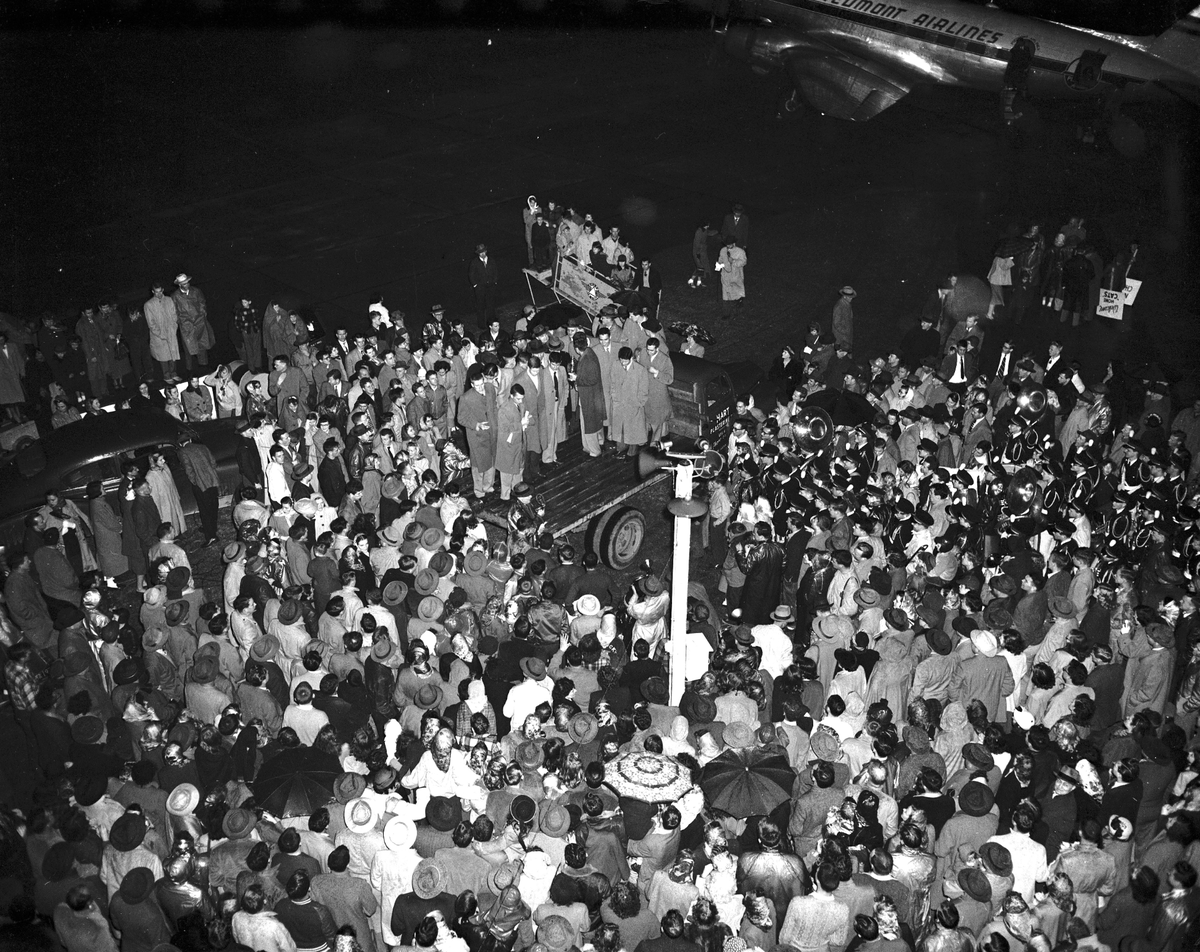
University of Kentucky basketball players were surrounded by a crowd of 1,500 rain-soaked fans and the UK band March 28, 1951 on their return to Blue Grass Field after winning the NCAA National Championship. The Cats beat Kansas State 68-58 the day before in Minneapolis, claiming their third basketball title in four years. After exiting the plane, the team climbed aboard a truck, displaying the trophy. Some Chamber of Commerce officials held a ceremony praising their win and each team member was given gift certificates from a local businessman. The team was then loaded into convertibles, and led by the UK band, marched from the West Main Street viaduct to Rose Street. More than 800 cars, with horns blaring, participated in the parade. Coach Adolph Rupp did not accompany the team home. He stayed in Minneapolis to attend the final sessions of the NCAA coaches convention.
University of Kentucky basketball players were surrounded by a crowd of 1,500 rain-soaked fans and the UK band March 28, 1951 on their return to Blue Grass Field after winning the NCAA National Championship. The Cats beat Kansas State 68-58 the day before in Minneapolis, claiming their third basketball title in four years. After exiting the plane, the team climbed aboard a truck, displaying the trophy. Some Chamber of Commerce officials held a ceremony praising their win and each team member was given gift certificates from a local businessman. The team was then loaded into convertibles, and led by the UK band, marched from the West Main Street viaduct to Rose Street. More than 800 cars, with horns blaring, participated in the parade. Coach Adolph Rupp did not accompany the team home. He stayed in Minneapolis to attend the final sessions of the NCAA coaches convention. Herald-Leader staff photo
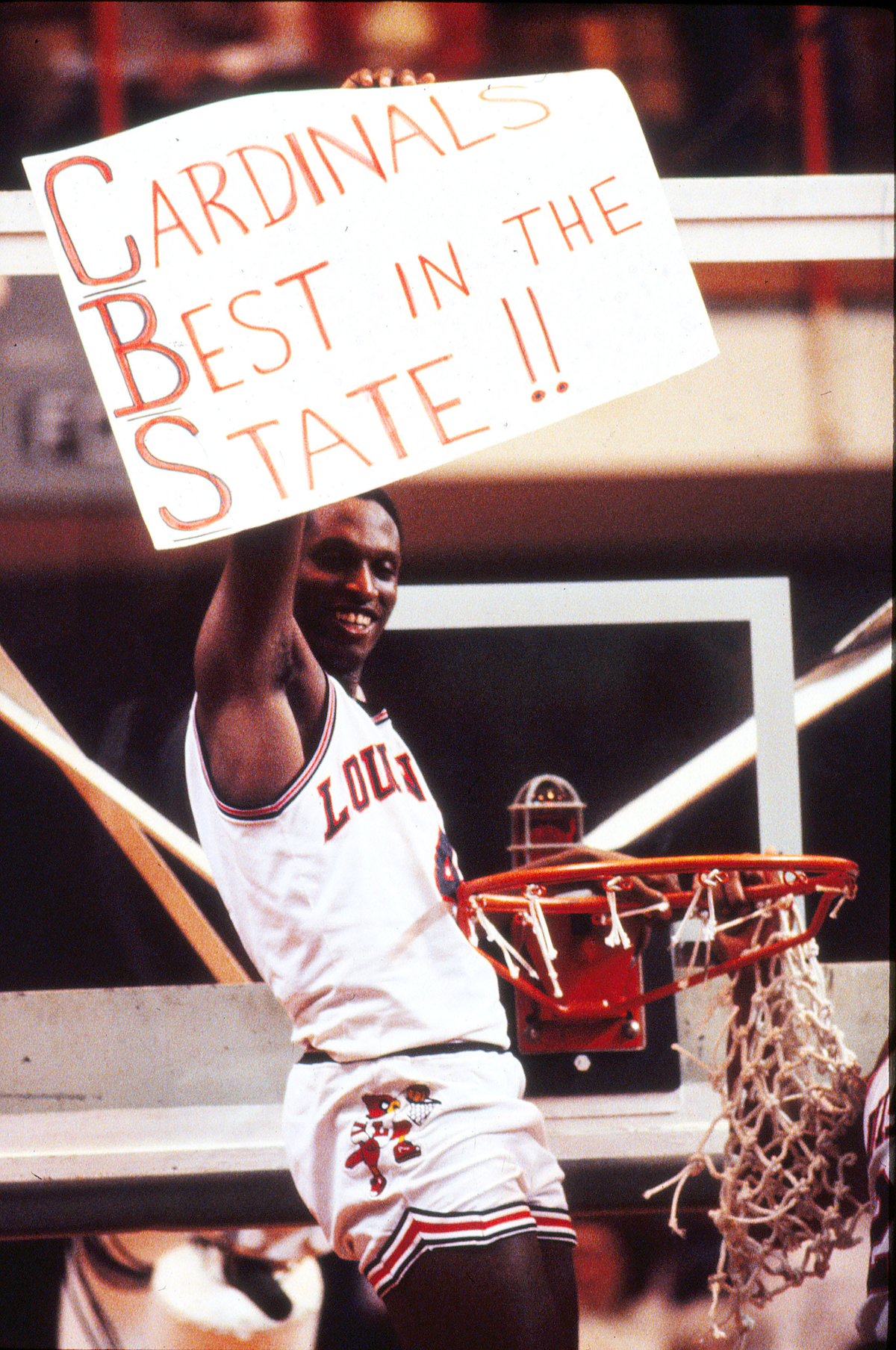
Louisville’s Lancaster Gordon celebrated March 26, 1983 after the Cardinals beat rival Kentucky, 80-68 in overtime, during the NCAA Mideast Regional Finals in Knoxville. It was an emotional, much anticipated battle before a capacity crowd of 12,489 at the University of Tennessee’s Stokely Athletics Center. The two schools had not met on the hardwood since the 1959 NCAA Tournament and not in the regular season since 1922. Kentucky was following a policy set by Adolph Rupp; they refused to play other in-state foes regardless of the strength of their teams. By 1983, U of L coach Denny Crum had already taken Louisville to four Final Fours, won the 1980 national title and clearly built a program that, on the floor, was at the least UK’s equal if not its superior. Yet the Cats wouldn’t play the Cards, but on this day, they had to to advance to their ninth Final Four. U of L missed 16 of its first 20 shots but turned up their press in the second half. Within two minutes, an 11-point second-half UK lead was cut to one. Kentucky’s Jim Master made a game-tying shot to force overtime but the Cards scored the first 14 points of the extra period. Gordon led all scorers with 24 and was named Most Valuable Player of the Regional. Facing pressure from fans and even the state legislature, the teams renewed their regular season match-up the following season and have faced each other every year since.
Louisville’s Lancaster Gordon celebrated March 26, 1983 after the Cardinals beat rival Kentucky, 80-68 in overtime, during the NCAA Mideast Regional Finals in Knoxville. It was an emotional, much anticipated battle before a capacity crowd of 12,489 at the University of Tennessee’s Stokely Athletics Center. The two schools had not met on the hardwood since the 1959 NCAA Tournament and not in the regular season since 1922. Kentucky was following a policy set by Adolph Rupp; they refused to play other in-state foes regardless of the strength of their teams. By 1983, U of L coach Denny Crum had already taken Louisville to four Final Fours, won the 1980 national title and clearly built a program that, on the floor, was at the least UK’s equal if not its superior. Yet the Cats wouldn’t play the Cards, but on this day, they had to to advance to their ninth Final Four. U of L missed 16 of its first 20 shots but turned up their press in the second half. Within two minutes, an 11-point second-half UK lead was cut to one. Kentucky’s Jim Master made a game-tying shot to force overtime but the Cards scored the first 14 points of the extra period. Gordon led all scorers with 24 and was named Most Valuable Player of the Regional. Facing pressure from fans and even the state legislature, the teams renewed their regular season match-up the following season and have faced each other every year since. Charles Bertram
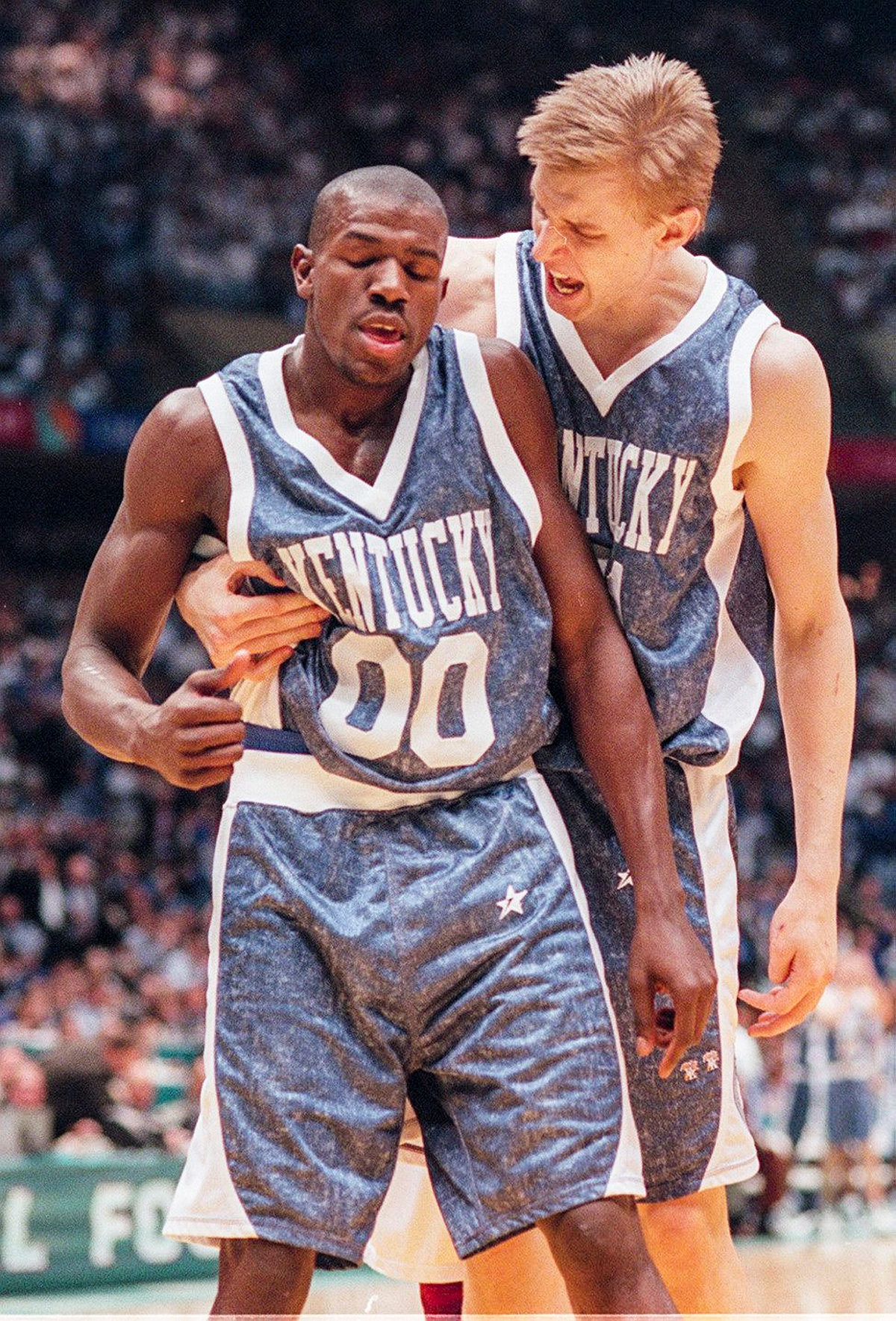
UK’s Mark Pope hugs Tony Delk after Delk was fouled while making a basket during the second half of the National semi-final game against a John Calipari coached UMass team in East Rutherford, N.J., March 30, 1996. UK won 81-74 and would go on to beat Syracuse in the NCAA title game two days later for the school’s sixth national championship.
UK’s Mark Pope hugs Tony Delk after Delk was fouled while making a basket during the second half of the National semi-final game against a John Calipari coached UMass team in East Rutherford, N.J., March 30, 1996. UK won 81-74 and would go on to beat Syracuse in the NCAA title game two days later for the school’s sixth national championship. Charles Bertram
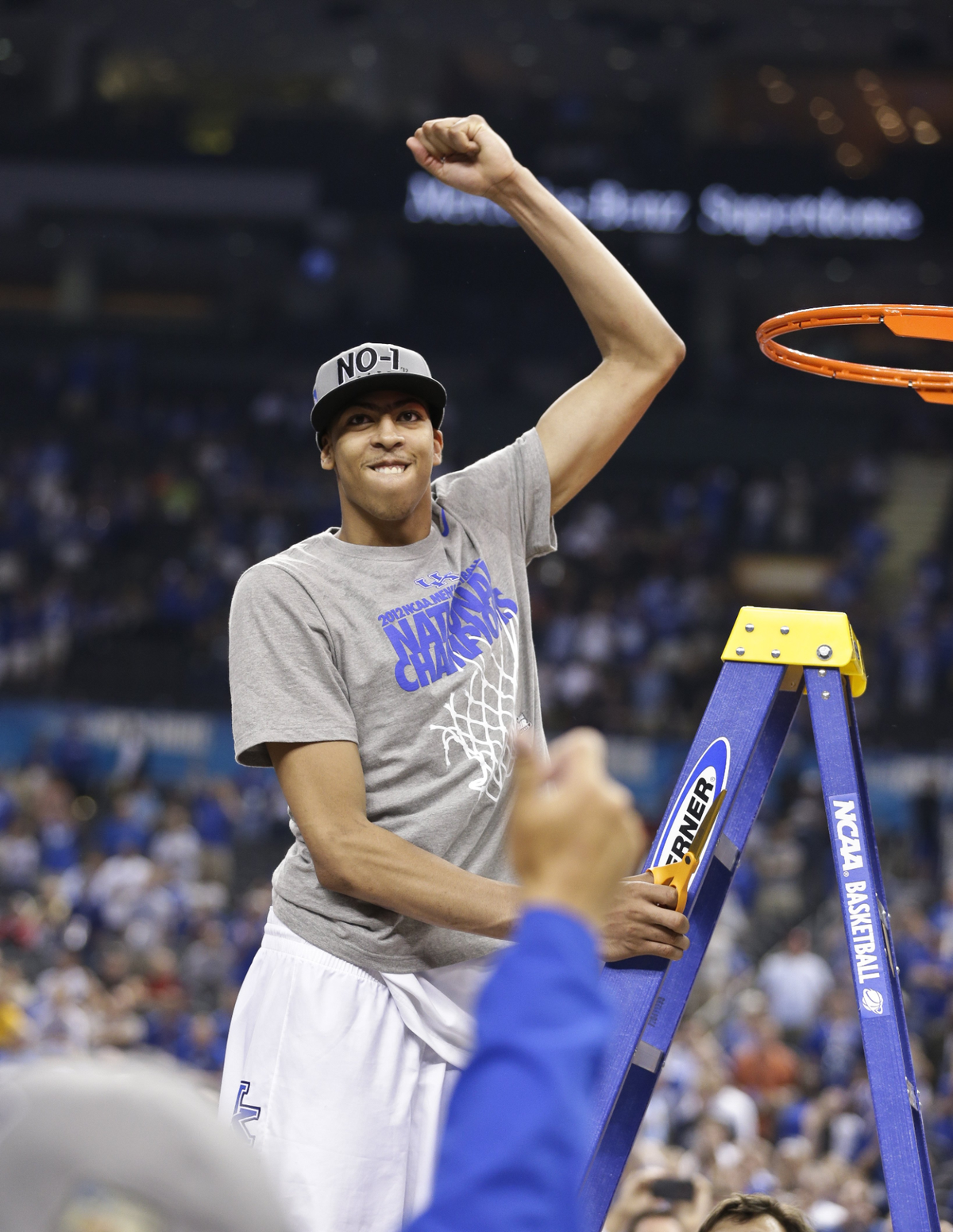
Kentucky’s Anthony Davis pumped a fist to the crowd after UK defeated Kansas 67-59 for the program’s eighth national championship, April 2, 2012 in New Orleans. Two nights earlier UK faced rival U of L for the first time ever in the Final Four. John Calipari’s Wildcats defeated Rick Pitino’s Cardinals 69-61 in the much-anticipated matchup. For the two games, Davis was named the Final Four’s Most Outstanding Player, scoring 24 points, grabbing 30 rebounds and blocking 11 shots
Kentucky’s Anthony Davis pumped a fist to the crowd after UK defeated Kansas 67-59 for the program’s eighth national championship, April 2, 2012 in New Orleans. Two nights earlier UK faced rival U of L for the first time ever in the Final Four. John Calipari’s Wildcats defeated Rick Pitino’s Cardinals 69-61 in the much-anticipated matchup. For the two games, Davis was named the Final Four’s Most Outstanding Player, scoring 24 points, grabbing 30 rebounds and blocking 11 shots Mark Cornelison

This story was originally published April 7, 2025 at 1:05 PM with the headline "Kentucky Fried History: Remember UK basketball’s first NCAA championship in 1948?."
Andrew Henderson
Lexington Herald-Leader
Andrew is the deputy audience editor for McClatchy’s mid-sized and smaller newsrooms. His home newsroom is the Lexington Herald-Leader and he occasionally writes opinion columns for the paper. He was previously the editor of the Oldham Era and is a graduate of Western Kentucky University. Andrew is from Olive Hill in Carter County.
Get one year of unlimited digital access for $159.99
#ReadLocal

Only 44¢ per day

SUBSCRIBE NOW