
Lexington history: Helen Caise, the first Black student to integrate city’s schools
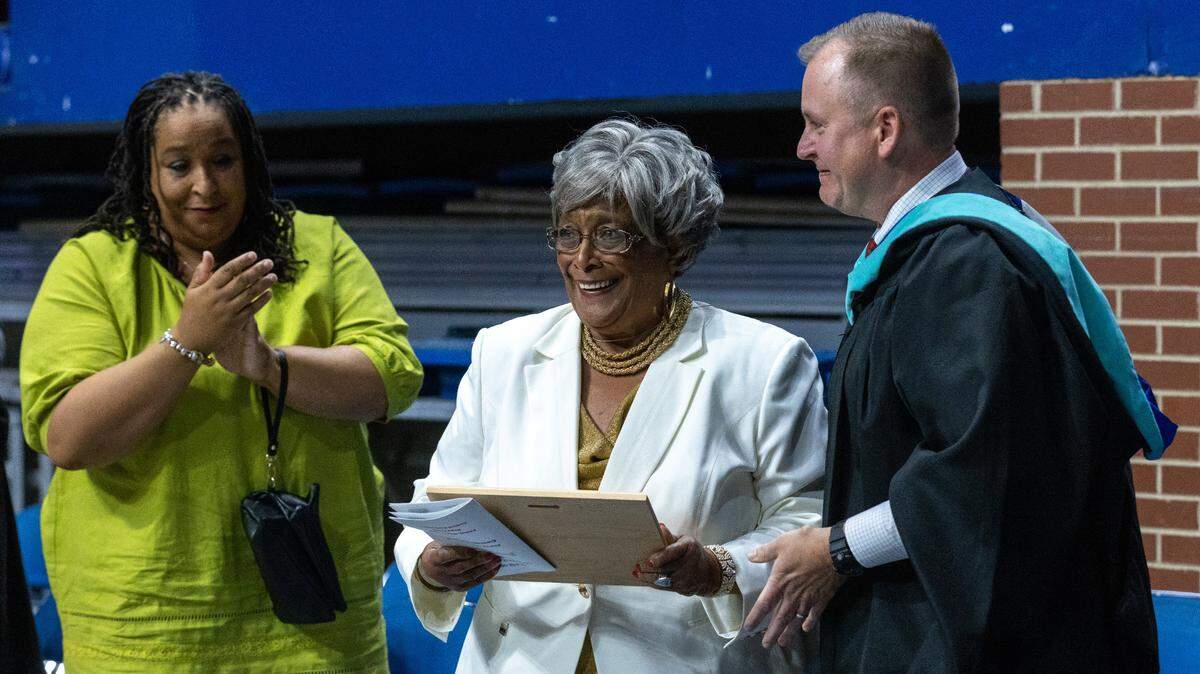
Editor’s Note: As Lexington celebrates the 250th anniversary of its founding, the Herald-Leader and kentucky.com each day throughout 2025 will share interesting facts about our hometown. Compiled by Liz Carey, all are notable moments in the city’s history — some funny, some sad, others heartbreaking or celebratory, and some just downright strange.
When 16-year-old Helen Caise registered for summer classes at Lafayette High School, she didn’t think she was making history.
But on June 7, 1955, she became the firstBlack student to attend a white school in Lexington. At the time, one year after Brown v. Board of Education ruling, Lexington and Fayette County schools were segregated.
Caise was a sophomore at the original Douglass High School, a predominantly Black school, and wanted to attend summer school.
Caise had been encouraged to take summer school classes by her principal Theda Van Lowe and her homeroom teacher, Mary Roach. County Superintendent N.C. Turpen made the decision to integrate the summer program, and his decision was backed by the board of education.
Because Lafayette was the only summer program in the county school system, Caise was admitted. Student attended classes for three hours a day for seven weeks. After finishing summer school, Caise returned to Douglass as a junior.
But it wasn’t an easy summer.
Caise was the only Black student enrolled in the program, and her attendance made the news. The Lexington Herald and the Lexington Leader, the city’s newspapers at the time, wrote stories about Caise attending the classes and included the family’s address, a common practice at the time.
As a result, the family received death threats.
Nine family members accompanied Caise to and from school each day to ensure she arrived safely. Caise was able to finish the summer school program, but retaliation against her family ruined them financially.
According to later reports by the Herald-Leader, her father John Caise would not allow pictures of her to be taken. For her protection, he slept outside in the car after the summer school session started.
“My father would sit out in the car and guard our house, but he never told me why,” she told the paper in 2021. “He never told me why. I know we were never approached by the police department for protection.”
Caise graduated from high school and went on to attend the University of Kentucky before transferring to Kentucky State University — the state’s only public historically Black university — to study teaching. Caise graduated and moved to Cleveland, Ohio, where she taught for 45 years.
Fayette County Public Schools did not officially desegregate all of its schools until a court order in the 1970s.
Now Helen Caise Wade, she returned to Lexington after her retirement.
In 2021, the Lexington Herald-Leader apologized to Caise Wade for publishing her address in 1955.
“Although hardly anyone who worked at the papers in 1955 is still alive, we think it’s important to recognize the harmful ways that the white power structure as represented in a newspaper did and still can harm marginalized communities,” the editorial board wrote.
“The coverage from that time got it wrong, and it’s sickening to think of the effects that had on the lives of a brave teenager and her family in this community,” former Herald-Leader Editor Peter Baniak said in the editorial. “Helen Caise Wade is an inspiration, for the barriers she broke, the resolve she showed and the countless lives she has touched through education in the many years since. After all this time, an apology seems woefully insufficient, but it is most certainly necessary.”
Have a question or story idea related to Lexington’s 250-year history? Let us know at 250LexKy@gmail.com.
This story was originally published June 27, 2025 at 5:00 AM.