
Red, white and hmm ... What Lexington thinks about patriotism this July 4th
Since the beginning of 2025, there has been no pause in the unfolding of history.
War continues to rage in the Middle East and Ukraine. Tariff tussles are still grabbing headlines.
Horrific weather in our commonwealth has claimed nearly 50 Kentuckians since the holidays.
And President Donald Trump, who took office a second time on Jan. 20, has made policy decisions that have split the country.
From immigration and an uncertain economy to bunker-busting bombs in Iran and a Congressional brawl over the “One Big Beautiful Bill,” bill, we reach this year’s halfway point with two distinct camps emerging.
“I’m not too proud right now,” said 17-year-old Gino Calipo, who’s critical of some of Trump’s policies.
Nonplussed, Scott Evans, a 59-year-old farmer from Madison County, is soaking up this red-white-and-blue Fourth of July.
“It just means being proud to be an American,” he said.
This holiday is the formal moment when the nation comes together to celebrate its founding.
It’s also an opportunity to ask a simple question:
What does patriotism and national pride mean to you at this historical moment and 249 years after we declared our independence from Great Britain?
Three Lexington Herald-Leader interns combed the streets of Lexington and Central Kentucky to find answers to the question.
America has some problems
Calipo, an incoming University of Kentucky freshman, said he is worried for his younger friends back home in Northern Kentucky.
“From how I see it, it’s just getting more expensive and more difficult to live than it has been in previous generations,” he said. “I’m kind of scared for them to grow up into this, along with all their problems.”
For some, like Juniper Thorne, a 32-year-old transgender woman from Dayton, Ohio, patriotism is not just loving one’s country above everything else — it involves loving the people who are part of it.
Historically, Thorne said, Americans have weaponized the concept of being proud of one’s people. For her, being patriotic also means being mindful of a country’s faults.
“When you’re a kid, your understanding of patriotism is Fourth of July, fireworks, flags, stuff like that,” she said. “As you grow older, you know, you start seeing, ‘Oh, there’s some problems here.’”
As a transgender person in the U.S., Thorne said she finds it difficult to see pride in being an American.
According to data released by Everytown for Gun Safety, the number of transgender people who were murdered in the country has doubled between 2017 and 2021.
“The Fourth of July, in particular, has a lot of jingoist, kind of nationalist tendencies right now, it feels like,” Thorne said. “I would like to be able to celebrate (the Fourth of July) happier someday.”
Thorne said she will take the time off and rest but will not celebrate it this year.
Loving those who run the country
On the other side, Julie Fleming, a 35-year-old from California, said being patriotic implies expanding love to the authorities who run the country.
“You always hope that the people put in charge, through democracy, that they will be making decisions based on the best well-being for its people,” Fleming said.
Fleming said she appreciates the diversity of other cultures, but her pride in saying she is from America has not changed over the years.
“Regardless of what’s going on in Washington, I could still have a lot of love for other people around me,” she said. “I could still have a lot of love for my country.”
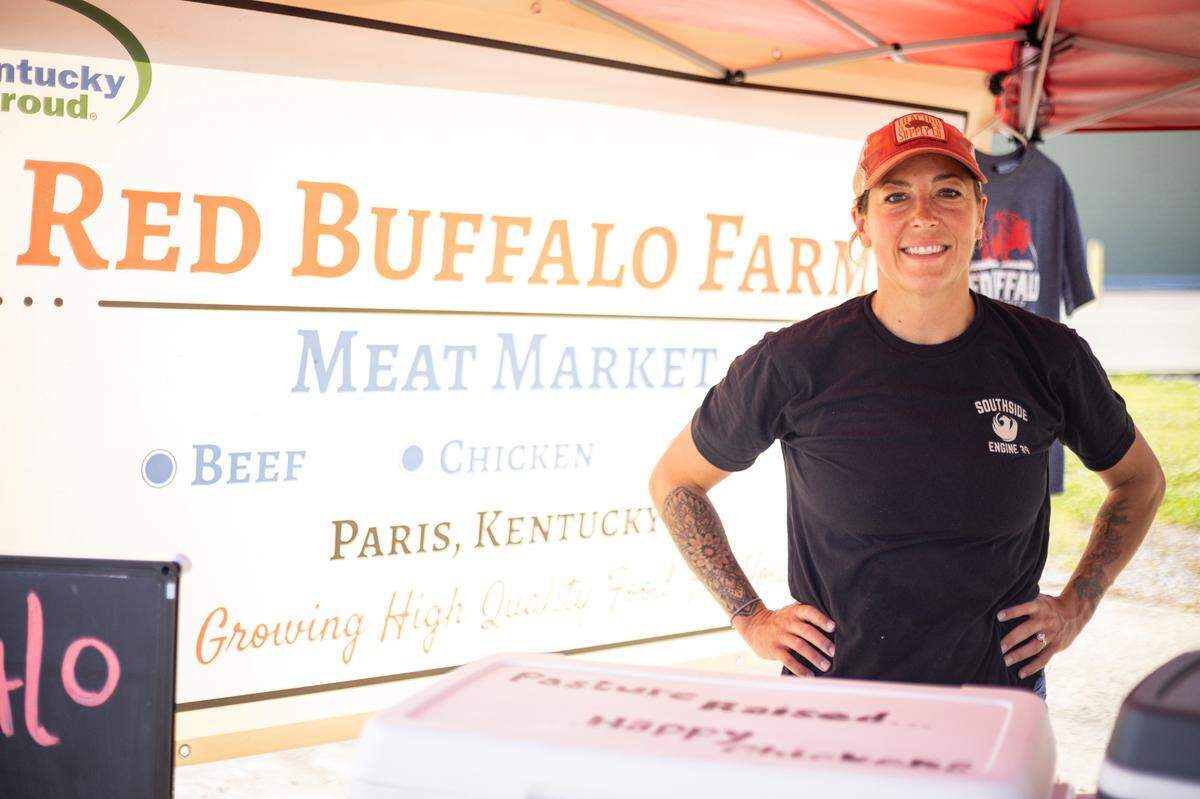
Fleming said she is even more excited about celebrating the Fourth of July in Kentucky, where fireworks are legal.
In Fayette County, if a person does not have a permit, they can buy only hand-held and ground-based devices, according to Lexington’s fireworks code.
Coming from Arizona, Fleming and her husband worked as public servants in Phoenix and saw farming as a way to make “a big change” and spend more time with their 8-year-old child.
Kentucky, then, became their new home — a place where they have celebrated the Fourth of July three times so far.
“We could do this finally and celebrate and (have) fun in a colorful way,” Fleming said.
Patriotism is fueled by a community’s values
Bringing a colorful and diversified mosaic of culture also belongs to the lives of those born outside the United States, like Andres Cruz, a 56-year-old man from Costa Rica.
Patriotism means being an active community member who makes society reach its full potential, he said. It is looking at the best for the “new land” that a person has adopted.
“Being patriotic is being loyal to the values of community, progress, justice (and) equality,” Cruz said.
Whether in or outside the United States, Cruz said he has learned that one can be poor and hungry in any country. For him, the main question is not where a person is from or lives, but what is built for and in it.
Cruz also said he does not appreciate how Americans typically emphasize the straight connection between patriotism and war.
“At the end, it’s just benefiting very specific groups,” Cruz said.
From his previous experiences going to Lexington downtown to celebrate the Fourth of July, Cruz said he no longer feels safe, especially “with all these shootings going on.”
“I think sometimes with the flag of patriotism, we invoke actions that are not really necessarily patriotic,” Cruz said.
Truman Holmes, a 23-year-old man from Georgetown, shares Cruz’s sentiment on patriotism’s reliance on community. However, Holmes said his idea of patriotism hasn’t always been the same.
For Holmes, patriotism used to coexist with a pride in national politics and foreign affairs.
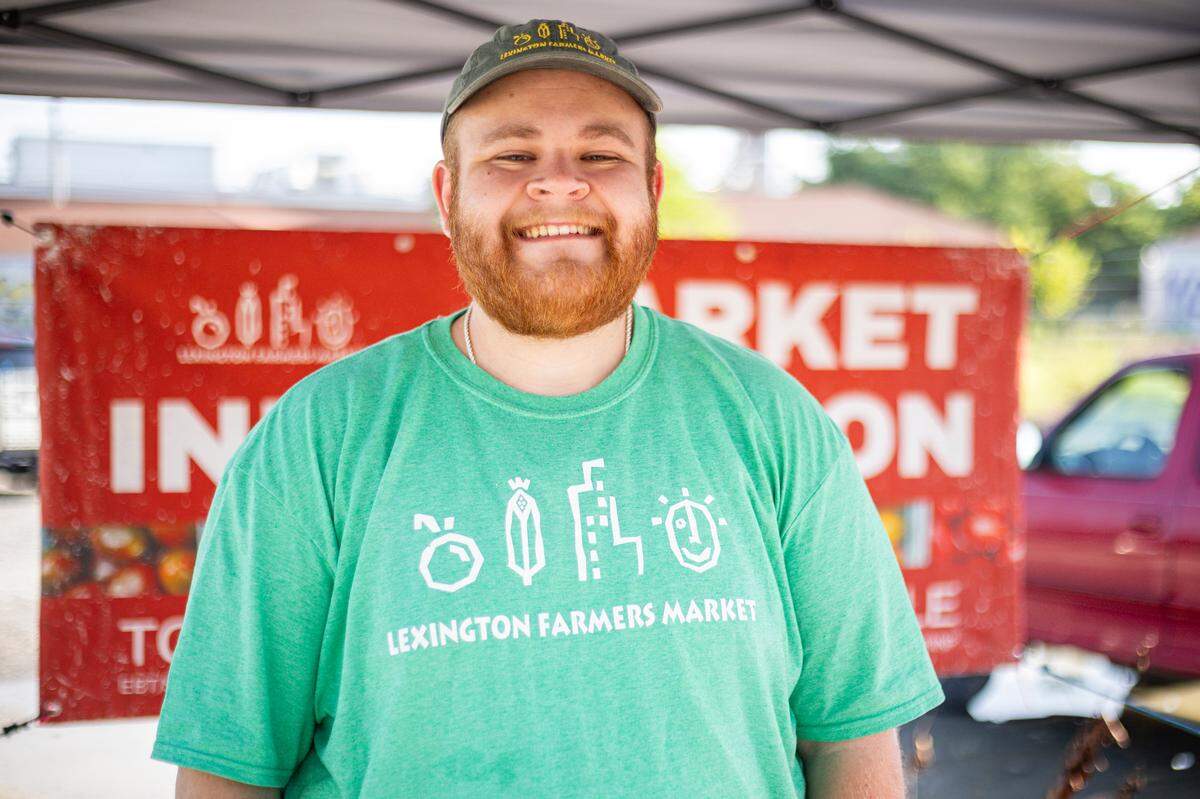
Now, Holmes said, patriotism is something that too often gets “conflated” with politics. Rather than showing support to politicians, Holmes believes patriotism is showing support to those in your community.
“I think it means supporting the people around you … the people that have a direct impact on your life,” Holmes said.
Holmes said the change from national to local pride was gradual, occurring over the past three years, as he started to realize “really what matters in your life is that sense of community.”
Blending passion with patriotism
That community sometimes can be thousands of miles away, just like for Justin Yan, a 27-year-old from Taiwan currently visiting his brother in Lexington.
Yan said he sees more extremism in Taiwan, where people, unlike him, lean toward politics more intensely.
“But in the U.S., I feel like everyone is kind of supportive in a good way or bad way,” Yan said. “People in here, they are. . .very passionate sometimes.”
Yan said that back home, there may not be the same Independence Day parades as in the United States, but he still sees the same urge to express national pride in almost natural ways.
“If there’s a team competing with your country, you always support your home team,” Yan said.
Cheering and belonging to a community is what Cylvia Baskin, a 20-year-old from Memphis, Tenn., resonates with, which has helped her understand the meaning behind patriotism.
“I don’t want to say (patriotism is) accepting your country, but understanding where you’re coming from,” she said.
For Baskin, being patriotic also means loving one’s country genuinely — to the point of wanting to fix its problems, which for her must be acknowledged.
As a Black young woman, Baskin said she does not plan on celebrating the Fourth of July this year.
“My celebration was Juneteenth, when all the slaves were freed,” Baskin said.
Evans, the Madison County farmer, said he’s always been proud to be an American and has “never been ashamed of the country, ever.”
He will be out working in the field all day on the Fourth of July. When asked if he does anything special to show his pride this time of year, Evans said no.
“I don’t do anything different,” Evans said. “It’s just a normal everyday thing for me.”
Patriotism can be polarizing for some
Kevin Kristoff, 57, from Jamestown, Kentucky, isn’t consistently patriotic.
He said his patriotism ebbs and flows, but currently, just like Calipo, he isn’t proud.
“It seems like we’ve taken some steps backward,” Kristoff said.
He said discrimination against transgender people and women’s rights being stripped away, which could affect his 15-year-old daughter, are some of those steps in the wrong direction.
Kristoff, who was sitting on the side of a hill, overlooking the thousands gathered at the Lexington Pride Festival on Saturday, June 28. The community at the event, he said, and the vendors in attendance that were still “valuing diversity,” gave him a sense of patriotism during his drought of national pride.
“It just feels like this nation is so separate,” Kristoff said. “People are just polarized, and it’s good to see this community come together.”
Victoria Vigil, 37, from Lexington, said patriotism is about “recognizing you’re not always right, and admitting it.”
She cited the First Amendment with her definition, saying that freedom of speech does not take away the consequences of our decisions. Virgil learned her definition over time, coming to her conclusion by watching people fight and argue.
“If you can see that you’re wrong, that also gives you the ability to step back and assess the situation,” Virgil said. “Unfortunately, if you look at Americans these days, they’re not doing that.”
She said the country is “reverting” with its rights, and would be “a much better place if we all learned how to love each other.”
Vigil is the founder and CEO of the Mom and Dad Hug Coalition, a project seeking 501c3 status that aims to “serve disenfranchised LGBT+ youth and young adults,” according to the project’s website.
Vigil believes part of the problem is a lack of acceptance for other ideas, and that “keeping an open ear is more valuable” than proving a point.
Are we a respectful and open home for all?
Jason Parrish, 54, from Lexington, says being patriotic is about not taking being American for granted.
“Our people came across many years ago to help found this nation,” he said. “And people still come today in order to be an American citizen, because we are the greatest country in the world.”
With the current mass deportations in the U.S., Parrish suspects “90%” of the people who come to the country are looking for “a better life,” while he believes only “10%” are creating problems.
He feels there have been problems in weeding out that 10%, and grouping the two sides as one whole.
Parrish said he has seen a shift in his opinion on patriotism recently. He pinpointed the “MAGA (Make America Great Again) movement” as something that has created a change in his views.
He said America should be “the flag bearer for what the world should be,” and be an open and respectful home for all.
This story was originally published July 3, 2025 at 4:30 AM.