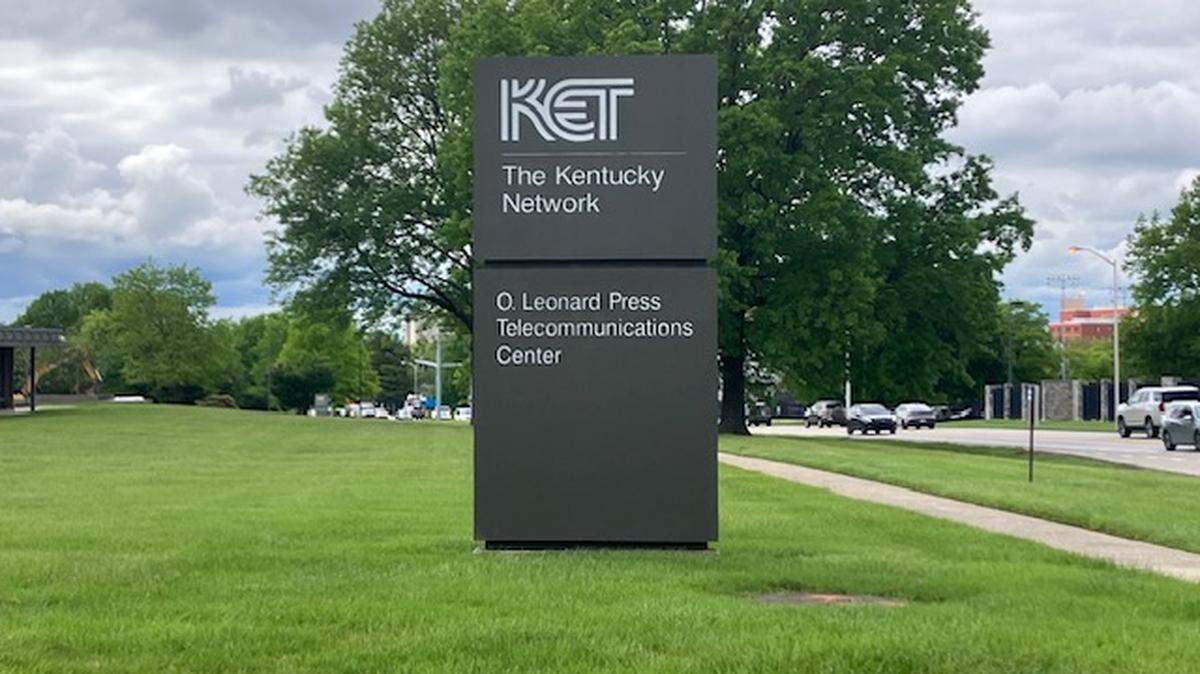
KET, KY public radio could lose millions in federal funding by end of the week
AI-generated summary reviewed by our newsroom.
- CPB funding cuts threaten Kentucky public media’s programming and safety systems.
- Trump-backed rescissions bill aims to cut $9.4B, including PBS and NPR funding.
- Rural stations reliant on federal grants risk losing emergency alert capabilities.
Kentucky public television and radio stations are bracing for possible cuts they say could devastate local programming and hamper the state’s ability to warn Kentuckians of severe weather.
The Senate is facing a Friday deadline to pass a rescissions package that would cut more than $1.1 billion from the Corporation for Public Broadcasting, which provides funding to Kentucky Education Television and the state’s public radio stations. In addition, President Donald Trump’s rescissions package includes sweeping cuts to foreign aid.
It’s not clear if Senate Republicans have enough votes to bring the bill to the floor for a vote.
On Monday, Senate Majority Leader John Thune, R-S.D., said negotiations were still ongoing on possible amendments. If the bill changes, it will have to go back to the House for final approval.
Trump has said he would not support any Republican who votes against his bill. Trump and his allies have repeatedly said National Public Radio and the Public Broadcasting Service are biased.
“It is very important that all Republicans adhere to my Recissions Bill and, in particular, DEFUND THE CORPORATION FOR PUBLIC BROADCASTING (PBS and NPR), which is worse than CNN & (MSNBC) put together,” Trump wrote in a Truth Social post.
The rescissions package would eliminate funding for the Corporation for Public Broadcasting for the next two fiscal years -- 2026 and 2027. That money had already been appropriated by Congress. The U.S. House passed the bill, which cuts $9.4 billion over two years, in June.
Sen. Paul says he will vote for the bill
Sen. Rand Paul, R-Kentucky, said on CBS’ “Face the Nation” on Sunday he would vote for the bill that would cut public broadcasting. Paul has long been a deficit hawk.
“Even though there are people who make arguments for it, and I can make an argument for a different way to cut it, we’re going to be presented with a $9 billion cut and a $2.2 trillion deficit,” Paul said. “So we have to cut spending. Absolutely have to cut spending.”
Sen. Mitch McConnell, R-Kentucky, did not immediately respond to a request for comment on how he would vote on possible cuts to Kentucky public media.
Rep. Morgan McGarvey, the lone Democrat in Kentucky’s Congressional delegation, voted against the cuts in the House. Republican Reps. Andy Barr, James Comer, Brett Guthrie, Thomas Massie and Hal Rogers voted in favor of the package.
In an interview, McGarvey said he and others are working hard to stop the cuts to public media. Nine Kentucky public radio stations receive $11 million from Corporation for Public Broadcasting grants, McGarvey said.
“There are a bunch of us fighting right now to keep the Trump administration from cutting funds that keep people in the rural parts of our state safe,” McGarvey said.
Many rural parts of Kentucky do not have local television stations, he said. Cell phone and internet service can be spotty at best. It’s public radio that serves those areas and issue severe weather alerts.
“Kentucky has had 46 severe flooding or tornado events so far this year and it’s only July,” McGarvey said. “A lot of this is happening in our rural areas and the Trump administration is taking away funds that warn people of immediate danger.”
Impact would be ‘enormous’
Officials with KET and other public radio stations said if the funding cuts are approved, Kentuckians will have less local programming.
“For KET, the annual (Corporation for Public Broadcasting) grant is essential and part of what has traditionally been an effective and efficient funding mix. If that were to go away, the impact on KET – and those we serve – would be enormous,” said Shae Hopkins, executive director and CEO of KET.
Kentucky Education Television receives 14% of its approximatelyy $30.4 million budget from federal funding, KET officials said.
That federal funding supports nearly all of KET’s local programming including the only statewide nightly news, “Kentucky Edition” and weekly series “Kentucky Tonight,” “Kentucky Life,”“Kentucky Health,”“Comment on Kentucky,” and “The Farmer & The Foodie,” KET officials have previously said.

But KET is also essential for the state’s emergency management, Hopkins said.
“And KET helps keep Kentuckians safe. Through our 15-tower network, KET provides a reliable infrastructure for public safety emergency communications and warnings about severe weather, tornadoes, flooding and other emergencies,” she said.
The Corporation for Public Broadcasting also provides funding for the state’s public radio stations. More rural stations, which have limited fundraising abilities, typically receive more funding through CPB grants, public radio officials have said.
Appalshop’s WMMT 88.7 in Whitesburg provides local programming unique to Eastern Kentucky, including shows like “Mountain Talk,” a public affairs program.
“Without federal funding, which accounts for a third of our budget, WMMT may no longer be able to deliver lifesaving alerts, essential programming, or the resources you rely on,” Appalshop staff warned in a June 10 email urging listeners to contact members of Congress.
“Community radio is a beautiful and unique thing that is often taken for granted in our media ecosystems. WMMT is proud to be Real People Radio, amplifying the Appalachian and Eastern Kentuckian voices that are often missing from national dialogue and even state-wide conversations.”
This story was originally published July 15, 2025 at 1:13 PM.