
Watch for migrating armadillos in Kentucky. They could have leprosy
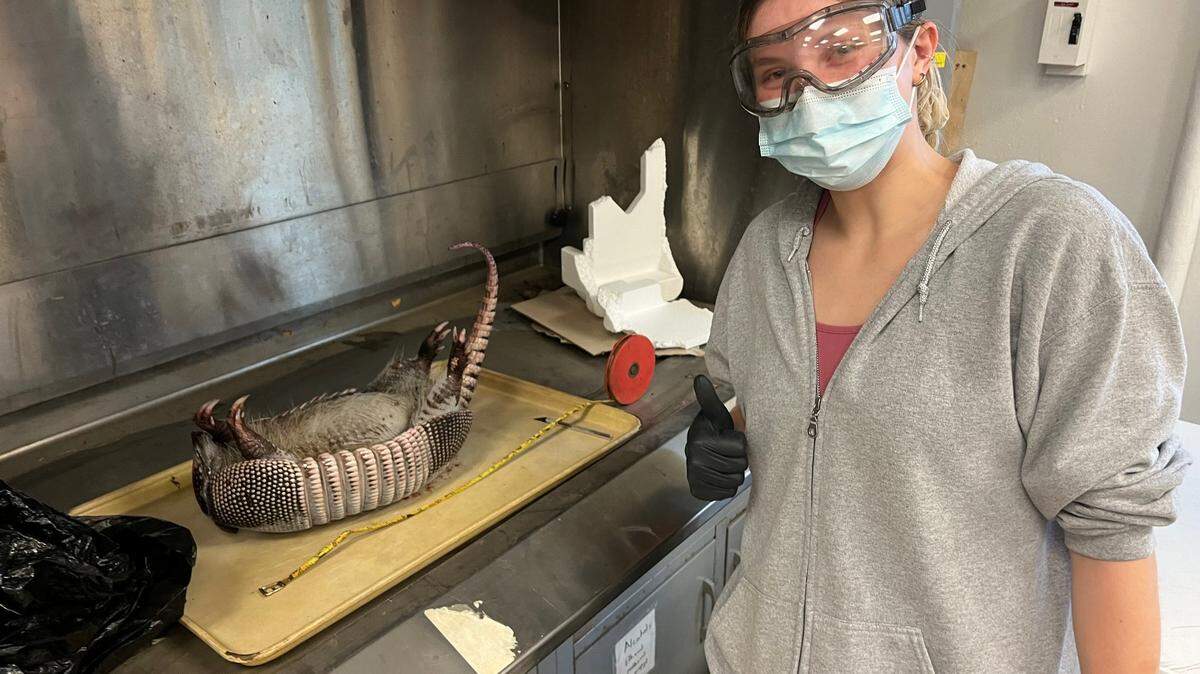
A migrating species of armadillo has caught the attention of University of Kentucky researchers.
Nine-banded armadillos, a species native to South America that has migrated north to the southeastern United States, have started to find a home in Western Kentucky.
Olivia O’Hearn, a graduate student aiding in the research of nine-banded armadillos with the UK Forestry and Natural Resource Science’s program, said there have been over recorded 200 sightings through Kentucky Fish and Wildlife.
“You can find them all over Western Kentucky,” she said.
While they’re most common in the Western Kentucky, armadillos have found their way in and around Fayette County. John Cox, professor of wildlife and conservation biology and a researcher on the project, said the project has collected over 30 roadkill armadillos, finding some in Woodford and Jessamine counties.
Just weeks ago, Cox said, a roadkill armadillo was found on South Broadway in Lexington.
“(We found it) two blocks from Rupp Arena. So we are literally studying this thing while they have moved into Fayette County,” Cox said.
“It’s going to kind of shock to some people when they first see them, but I think they eventually are going to adapt to them.”
Cox said northward armadillo migration has been a phenomenon since around 1850, when they were first seen in Texas. Armadillos do not thrive in the cold, but Cox said as their “cool boundary” retreats due to rising temperatures, they continue to move further north.
The team has studied nine-banded armadillos since spring 2024. Although they are tracking migration, Cox and O’Hearn are focusing on a very unique aspect of the armadillo in their studies.
Nine-banded armadillos are one of the only vertebrate species to carry the leprosy bacteria.
Based on the genetic sequence of bacteria, Cox said he he thinks armadillos contracted the leprosy bacteria from European colonists in Central and South America. He said it isn’t common for armadillos to succumb to leprosy, but as a carrier, they can occasionally transmit leprosy to people.
Of the 22 armadillos they have studied, three of them have tested positive for leprosy, which “generally means they’ve got the bacteria on their body somewhere,” Cox said.
He said they are still attempting to increase the sample size to get a better understanding of the prevalence of leprosy bacteria in armadillos. Cox said in most populations 0-20% of the armadillo population would be positive for the bacteria, but in South America, it can rocket to 15-20%.
O’Hearn said that contracting leprosy from an armadillo would be a consequence of constant contact, and is difficult to spread, but said in places like South America, where armadillos are much more common and are eaten, it can spread easier.
As armadillos continue to become more common, O’Hearn said longer exposure with armadillos could “potentially spread” leprosy.
“When I say its a public health risk, it’s not something that we need to go shouting form the rooftops,” she said. “It’s more so just a really interesting project that we’re working on, and there (are) risks for public in that way.”
O’Hearn’s best armadillo advice was to stay away from them, and if they are in your yard, call for a professional to pick them up.
“Just don’t keep a live armadillo as a pet,” O’Hearn said.
Cox said the study could last four years. He said they hope to live track armadillos to monitor their movements as a next step in the research.
See an armadillo? Let Cox and O’Hearn know here.
This story was originally published July 25, 2025 at 4:00 AM.