
Know Your Kentucky

Nicholasville Road lanes have changed directions for decades. How to navigate it
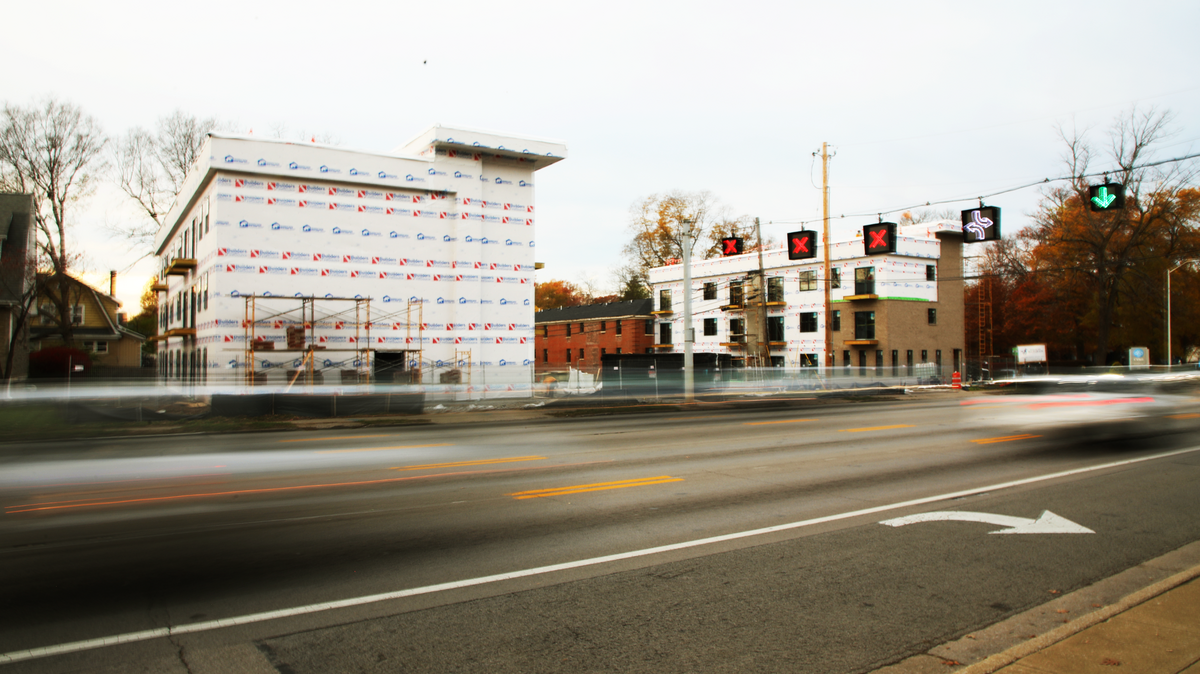
Cars whiz by a 41-unit apartment complex under construction on Nicholasville Road under a state legislative task force mandate attempting to solve the housing in Kentucky on November 18, 2024, in Lexington, Ky.
Cars whiz by a 41-unit apartment complex under construction on Nicholasville Road under a state legislative task force mandate attempting to solve the housing in Kentucky on November 18, 2024, in Lexington, Ky. tpoullard@herald-leader.com

“Have you ever thought about how Nicholasville Road in Lexington, Kentucky is literally equivalent to the grand staircase at Hogwarts in the Harry Potter films?” local social media user Taylor Greatbatch said in a TikTok video.

“They don’t know when the staircases are going to move, we don’t know when the lanes are going to switch,” she said.

Aside from being one of the main streets in and out of Lexington, Nicholasville Road is known for the unique way the lanes are used at certain times of the day.

Sometimes, only two of the seven lanes are available to leave the city, and later, four of the seven lanes are for departing.

A composite image showing traffic along Nicholasville Road near Southland Drive in Lexington, Ky. Left, Motorists travel along Nicholasville Road near Southland Drive at 3:47 p.m. in Lexington, Ky., Saturday, March 28, 2020. Right, Motorists travel along Nicholasville Road near Southland Drive at 4:24 p.m. in Lexington, Ky., Wednesday, March 17, 2021.

Why do the lanes change?

The implementation of the changing lanes was a logistical project carried out by the Kentucky Department of Highways nearly 50 years ago, according to the Lexington Division of Traffic Engineering.

The move came as a solution to the issues posed by the city’s steep population increase throughout the 1970s, Lexington Traffic Engineering told the Herald-Leader in an email.

In 1970, Lexington had a population of 108,137 people, which increased to 194,093 by 1980, according to the U.S. Census Bureau, making for approximately an 80% increase in 10 years.

Increasing roadway capacity and improving travel safety were the driving forces behind the initiative, according to the traffic engineers.
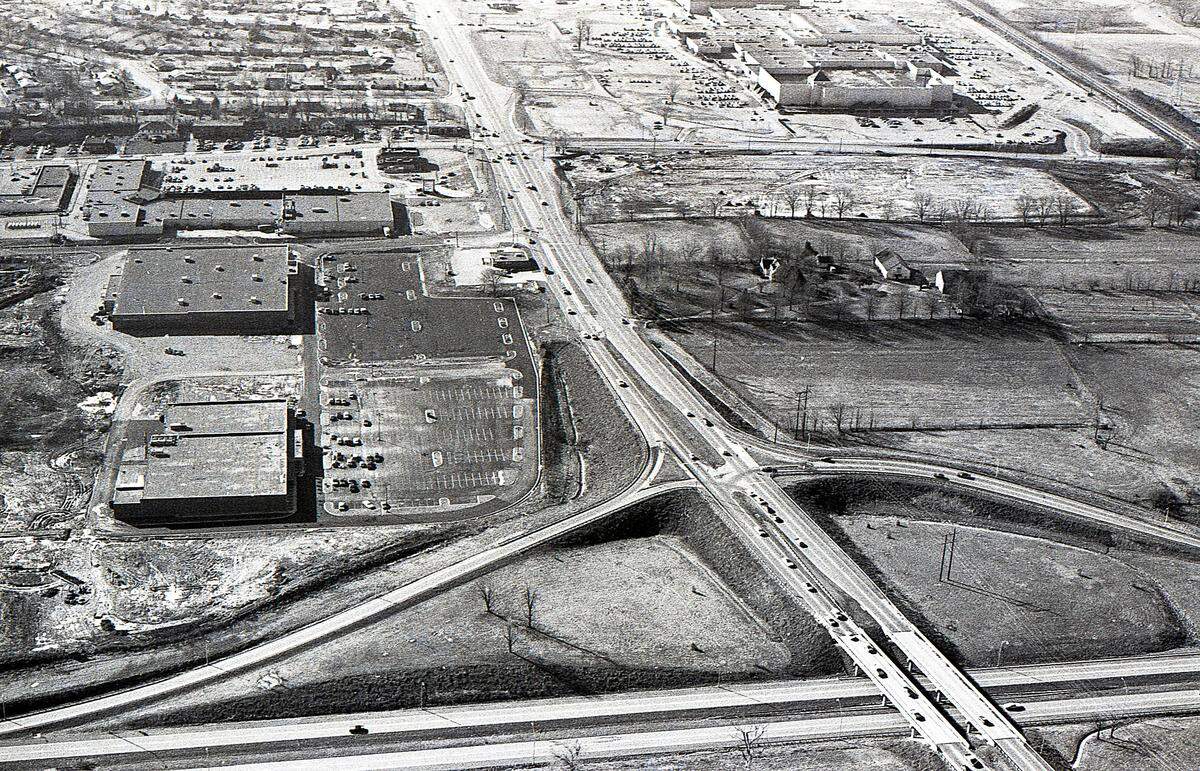
The intersection of New Circle, running across the bottom of the photo, and Nicholasville roads, in late January, 1976 in Lexington, Ky. The South Park Shopping Center is on the left side of the image. Stores there included Mac Donald Sales Center, Kroger, Hills Department Stores and Super-X store as construction continued with developers scraping plans for a 99-room hotel. On the right side of the image, the farmland, is the site of what would later become Lexington Green shopping center, it opened in 1986. Just above it is the beginning construction of Gold Circle Department Store, which today is Target. And above that, in the upper right corner of the image, is Fayette Mall, which opened in 1971. At the time of this image, traffic was becoming a major concern at what would eventually become one of Lexington’s busiest intersections.
The intersection of New Circle, running across the bottom of the photo, and Nicholasville roads, in late January, 1976 in Lexington, Ky. The South Park Shopping Center is on the left side of the image. Stores there included Mac Donald Sales Center, Kroger, Hills Department Stores and Super-X store as construction continued with developers scraping plans for a 99-room hotel. On the right side of the image, the farmland, is the site of what would later become Lexington Green shopping center, it opened in 1986. Just above it is the beginning construction of Gold Circle Department Store, which today is Target. And above that, in the upper right corner of the image, is Fayette Mall, which opened in 1971. At the time of this image, traffic was becoming a major concern at what would eventually become one of Lexington’s busiest intersections. Ron Garrison 1976 Herald-Leader staff file photo

How the Nicholasville Road lane changes work

During morning rush hour, 6:30-9 a.m., the lanes going into Lexington are increased from three to four. During the evening rush, 4-6 p.m., lanes leading out of Lexington are increased from three to four, to make leaving Lexington easier.

When it is time for the lanes to change, there is a two-minute transition period, according to traffic engineers, to allow for a safe, smooth transition.

Steps of the lane-use control signals changing:

  1. Road starts with three lanes inbound, three lanes outbound and one left turn lane.
  2. Current left turn lane changes to a red X.
  3. Center-most green arrow lane changes to a red X.
  4. Traffic lights turn green to let drivers vacate the lanes that will no longer be used in that direction.
  5. Center-most green arrow that changed to a red X changes to a left turn lane.
Nicholasville Road utilizes the lane-use control signals installed in the 1970s. The lanes change direction based on the time of day when traffic fluctuates. A two-minute transition period is used to clear lanes of vehicles to ensure for a safe and smooth transition.
Nicholasville Road utilizes the lane-use control signals installed in the 1970s. The lanes change direction based on the time of day when traffic fluctuates. A two-minute transition period is used to clear lanes of vehicles to ensure for a safe and smooth transition. Casey Sebastiano
Related Stories from Lexington Herald Leader
CS
Casey Sebastiano
Lexington Herald-Leader
Get one year of unlimited digital access for $159.99
#ReadLocal

Only 44¢ per day

SUBSCRIBE NOW