Bill Estep: From snakehandlers to serial killers, it’s been fun to cover Kentucky for 40 years
I was sitting about 30 feet away when a copperhead bit Dewey Chafin on the right hand. He kept worshiping and bent over to take another — this one a rattlesnake — out of a box.
I was there when the hearses slowly pulled away from a temporary morgue at the National Guard Armory in Carrollton, carrying the bodies of 24 kids and three adults who died after a drunk driver hit their church bus, igniting a fire that consumed the interior.
I was in Frankfort the day FBI agents fanned out to interview people and serve subpoenas in the largest-ever investigation of corruption in the Kentucky legislature. Stunned is probably the best way to describe the mood in the Capitol.
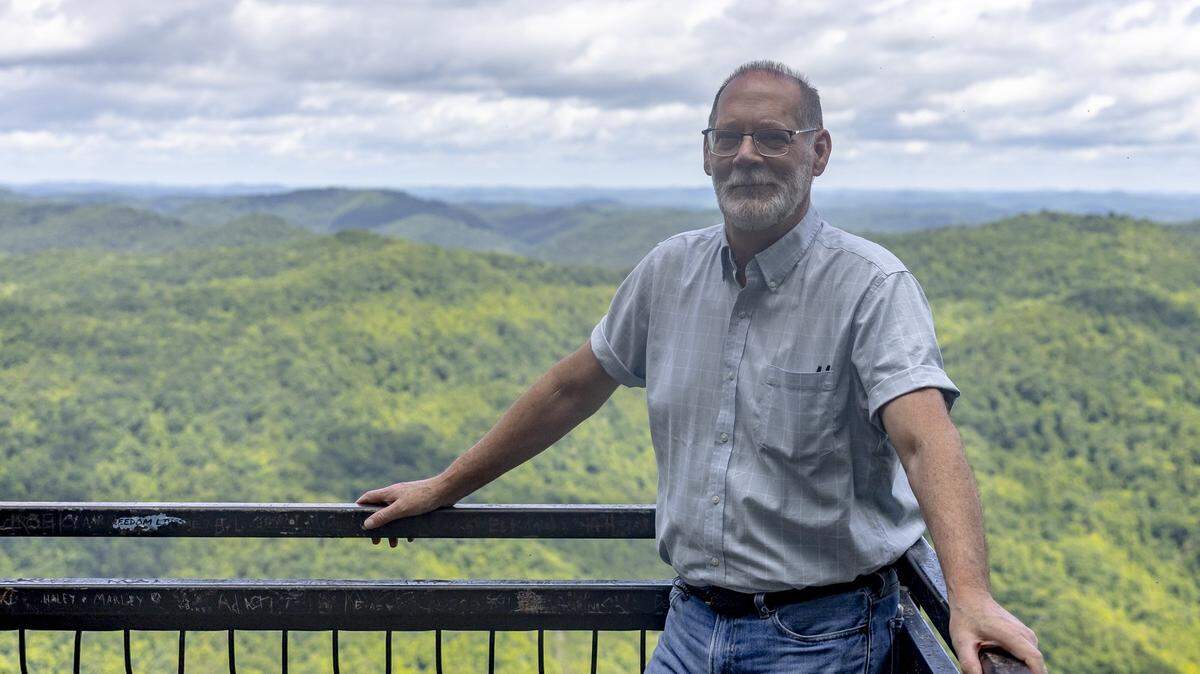
I’ve been a reporter in Kentucky for more than 42 years, including the last 40 at the Herald-Leader. I’ve always felt that if I hadn’t been sued or shot, the story shouldn’t be about me. But with retirement set for June 30, editors asked me to write something about my career.
I’ve written more than 6,500 stories in that time. Some stand out.
Snake handling believers
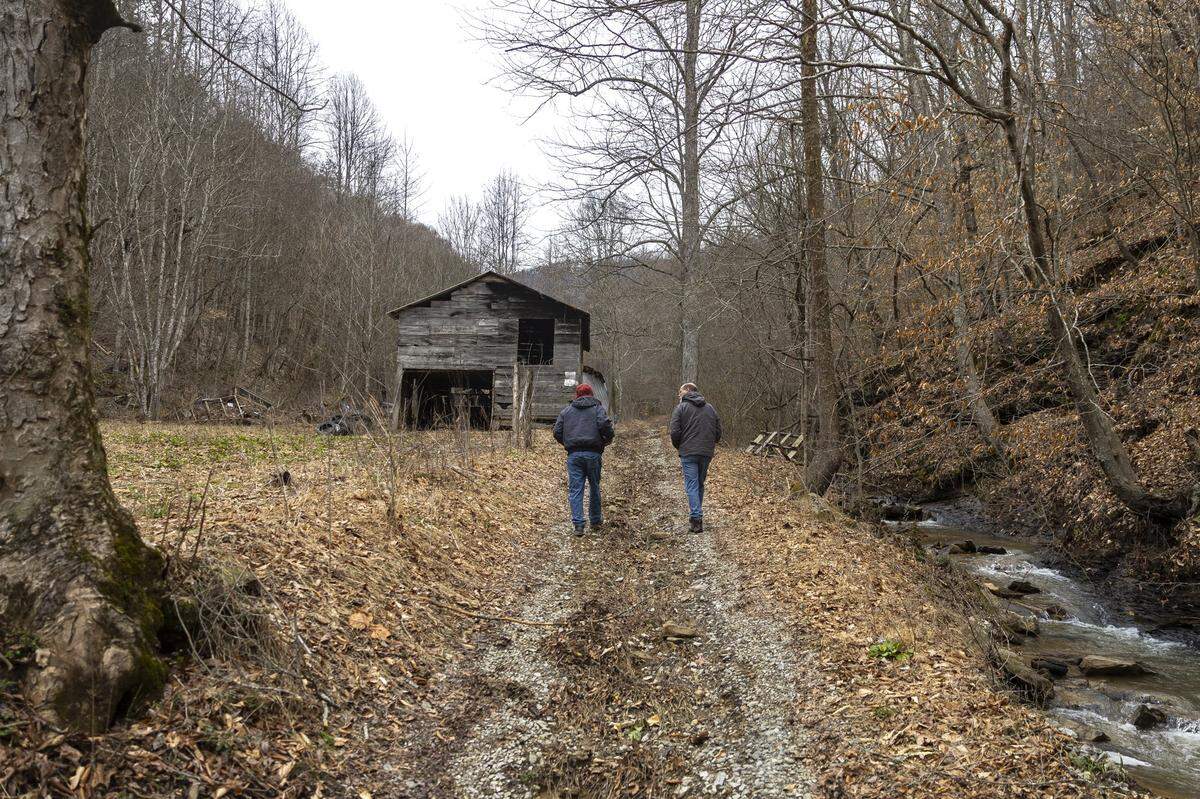
I met the pastor of a Knox County church in 1988 when he and three others were charged with handling venomous snakes at their small church on Stinking Creek, a misdemeanor in Kentucky.
The prosecutor ultimately dismissed the charges based on an argument that the law against handling snakes in church is a violation of religious freedom.
The pastor, A.B. Smallwood, allowed me and photographer J.D. Vanhoose to attend services at the church for several months to help us better understand the belief in handling snakes during worship, ridiculed by some as some kind of misguided, dangerous hillbilly voodoo.
I went in thinking the practice was odd, at best, but I came away with a great deal of respect for Smallwood — one of the most humble Christians I ever met — and other members of the church. They were doing what they believed was needed to be obedient to God.
I eventually met Jamie Coots, pastor of a snake handling church in Middlesboro. Photographer Charles Bertram and I attended a service in 1995 at another of Coots’ churches, The Church of Lord Jesus in Jolo, W.V., which allowed reporters to attend the homecoming service each year.
That’s where I saw Chafin, an associate pastor, get bitten.
He survived that bite, but he died in February 2014 after being bitten by a rattlesnake he’d been handling during a service.
“To me, it’s as much a commandment from God when He said, ‘They shall take up serpents,’ as it was when He said, ‘Thou shalt not commit adultery,” Coots had said in an interview explaining his belief.
‘A whole person missing’
The bus crash near Carrollton in May 1988 was one of the saddest stories of the last several decades.
A group from a church in Radcliff was returning from a day at Kings Island amusement park when Larry Mahoney, who had been drinking and was driving the wrong way on Interstate 71, hit the bus.
The impact didn’t kill anyone, but caused a puncture in the fuel tank of the bus, which caught fire. Children fell in the narrow aisle during the scramble to get out the back of the bus, and noxious fumes filled the vehicle, which the medical examiner said was what killed 27 of the 67 people on board.
As the fifth anniversary of the crash approached, I talked to the parents of some of the young people who died.
“It can’t ever be the same, because there’s a whole person missing,” said Madeline Nichols, who lost her 17-year-old son William Nichols Jr.
“At 10:54 (the time of the crash), we were a family, Billy and Maddy and I,” said her husband, William Nichols. “At 10:55, Maddy and I became a couple.”
Mahoney was convicted of manslaughter and served almost 11 years before being released.
The angel of death
I got to interview Donald Harvey, nicknamed the “Angel of Death,” who grew up in Owsley County and claimed to have killed more than 60 people while working as an orderly at hospitals in Kentucky and Ohio.
The first murders were at Marymount Hospital in London. Harvey said he killed 13 patients there in 1970 and 1971 before moving on to jobs in Cincinnati, where he killed dozens more.
Harvey killed most of his victims in London by hooking them to empty oxygen bottles, but used poison and other methods in Ohio.
He claimed he killed some patients to end their suffering, but admitted he committed some murders out of anger at the patients.
Harvey finally got caught in 1987 when a medical examiner in Ohio smelled the telltale almond odor of cyanide during an autopsy of one victim.
Authorities said Harvey had a personality disorder and killed defenseless patients because it gave him a feeling of power.
When police brought Harvey back to London in October 1987 to plead guilty to the deaths there, the Laurel County jailer, Big John Bowling, let me interview him, locking us together in an office in the jail.
Harvey was facing decades in prison, but was animated and cheerful.
“I could sit around here and cry and feel sorry for myself, but what good would it do?” he said. “I’ve been portrayed as a cold-blooded murderer, but I don’t see myself that way.”
Another inmate beat him to death in an Ohio prison in March 2017.
Three state executions
I have been in the witness room for each of Kentucky’s three executions since the mid-1970s, when the U.S. Supreme Court lifted an earlier moratorium on the death penalty.
It was not pleasant, but I think the media has a legitimate oversight role when the state puts someone to death.
The first was in July 1997, when Harold McQueen was executed in the electric chair for killing Rebecca O’Hearn in 1990 while robbing the convenience store in Richmond, where she worked.
I could see steam rising off McQueen’s leg as the current jolted through him, and then his body slumped against the restraints.
The others were Eddie Lee Harper, who was executed by lethal injection in May 1999 for killing his adoptive parents in Louisville, and Marco Allen Chapman, put to death by lethal injection in November 2008 for stabbing two children to death in Gallatin County after raping their mother.
The state’s death penalty has been tied up in court since 2010.
‘I’m still unindicted’
There were plenty of charismatic rogues to write about along the way.
One was Lester Burns, a rakish attorney known for his flamboyance in court. There were stories about him pleading a case on his knees, quoting Scripture and wrapping himself in the American flag.
He told the story of one case in which he represented a woman accused of shooting at police, and he held her infant child in his arms during his closing argument. He said he planned to pinch the baby to make it cry, but it cried without a pinch.
Burns ultimately went to federal prison for trying to defraud insurance companies when he handled a lawsuit that was based on a fake car wreck, and for transporting stolen money across state lines while representing a man charged in a sensational murder in 1985 in Letcher County.
Burns served 32 months in prison before being released in 1990.
He hadn’t lost his sense of humor. A friend gave him a job as part of a work release program, and I met him at the man’s farm for an interview.
We were in a barn, and he joked about cleaning manure out of a stable.
“Now that sounds like practicing law,” he said with a big grin.
Burns tried without success to get back his law license. He died in 2015.
And every reporter who covered politics in Kentucky anytime between the early 1980s and 2011 almost certainly has a Gatewood Galbraith story — or 10.
The Lexington lawyer first achieved attention for his call to legalize marijuana for recreational use — gaining the support of another smoker, country music icon Willie Nelson, who campaigned for him — but also argued strongly for gun rights and other personal freedoms.
Galbraith was one of the quickest wits in Kentucky politics.
I ran into him the morning before the Fancy Farm political picnic in 2010, when he was running for governor, and heard someone ask how he was doing.
“I’m still unindicted,” he quipped.
Galbraith, who ran unsuccessfully for governor, agriculture commissioner, U.S. representative and attorney general and was often in financial straits, joked that “losing statewide elections doesn’t pay worth a damn.”
In 1991, when he faced charges that he hadn’t paid occupational taxes in Lexington, he said, “I’m in the same shape as Donald Trump and the United States government — I’m broke.”
He died in January 2012, two months after his fifth run for governor.
The mission remains
I started working as a reporter before cellphones were widely available, which I know makes me a dinosaur. At one time, I knew where to find a pay phone in every county in Southern and Eastern Kentucky.
There have been a lot of changes in newspapers since. Some are good, including new ways to research and tell stories, and the ability to post and update stories throughout the day and night. Some are not so good, including financial shifts that have caused widespread staff cutbacks.
What hasn’t changed is the mission. I see that as finding good stories, helping people understand what’s happening in their world, including what their government is doing for and to them, and holding power accountable — and doing all of it fairly, accurately and thoroughly.
I know many people don’t trust newspapers. Mistakes have played a role in that, but I believe it also flows from decades of politicians bashing the media for political gain, quite often dishonestly.
The idea that the press is the enemy of the people is a lie.
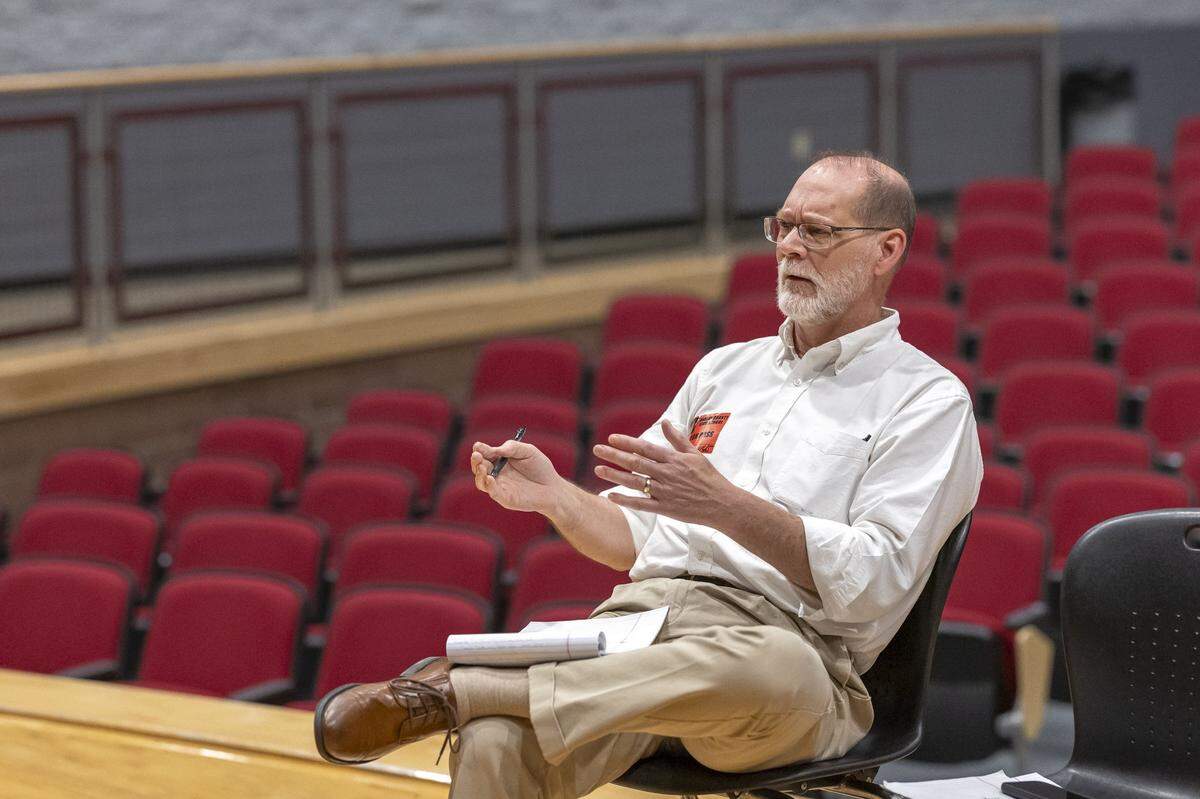
I keep two quotes taped to the wall of my office.
One is about how the press can become unpopular because of aggressive reporting, but “that is a price of liberty that free societies must learn to accept.”
The other is the first part of a verse from the Old Testament, Hosea 4:6: “My people are destroyed for lack of knowledge.”
It refers to God’s people rejecting spiritual knowledge, but I think it’s true in a broader context as well.
I have worked with reporters I’m pretty sure were socialists, and others I knew were Sunday School teachers — not that someone can’t be both — but what marked them was their commitment to get the whole story and include viewpoints across the spectrum, whatever their personal beliefs.
But make no mistake — there isn’t a legitimate “both sides” on some issues. School choice, taxes, medical marijuana and many others, yes. White supremacy, no.
Presidential candidates and pot growers
I feel tremendous gratitude for the career I’ve had and the people who helped me along the way.
I’ve written about public officials who stole money or bought votes or did other bad things — it’s Kentucky, after all, where a 1902 poem that says politics are “the damnedest” still applies — but I believe most of the politicians and officials I’ve covered really wanted to help their communities and their state.
And I’m grateful to people who let me into their homes and lives and shared their stories, sometimes at the worst of times, after a flood, tornado or other tragedy.
I have marveled many times at people’s strength and faith and the compassion of their neighbors.
I’ve reported on every county in the state and interviewed everyone from presidential candidates to pot growers.
It’s gratifying that some of those stories had a role in making the state a better place. Others were less consequential, about an interesting person or thing, or simply recapped what happened yesterday, but I believe they all had value.
I’m proud of the caliber of work the paper still does, with stories exposing abuse and other problems in the state’s juvenile justice system, sexual misconduct by teachers, allegations of harassment by a state legislator and alleged shoddy business practices by a roofing company in Lexington, to cite only a few.
I’ve worked for top editors and with great reporters at every stage of my career.
I owe a debt in particular to Tom Caudill, who hired me; Jack Brammer, who covered Frankfort for the paper for more than 40 years and was generous with knowledge and wisdom; and Lee Mueller, whose coverage of Eastern Kentucky and storytelling ability I aspired to match but didn’t.
And I can’t pass up the chance to thank my wife and daughter, who supported me and were patient every one of the 3,692 times (that’s an approximation) I called and said I’d be home late because something had come up.
A career in Kentucky
More than anything, I’m deeply grateful for getting to spend an entire career covering Kentucky, covering home. I’ve always been convinced it was the best job in the world.
I’m not oblivious to the fact that Kentucky has problems, but it’s kind of like how my wife can see my faults and still love me.
This is where the redbuds bloom in the spring along the Mountain Parkway, where you can see forever from the top of Pine Mountain, where the smell of a hay field cooling off in the evening after a hot day is sweeter than any perfume, where neighbors really do go out of their way to help each other.
I don’t think I did it justice, but it’s been a lot of fun.