
What could Lexington learn from other cities that keep roads clear of ice, snow?
AI-generated summary reviewed by our newsroom.
- Mayor acknowledges plan failures and commits to revising Lexington’s snow strategy.
- Governor cites unacceptable road conditions and offers state guidance and aid.
- City to consult experienced cold-weather municipalities to improve cleanup.
After frustration from residents over the city’s response to Winter Storm Fern, Lexington Mayor Linda Gorton said the city needs to revisit its approach, including by looking at other places with more experience battling harsh winters.
Thursday, Gov. Andy Beshear added his voice to the list of critics, calling road conditions in Lexington “unacceptable.”
“I think we’re all disappointed by the city’s response to this ice and snow event,” Beshear said, adding that state crews offered to assist Lexington, but were told “our help wasn’t needed.”
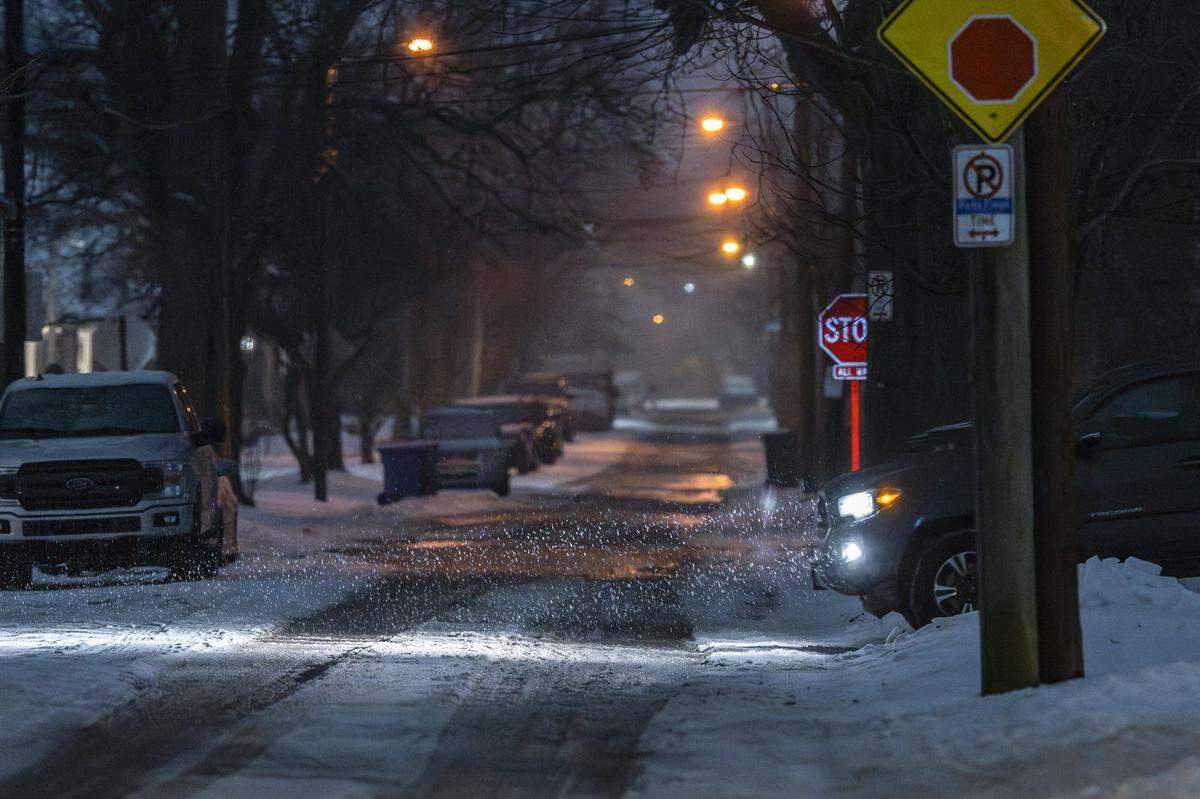
Lexington officials have said persistent cold and lingering ice have complicated cleanup efforts, but as of Wednesday, snow and ice build-up was still blocking lanes on major roads and completely covering many neighborhood streets. After Winter Storm Blair in early 2025, this is the second weather event in a row Lexington has struggled to adequately respond to.
The governor also said the state will help provide guidance to improve the city’s response going forward.
“After two times like this, where it’s taken them longer than similar or even smaller cities to get their roads clean, we simply have to do better,” Beshear said.
How is Lexington revisiting its snow and ice removal plan?
For her part, Gorton has conceded the city’s snow and ice removal plan needs work.
“It’s clear that ice storms and extreme cold are part of our winters now,” Gorton said in some of her recent comments on the response. “They are incredibly hard to handle, and the plan we have can’t adapt to more severe weather. We will be revising our approach. There are no easy answers, but we will start by reaching out to cities that have much more experience with ice and cold than we do.”
The Herald-Leader asked the mayor’s office which cities Gorton has in mind and if there are specific changes she would like to see.
“We are doing an in-depth, after-action review. We’ll know more about which cities, and what recommendations will be made after that happens. She wants to look at cities of comparable size and weather,” Susan Straub, a spokesperson for Gorton told the Herald-Leader in an email Feb. 4.
How does Lexington’s plan compare to other cities?
Lexington’s current snow and ice removal plan follows a ranking system that prioritizes streets carrying heavy traffic, such as Main Street, Nicholasville Road and Richmond Road. When a snow or ice event is anticipated, the city pretreats roads and strategically positions snow plows.
Neighborhood streets typically receive a lower priority ranking for plowing, if they’re ranked at all. During a winter storm event, the city’s crews and contractors work to keep major corridors clear, but many neighborhood streets may see little or no activity.
“Only ranked roads will be plowed in a typical snow event,” the city’s plan states, in part.
In total, there are roughly 1,203 lane miles of streets in the city ranked 1 through 4 and 1,545 lane miles of city streets ranked 1 through 5, according to Lexington’s plan.
In Louisville, crews service 2,750 miles of roadway divided into 111 routes for systematic snow and ice clearing.
It follows a similar approach to Lexington in that “snow routes are focused on roads which carry the most traffic and are critical to connecting people to large employment areas, neighborhoods, schools, medical facilities and hospitals,” Louisville’s snow and ice plan states.
That said, Louisville doesn’t necessarily plow every neighborhood street.
Its plan states those not included in designated snow routes aren’t plowed by Louisville Metro crews. They may, however, be plowed by other municipalities within Jefferson County, including Middletown or Jeffersontown, for example.
Students in Jefferson County returned to school Thursday after a rocky start to the week, which included a two-hour delay Monday and a remote-learning day Wednesday.
In Pittsburgh, a hilly city that sees about 40 inches of snow each year, the city’s snow and ice control program works to keep traffic moving on more than 1,200 miles of streets following snowstorms. Its public works fleet uses plows with computerized salt spreaders, and the department’s personnel are trained in using snow removal and salting equipment for high efficiency, the city’s website states.
Overall goals include maintaining access to hospitals, schools and emergency services, but travel to and from businesses and residential areas are also top priorities.
“In road priority, we focus first on main roads that are emergency routes, access hospitals, main lines through neighborhoods and connect to other main roads. Our Department of Public Works has pre-determined routes that they follow,” Molly Onufer, a spokesperson for Pittsburgh’s mayor, wrote to the Herald-Leader in an email.
Madison, Wis., which has a population of roughly 275,000 people, typically gets about 50 inches of snow each winter. The city prioritizes keeping routes passable and safe, especially for buses and emergency services. That’s according to Bryan Johnson, a spokesperson for the city’s streets division.
According to Johnson, the city is also conservative in the rock salt it deploys, with the aim of minimizing environmental impacts. Madison is located on an isthmus situated between two lakes.
Generally, the city treats streets with targeted rock salt and sand to boost traction, Johnson said. In Madison, residential streets are plowed during major snowstorms, but they aren’t routinely salted or kept down to bare pavement.
“Here in Madison, we try to mitigate that harm by only using salt on those salt routes and only using it when temperatures will require it or allow for it,” Johnson told the Herald-Leader in a phone call Wednesday.
“We’re very aware of salt use,” Johnson said, adding it’s been an environmental focus for the city since the 1970s. “All of our storm drains lead to the lake and local waterways.”
Do you have a question about Lexington for the Herald-Leader? We’d like to hear from you. Fill out our Know Your Kentucky form or email ask@herald-leader.com.
This story was originally published February 6, 2026 at 11:18 AM.