‘Humanitarian crisis’ persists as Lexington judge recuses from property dispute
After a weekslong fight, a Lexington judge has recused herself from a property dispute in which a bank claims she failed to disclose a conflict of interest.
Fayette Circuit Judge Julie Muth Goodman on April 17 recused herself from a fight in which Bancorp, a Minnesota-based, multinational bank, is aiming to recoup money on several dilapidated properties in southwest Lexington.
Bancorp and other lenders sought the recusal because they said Goodman failed to disclose that the receiver in the property dispute, James Frazier III, was also one of the lawyers defending Goodman against an unprecedented, failed effort by Kentucky lawmakers to impeach and remove her from office.
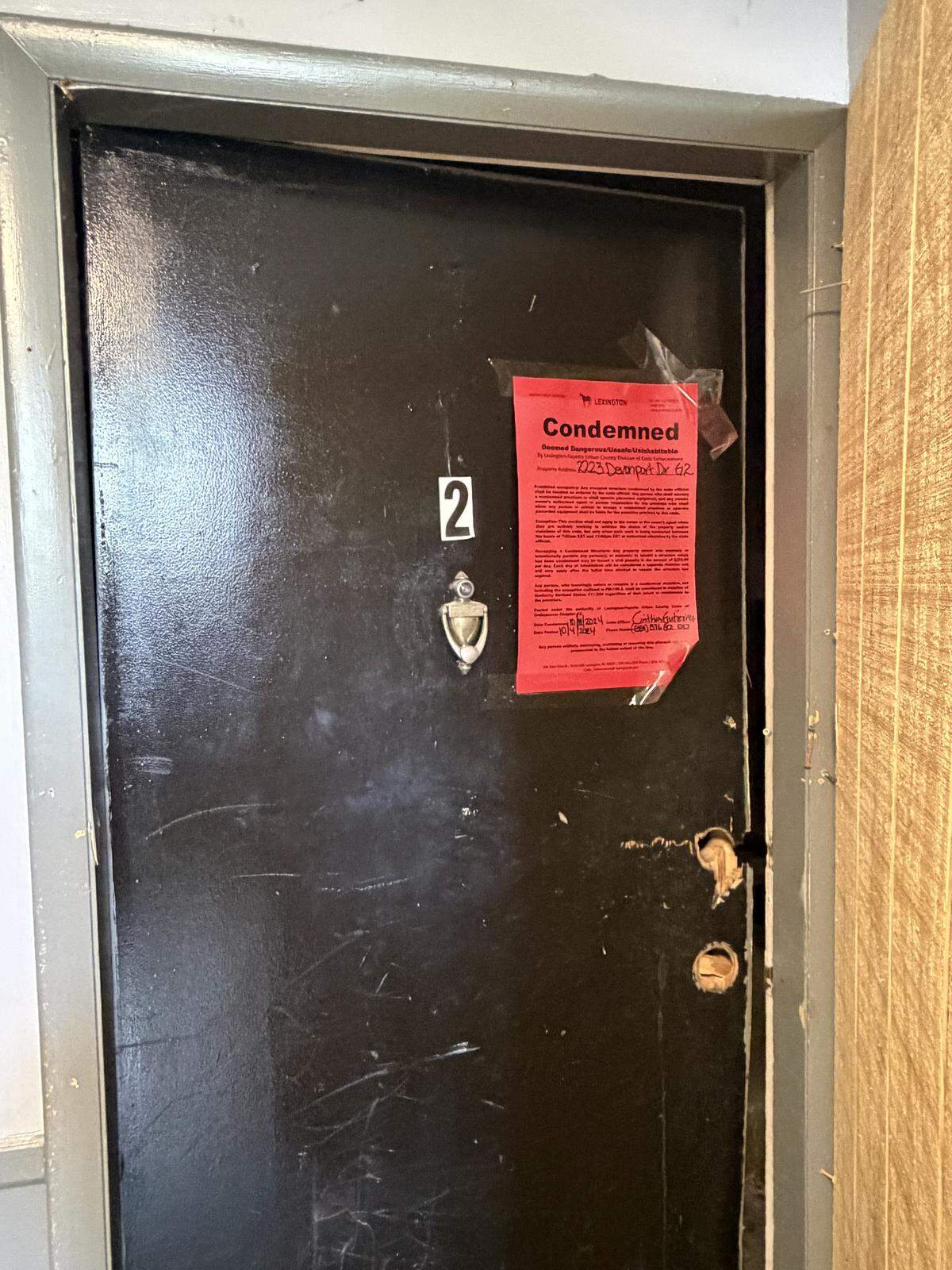
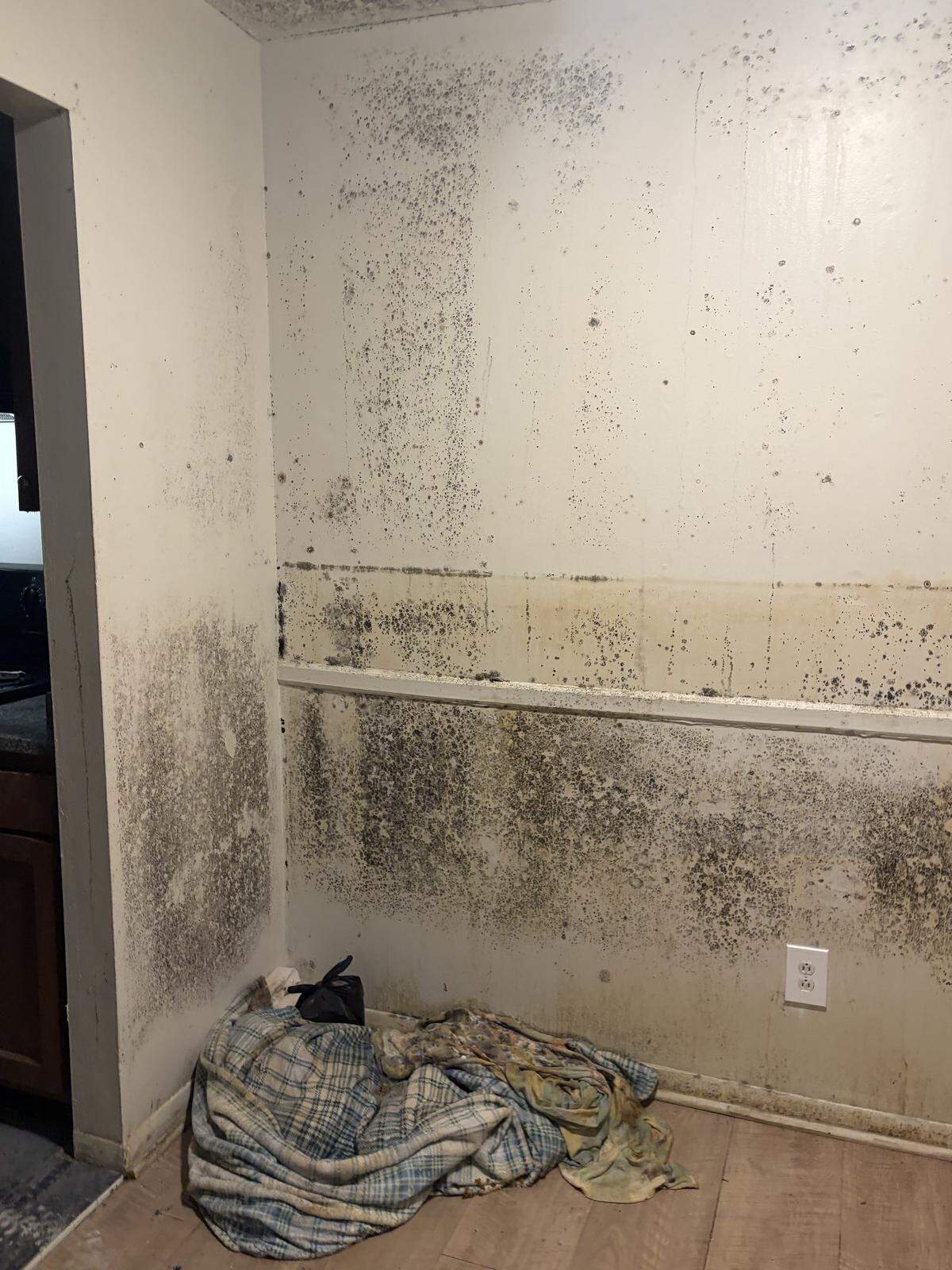
Meanwhile, as the property dispute case overcomes hurdles in litigation, many of the apartments are sitting condemned, awaiting repairs, sale or demolition. Some units have walls covered in black mold, damage from squatters, standing water, and sewage backed up into the toilets and tubs.
.jpeg "IMG_6700 (1).jpeg")
And until recently, families were paying as much as $1,000 a month to live in the dilapidated units.
Goodman announced her recusal at an April 17 hearing. She did not remove Frazier as the receiver, so the work to improve hundreds of dilapidated apartments on Cambridge and Davenport Drives could resume more quickly.
.jpeg "IMG_6715 (1).jpeg")
She did not leave the hearing without chastising the banks’ lawyers, whom she accused of delaying proceedings for their own interests.
“The interests of the out-of-town banks has always been to spend as little money as possible, and to use the resources of the Fayette County personnel — codes enforcement, (city) staff and the court’s receiver — to do their will, and at the same time, being more than willing to accept that work ... only to complain they shouldn’t have to pay for that work,” Goodman said.
Attorney David Staples, one of the lawyers who requested Goodman’s recusal, declined to comment for this story.
Another, James Irving, said the attorneys acted appropriately and ethically, which they would have explained if Goodman had given them an opportunity to speak at the April 17 hearing. After she confirmed her recusal, Goodman declined to let Irving speak on the record, saying she had a funeral to attend.
“We respectfully disagree with the Court’s statements made during the hearing and any characterization suggesting otherwise,” Irving said in an emailed statement to the Herald-Leader.
The previous property owners of the buildings, a Cincinnati company called Vision Beyond Capital Investments, were indicted in January for a real estate scheme in which they were double-pledging properties to obtain multiple loans and for conspiring to conceal information from lenders and investors.
A phone number for the company is disconnected.
What happened in the case
Lawyers for Bancorp and other lenders filed a motion March 30 seeking to remove Goodman from the case. They argued her impartiality was in question because she failed to disclose that Frazier, who works as master commissioner in Fayette County and in 2025 was appointed by Goodman as receiver in the case, also served earlier this year as her private lawyer.
“It is similarly reasonable to doubt that Judge Goodman will impartially listen to objections made by parties in this case to attorney Frazier’s actions, when Judge Goodman is currently trusting attorney Frazier and his judgment in arguably the most important case of Goodman’s career,” wrote Allison M. Bortner, Drake Staples and James Irving, lawyers for Bancorp and other lenders.
Bancorp is seeking to restore its liens on the peroperties and confirm the previous owners still owe money to the bank. While the case is being litigated, the new property managers are requesting funds from the bank to update the properties, which the new managers described as a “humanitarian crisis to the nth degree.”
As of the April 17 hearing, there were 57 condemned units among the four apartment buildings. Three entire buildings were condemned.
No one is living in the condemned units or buildings, but tenants are still living in nearby units that have been repaired to livable condition.
A recusal request and a delay
In a previous interview with the Herald-Leader, Frazier argued the judge did not need to recuse herself. He noted that he is not a party in the case — neither defendant nor plaintiff — and called the recusal motion a “political diversion” from the real issues involving safe homes for families.
A receiver is appointed by a judge to manage distressed assets, including bankrupt companies and foreclosed homes, when the owner loses possession for failing to pay creditors. The receiver works with lenders and the judge to determine how best to salvage value from the assets.
Frazier is a real estate lawyer by trade, and he serves as master commissioner of Fayette County Circuit Court. In that role — which prompted his appointment as receiver in the Bancorp case — he conducts court-ordered property sales in cases such as foreclosures. Throughout the litigation, Frazier requested money be paid by Bancorp and the other lenders to restore the property and make upgrades.
When Bancorp and other lenders sought Goodman’s recusal, the case was paused pending her decision. Fayette Circuit Judge Kimberly Bunnell has since been assigned to the case, but no hearing has been scheduled.
Meanwhile, the new property managers say they cannot fix the condemned buildings and units that are approaching a code-enforced demolition date.
Michael Sanner, an attorney for the city, said his goal is to get more units in compliance with the housing codes. By doing so, more families would be able to have homes, and the new property management company could have more income to repair the buildings. The banks have provided no compliance plans, he said.
“Even though this matter is stayed (in the court), the black mold in the condemned units is not stayed from spreading,” Sanner said at the April 17 hearing.
‘A humanitarian crisis to the nth degree’
After the court became involved with the property, a new management company began to operate the apartments.
Home Forward, a Lexington-based real estate company, took over the apartments around the time Frazier was appointed as the receiver in February 2025, said the company’s owner and director, Debbie Adams. The group previously bought and restored the Saddlebrook Apartments in Lexington more than a decade ago.
When they took over the 419 units, she described deplorable conditions and buildings condemned by the fire marshal for lack for fire extinguishers, inoperable smoke detectors, no lighting and no locks on the doors in the common areas. Even worse were the conditions inside each unit, including black mold, water dripping from the ceilings, no hot water and sewage blockages.
During their first tours of the apartments, local officials found someone using a charcoal grill inside a unit to keep warm. In another, parents were boiling 49-degree water from the faucet to bathe their children, Adams said in an interview with the Herald-Leader.
She described it as a “humanitarian crisis to the nth degree.”
Within the first month of Home Forward’s work, 84 units had their condemnations lifted, Adams said.
“There was no money. We started with zero,” Adams said. “We started with the first rent check. That was our till. That was what we started with. So we just kind of did all hands on deck. “(We) just started trying to get people livable places to live, just one building at a time.”
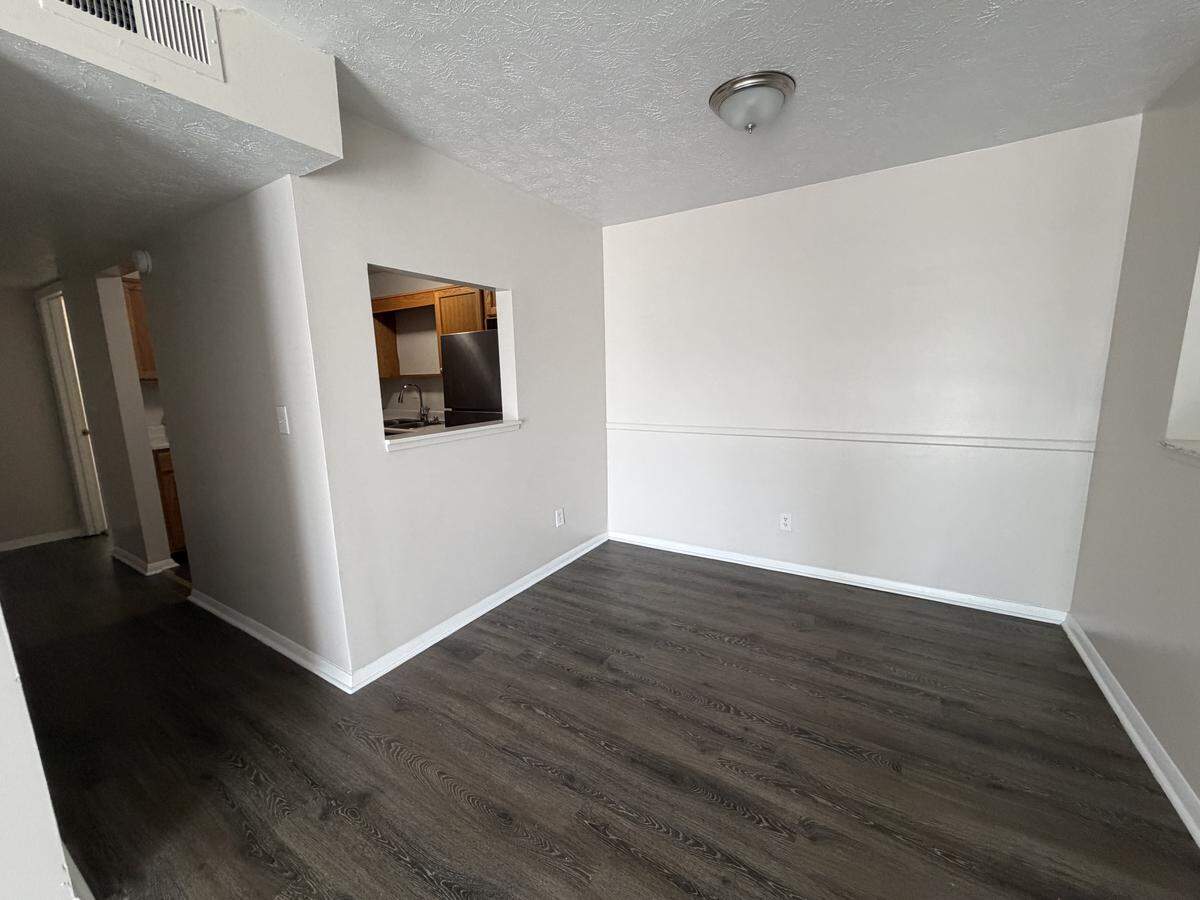
Within six months, condemnations were lifted from all occupied units, Adams said.
However, several units and buildings remain condemned and in need of an overhaul of repairs, Adams said, and Home Forward does not have enough money to fix them.
“We have really just gone as far as we can go. We have the cash flow that comes in from the monthly rent,” she said. “We’ve replaced a lot of HVAC units, and the banks didn’t contribute to that, but they kind of halted that (process) somewhere along the way. So we are limited to being able to get any more ready.”
This story was originally published April 29, 2026 at 5:00 AM.