Kids in kinship care to lose services as funding cuts force Lexington program to close
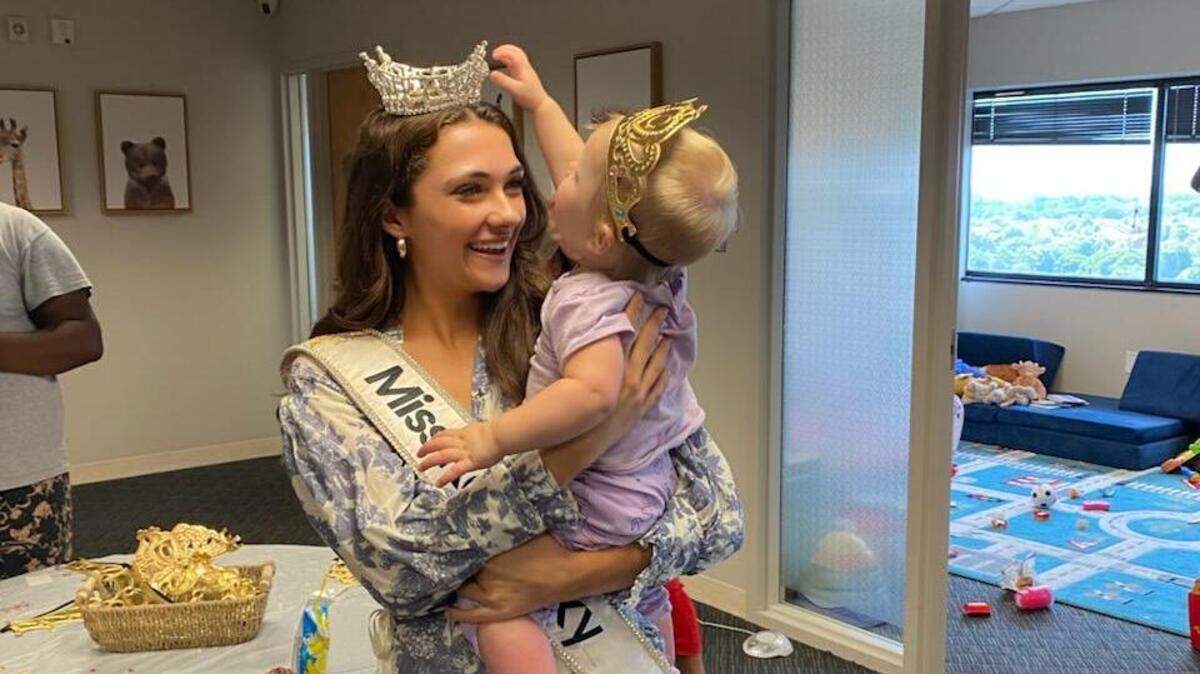
A program that serves Kentucky children who have been placed in the care of relatives will be forced to close at the end of June because of lack of funding.
Samantha Sheets, program director for Lexington-based Kindred Roots, said the program, which is operated by The Bair Foundation, a Christian nonprofit, was notified May 27 that it had lost its funding.
And, she said, it’s thought to be “the only kinship-focused reunification program in the state of Kentucky.”
The children served by Kindred Roots have been removed from their parents’ care by the state and placed with grandparents or other relatives. Kindred Roots provides supervised visits between the children and their biological parents, as well as parenting education, court advocacy, support for the relatives caring for the children and other aid.
“We provide services to the full family unit,” Sheets said.
If relatives taking in children need beds for the kids or help with a utility bill, or if a parent who is trying to get back on their feet by starting a new job needs new work boots, Sheets said Kindred Roots can help with those kinds of needs too.
A memorandum of agreement with the state Cabinet for Health and Family Services indicates that Kindred Roots had a contract for nearly $2.5 million — $1.1 million for fiscal year 2025 and $1.3 million for fiscal year 2026 — that is set to end June 30.
According to the document, the 2026 portion of the contract is paid for with 15% federal funds and 85% state general funds.
Sheets said cuts to the Temporary Assistance for Needy Families, or TANF, program at the federal level have trickled down to affect programs at the state level.
The Kentucky Lantern reported that Kindred Roots had signed a contract to provide services from 2026 through 2028.
Then, Sheets said, “they told us we have no funding. It was just really short notice.”
“The elimination of Kindred Roots is a part of a broader pattern of state budget cuts affecting preventative family services across Kentucky, a pattern with measurable human costs that far exceeds the dollars saved,” The Bair Foundation said in a statement posted to its website announcing the closure.
“The Bair Foundation urges state officials, community leaders, and policymakers to recognize the downstream costs of eliminating preventative family support to be measured not only in dollars but in children’s lives and family stability.”
On Thursday, Gov. Andy Beshear said in a Team Kentucky update he was transferring $30 million to help fund the Department for Community-Based Services budget because of cuts made by the General Assembly.
While Beshear said the funding “won’t fix everything,” he said it would be used “toward the services, especially foster care and foster care children, that otherwise would’ve seen deep and difficult cuts.”
It was not immediately clear whether the funding will help Kindred Roots.
Beshear said that in addition to “protecting safe, stable foster and residential care” and ensuring that foster parents would not experience rate cuts, Beshear said “it’s going to protect access to TANF for Kentucky families” and would help address shortfalls in the Medicaid budget.
“We aren’t sure how that is going to impact us,” Sheets said. “We have to wait and see what they decide to do with that money.”
Beshear urged organizations and families to speak out and contact their legislators about the effects of the budget situation.
The Bair Foundation said in the statement it “is actively pursuing emergency philanthropic funding to sustain the Kindred Roots services during this critical period. The Bair Foundation urges other foundations, community partners, businesses, and individual donors who share a commitment to family stability and children’s wellbeing to come forward.”
Since its launch in 2022, Sheets said hundreds of children have been served by the program.
She said there are 300 to 400 people who are being served and will be affected by the program’s closure.
In some cases, it may be months before children see their parents again, since there are few other services for supervised visitation.
“We’re working on a transition plan as best we can,” Sheets said. “It was really difficult to figure out what to tell the children. There’s just been so much uncertainty in their lives. ...We do not want them to feel like it’s their parent’s fault” that they aren’t getting to have visits.
Sheets said sometimes the court orders supervised visits, and in many instances workers with the Department for Community-Based Services put those parameters in place.
While all the families served by Kindred Roots have court cases in Fayette, Scott, Madison and Clark counties, Sheets said the program’s reach goes much farther.
“We drove up to 80 miles to pick up families for supervised visits,” she said.
She said 97% of families served by Kindred Roots are stable six months after completing the program, whether the kids end up going back home with their parents or whether the kinship caregiver receives permanent custody.
“It is so important and so valuable,” Sheets said. “It’s necessary for safety and wellbeing for our kids.”
She said the program has about 20 employees, including her, who will be laid off after June 30.
“We’re just really hoping for the best,” she said.
Sheets said in the statement posted on Bair’s website that Kindred Roots had several community partners that are also affected: “Foundation47 for financial literacy, Central Kentucky Creative Therapies for music therapy, Lane of Roses for therapeutic co-parenting support, and SAFE KIDS at UKY for home and car seat safety.”
“They built something real alongside us. This loss is theirs too,” she said.
“This is a devastating loss, for the families we served, for the dedicated Kindred Roots staff who showed up every day, and for the communities who counted on this work,” Renay Crouse, chief executive officer of The Bair Foundation, said in the statement. “The Kindred Roots team were exceptional stewards of every dollar entrusted to them and exceptional servants to every family who walked through their doors. The decision to eliminate this funding was made by the state and not a reflection of the program’s outcomes, the quality of its work or the commitment of its people. We grieve this alongside them.”