
Winter's icicles can be dangerous, but are they deadly?
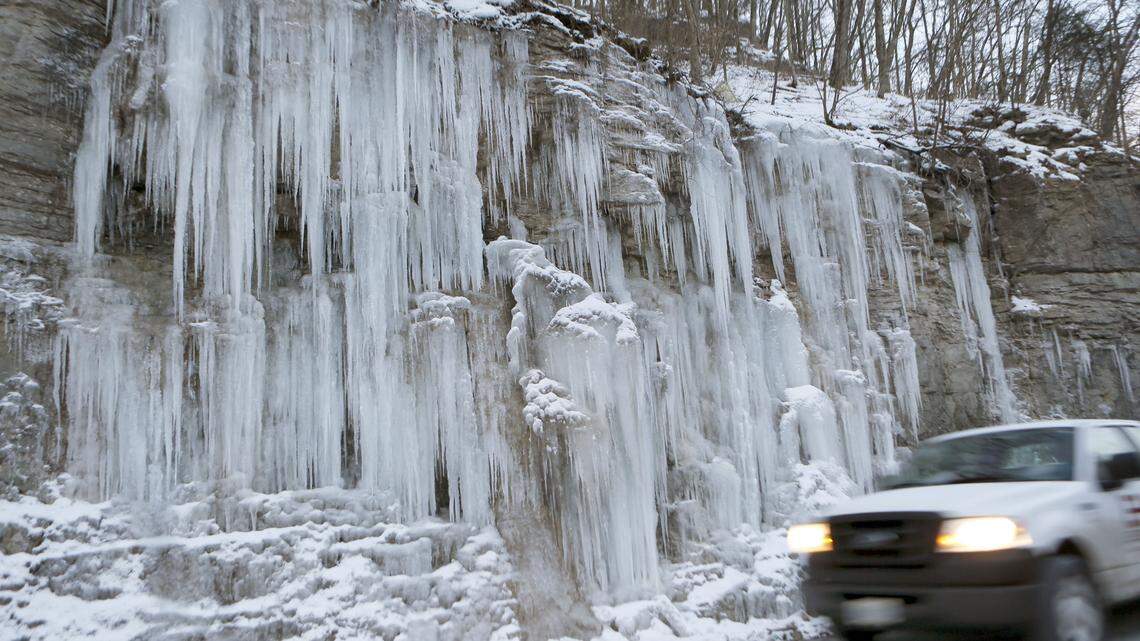
The glistening icicles across Central Kentucky are certainly pretty, but could they be deadly?
Robert Thomas, news director of WKYT, respects the potential for harm. Last Thursday, the news crew was shuttled to work from a nearby parking lot because of falling ice from the station's tower off Winchester Road. The arrangement was made because in 2009 ice falling from the tower damaged employees' cars, Thomas said.
While property damage is a concern, at the University of Kentucky Chandler Hospital Emergency Room they've seen ice/human collisions that need repair. But injury by icicle is, said Dr. Matt Dawson, "extremely rare, but possible."
Good statistics aren't kept on such matters, he said, and he has never seen one nor does he know of a physician who has.
"I have only read about case reports."
Dawson, assistant emergency medicine program director, said large chunks of falling ice are of more danger than the sharp ones we see hanging around Lexington. And, he said, it's unlikely an icicle could impale a person.
"Icicles aren't as sharp as they look," he said. "If they are sharp, they will break before penetrating deeply."
The ice over our heads may catch our glance, but it's the ice under our feet that is the greatest threat.
"We frequently see patients who slip on the ice," Dawson said. "Those injuries can be minor contusions or strains, but they can also be severe head injuries or hip fractures, especially in the elderly."
So, step carefully out there and look up occasionally, just in case.
This story was originally published February 11, 2014 at 5:27 PM with the headline "Winter's icicles can be dangerous, but are they deadly?."