
Molting-season ritual: Canada geese in Kentucky lose their feathers, gain leg bands
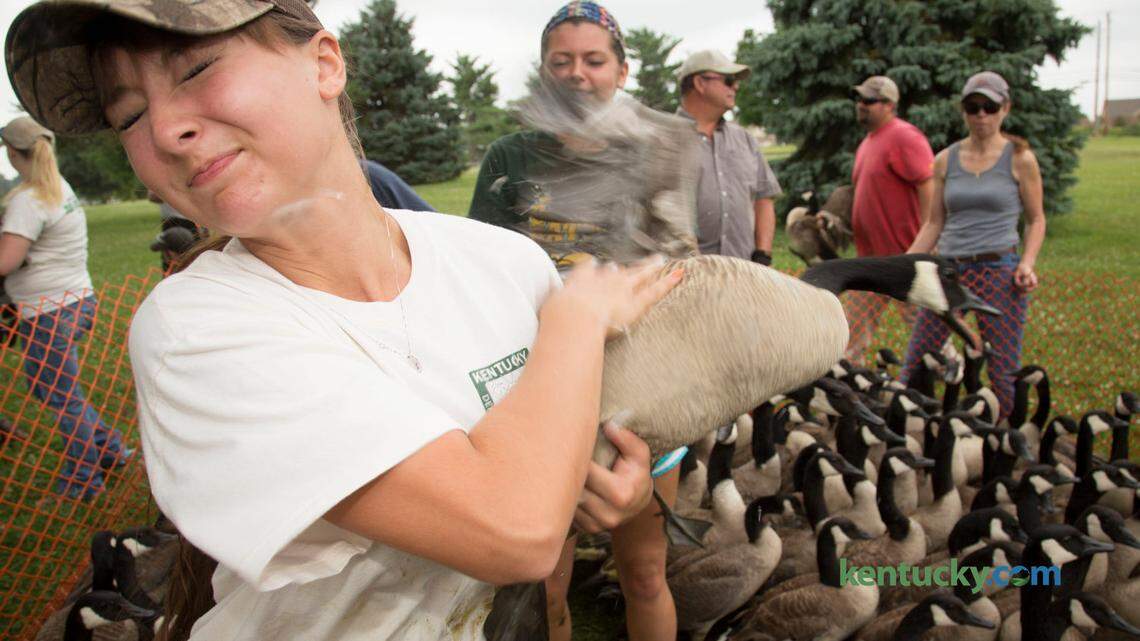
In early summer, when geese enter their no-fly molt, Rocky Pritchert gathers volunteers and employees of the Department of Fish and Wildlife Resources for two weeks of bird-banding throughout the state.
Pritchert, as migratory bird program coordinator, oversees the gender identification and banding of about 1,300 Canada geese.
This is the time of year when geese can't fly away because they're molting, or growing new feathers. Unlike other birds, which grow only some new feathers at a time and thus can continue to fly, geese grow theirs all at once and can't fly during molting.
During banding, a metal band is attached to one leg of each goose. Every band contains a unique number that identifies the geographic coordinates of its place of banding. Hunters and birders report the band number found on any downed goose to the U.S. Geological Survey Bird Banding Laboratory in Laurel, Md.
Banding the geese "helps biologists track population dynamics," said Derek Beard, regional coordinator of wildlife for the Bluegrass region of the Department of Fish and Wildlife. "They want to know: Is the population stable, or is it increasing or declining because geese are hunted? And we want to make sure geese aren't declining in Kentucky."
WASHINGTON - ONE inch begins here. This ONE goes out to the ONE I love. (File under fire) This ONE goes out to the one I left behind. A simple prop to occupy my.
TWO inches begins here. It was the best of times, it was the worst of times. A Tale of TWO Cities. It is a far, far better thing that I do, than I have ever done before.
THREE inches begins here. Commander, tear this ship apart until youve found those plans, and bring me the passengers; I want them alive. Apology accepted Captain Need. You can tell him
This story was originally published July 2, 2014 at 12:24 PM with the headline "Molting-season ritual: Canada geese in Kentucky lose their feathers, gain leg bands."