
Ky. couple turned fibers into fabric, got attention of 3M, Johnson & Johnson, fashion
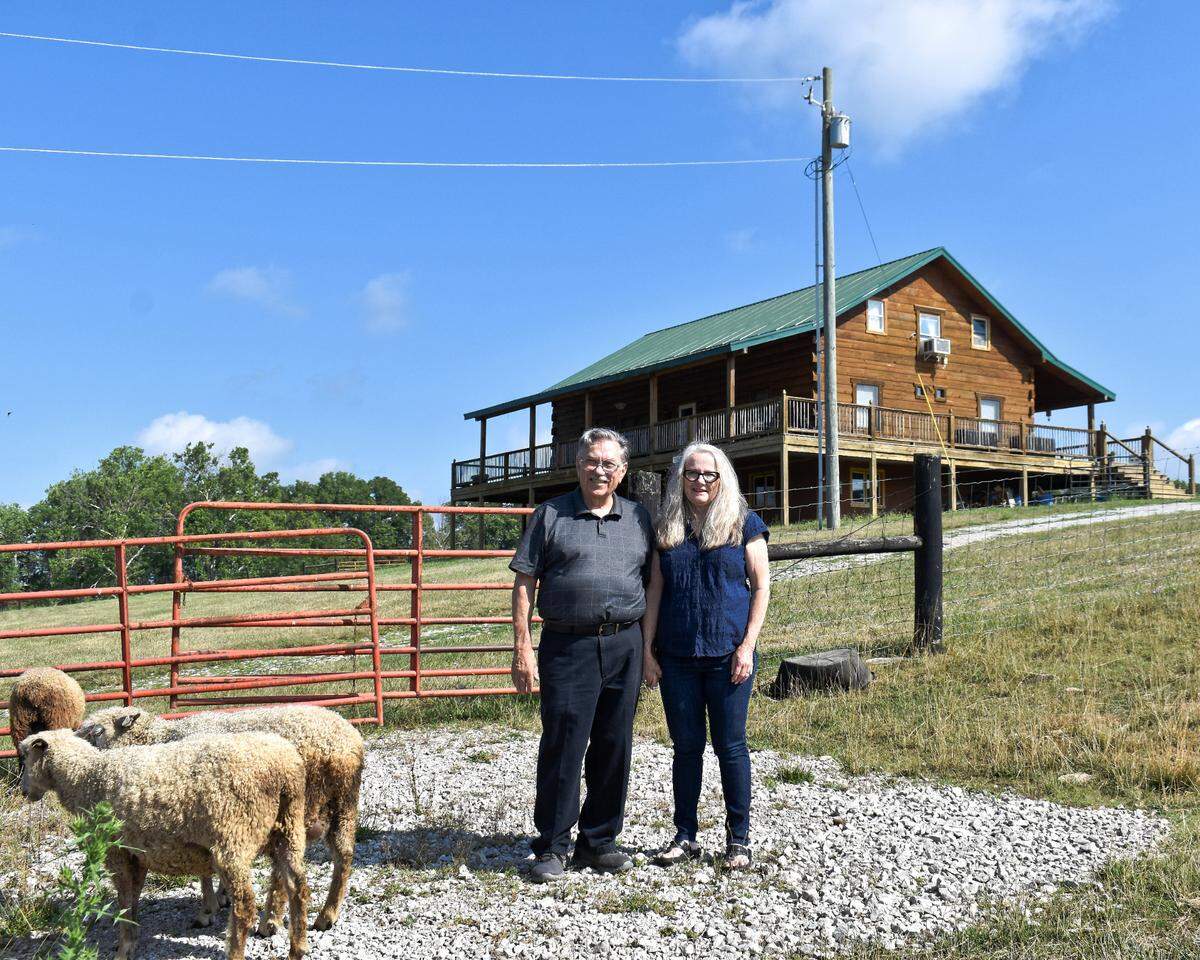
For much of her first career, as an information technology specialist and computer programmer in the Midwest and Northeast, Lanette Freitag dreamed of owning a farm in her father’s home state of Kentucky.
But for years after realizing that dream in the mid-1980s, raising sheep, llamas and alpacas on her Bourbon County farm, Freitag struggled with how to make fabric for felt hats, garments, rugs, tapestries and other marketable goods in a cost-effective way.
“At the time we were using a wet-felting process, which involved crawling around on our hands and knees with soap and water to turn the sheep and alpaca fibers into fabric,” Freitag said. “It was exhausting and slow. At that speed of production, you couldn’t make enough to pay for feeding the animals on the farm. We needed a new way.”
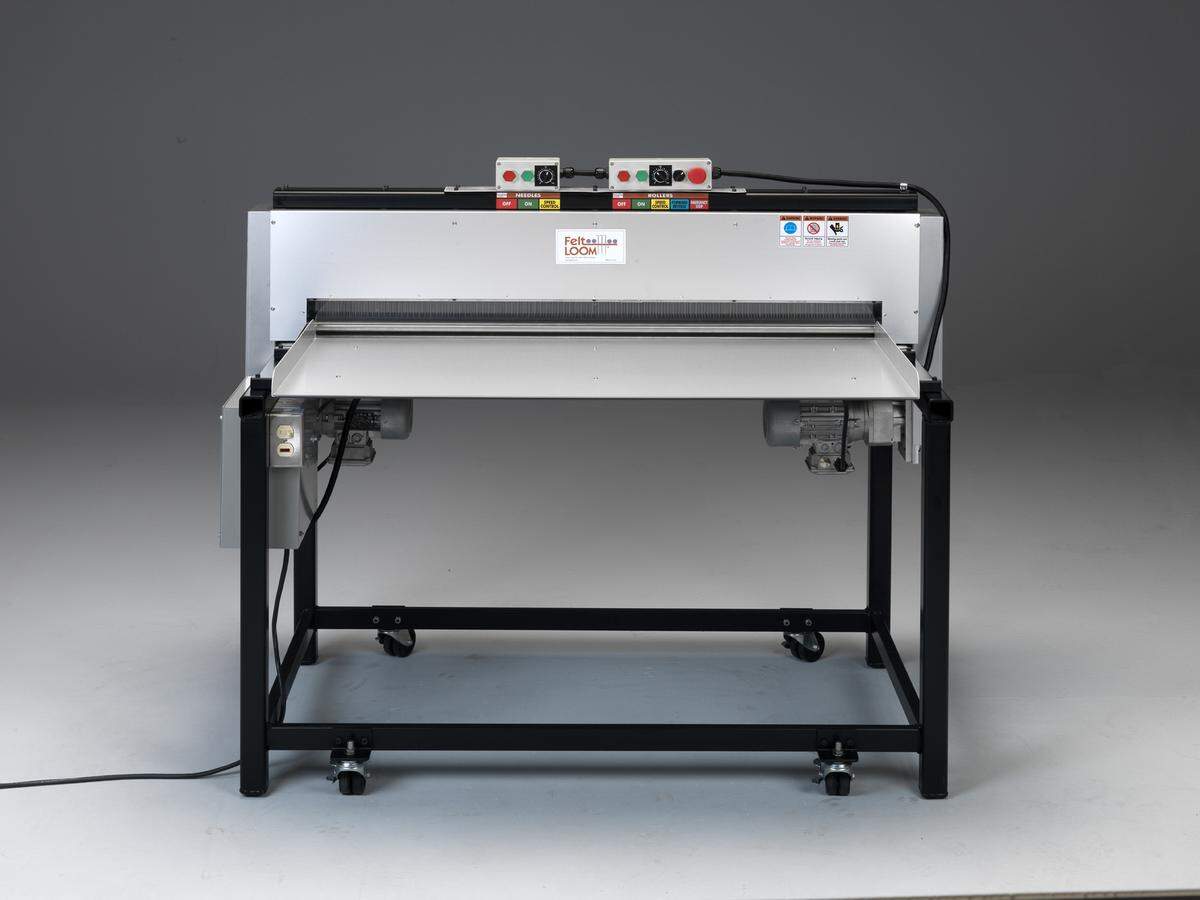
That new way turned out to be the FeltLOOM, a patented needle-felting machine that Freitag and her husband, Don Bowles, co-created and refined over several years, finally bringing it to market in 2008.
“We developed a machine like the textile industry had,” said Freitag, 73, now president of FeltLOOM Inc. “We put that same technology into the hands of regular people, so that a cottage industry farmer can have the same basic fabric-making techniques that big companies had, but on a small scale.”
Demand for FeltLOOMs
Since then, about 250 of the machines have been sold to farmers, fiber artists, fashion designers, textile companies and universities (including the University of Kentucky, Cornell University and Auckland University of Technology) around the world. Prices range from $9,600 to $37,000, depending on the model.
Freitag has traveled to France, Italy and other countries to teach and consult with artists and designers, and held symposiums at the farm attended by FeltLOOM owners and users from around the world, about the machine’s many applications — which are turning out to be more numerous than expected.
In recent years, for example, small companies and large corporations such as 3M and Johnson & Johnson have bought high-end FeltLOOMs to use for research and development of new industrial products such as surgical patches and carbon fibers used for windmills. “They’re lab machines for quick what-if sampling,” Freitag said. “3M has two of them, and they’re using one in a small production line.”
Prior to the FeltLOOM, if a company wanted to do industry testing of a new product or sampling in small quantities, “A lot of the big labs they had to take it to were very backed up,” Freitag said. “You also had to send to send a thousand pounds of everything. Their machines were so big that you couldn’t run a square-foot sample like the FeltLOOM can.”
But the rough-and-ready machine can also handle large quantities of work when called upon. “A company wanted to rent a FeltLOOM at the farm for a day, and I said sure,” Freitag recalls. “I showed up with an 18-wheeler full of material. They ran it through the FeltLOOM and it accomplished what they wanted, and they bought a machine.”
How the FeltLOOM was created
The year’s-long process of creating the FeltLOOM started in 2003, when Bowles asked his wife a simple question: “Did you ever hear about these needles that fix holes in wool?”
No, she hadn’t. Bowles brought home a few of the barbed needles, which had been in existence since the mid-19th century but had only been used in large-scale industrial settings; they had never been put into the hands of regular people for relatively scaled-down applications.
Experimenting with the needles for the first time, Freitag immediately sensed their huge potential.
“I had a little hunk of wool and Don had a little brown ball,” she recalled. “I started poking it with one of those felt needles and made a little chicken, and he made a little man’s head. In a very short amount of time, we had done an amazing amount of work, far more than we would have done in the wet-felting world.”
Freitag held up the needle to her husband and said, “These needles are going to change our lives. I need it and other people need it.”
The couple quickly assembled what turned out to be the embryo of the FeltLOOM: a series of brushes with felting needles instead of bristles. “We made three-needle tools, four-needle tools, six-needle tools,” Bowles said. “Very quickly it became obvious we needed a machine.”
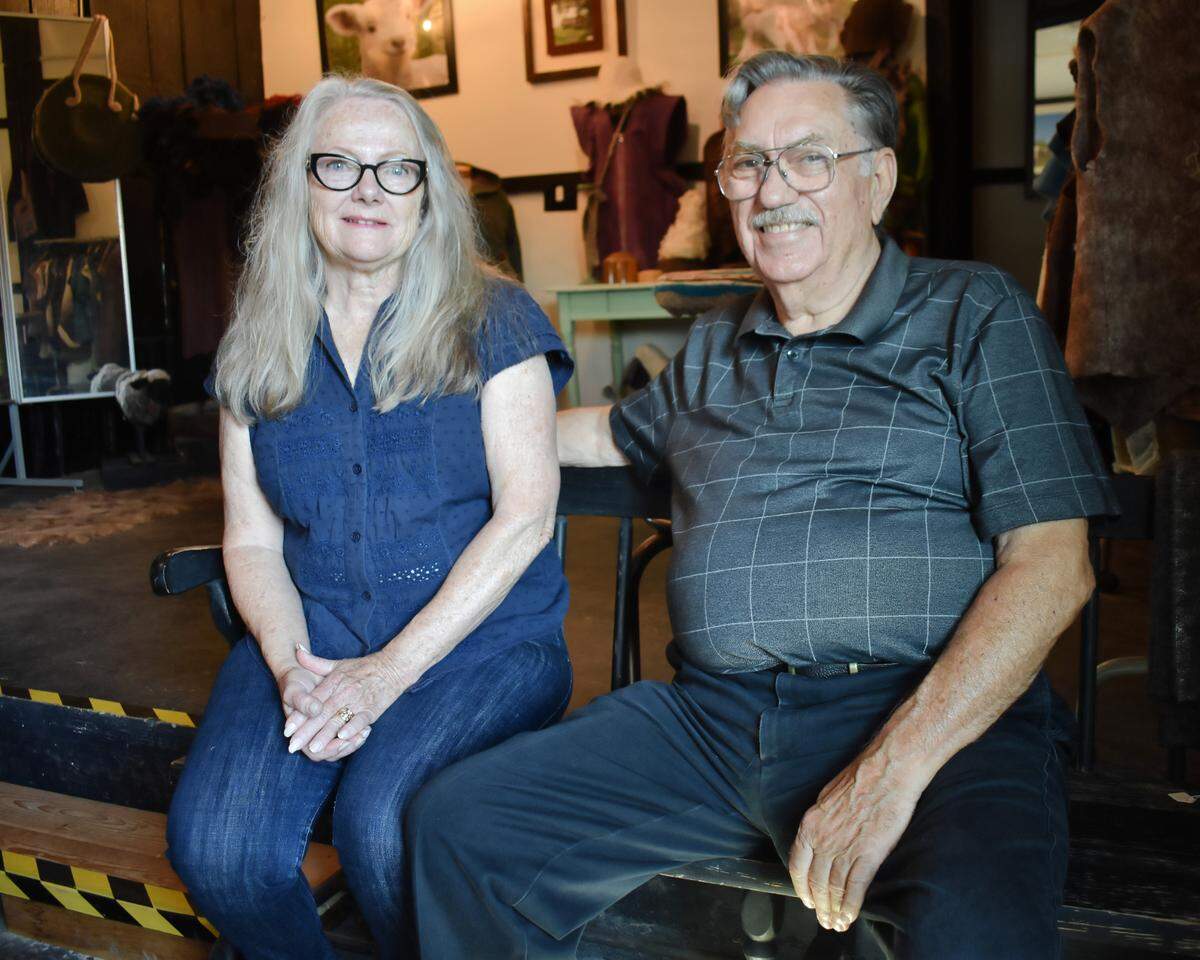
Working with an engineer in North Carolina, Freitag and Bowles created the first FeltLOOM prototype, which was 36 inches wide and used hundreds of felting needles to bind raw animal fibers into fabric.
But there were serious problems. The machine had no ability to run in reverse. The rollers that pulled the fibers through the needles were glitchy. And changing the needles was cumbersome, “a two- or three-day job,” Bowles said. “We knew it had to be better.”
With the help of a grant from the Kentucky Science and Technology Corporation and engineering assistance from the University of Kentucky Center for Manufacturing, the couple refined the FeltLOOM and were awarded a patent in 2008.
“And here we are,” Freitag said with a smile.
Using the FeltLOOM for sustainable clothing
There are at least two new frontiers for the FeltLOOM: sustainability and job training.
Fashion designers like Eileen Fisher in New York and wearable-art creators such as Lexington’s own Laverne Zabielski are using the FeltLOOM to blend together old fabrics and materials — including synthetic fabrics and recycled plastic bottles — to create brand-new fabrics for use in their latest designs.
“What I love about the FeltLOOM is that it allows me to contribute to keeping synthetic fibers out of the landfill, where they would never disintegrate,” Zabielski said. “I use them to fuse new fabrics for sustainable clothing.”
Freitag is exploring the possibilities of using the FeltLOOM to recycle old fabrics into new ones at her research and manufacturing facility in downtown Carlisle. To that end, in 2018, Goodwill Industries of Kentucky donated 1,000 pounds of clothing, bedding and other landfill-bound textiles for the cause.
She’s also developing a network of potential partners — including the ARC Counseling Center, the Isaiah House Treatment Center in Danville and Jubilee Jobs of Lexington — to test the idea of using the FeltLOOM as a form of job training and resume-building for underemployed people, including those in recovery.
“We’re still in the exploratory phase of this, and of course COVID has brought everything to a halt for the moment,” said Bruce Manor, executive director at Jubilee Jobs. “There are some interesting possibilities out there if we can find appropriate industries and a marketable material that could be used to make shoe liners or something like that. It’s finding that niche.”