‘Like living next to an endless wall.’ Council rejects high-rise apartments near UK.
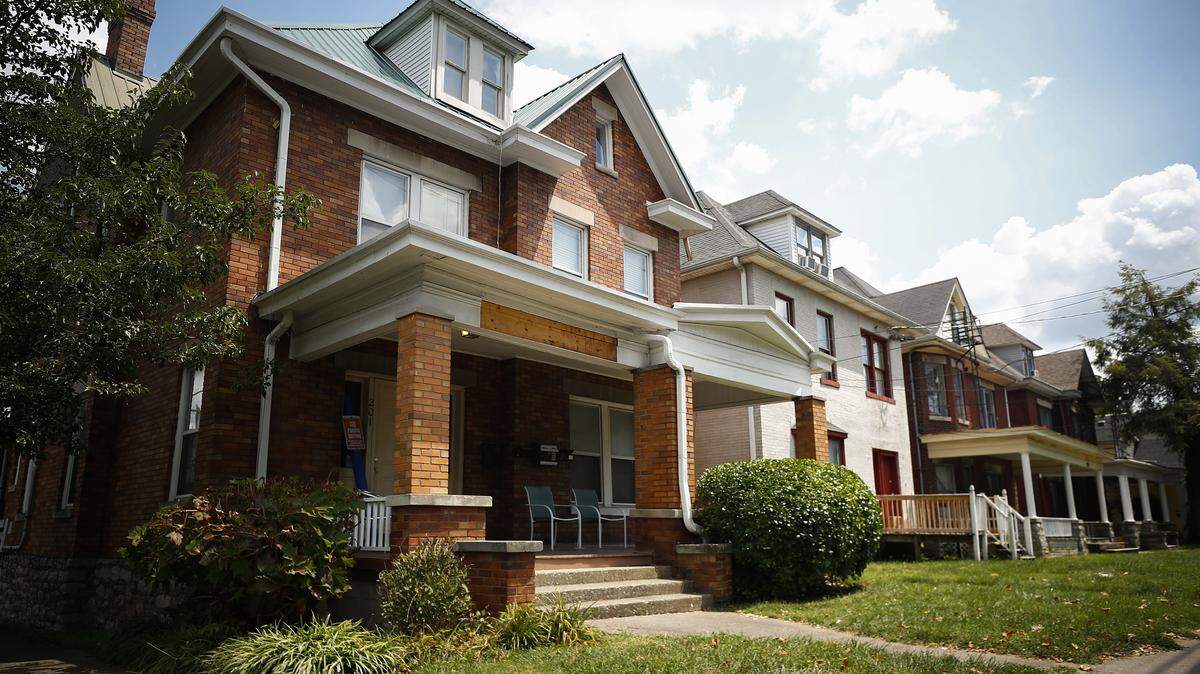
A proposal to put a controversial high-rise apartment complex aimed at students near the University of Kentucky campus appears to be dead.
After a more than five-hour hearing, the Lexington-Fayette Urban County Council voted 8-3 Tuesday night to turn down a zone change for Aptitude Development LLC of New Jersey to build an apartment complex up to eight stories tall that would include 208 apartments and 235 parking spaces.
Aptitude can challenge the council’s decision in Fayette Circuit Court.
The Urban County Planning Commission voted 6-3 in November to turn down the zone change from residential to a business zone for property located at East Maxwell Street between Stone and Lexington avenues. The developer wanted to raze 12 homes in that block to make room for the high-rise apartment.
City planners had recommended approval of the zone change at the November meeting but recommended limiting the building’s height to 75 feet instead of the 10 stories Aptitude Development had originally proposed. A 75-foot height restriction would translate to six stories. That would be financially unfeasible, said Jon Woodall, a lawyer for Aptitude.
Aptitude officials told the council during Tuesday’s meeting the total economic impact of the development would be $40 million.
“We are not some fly-by-night company,” said Jared Hutter, CEO and principal of Aptitude. “We will be here for ten-plus years.”
Aptitude is building a similar development in Louisville.
Hutter said the development needs to be at least eight stories tall to provide affordable market-based apartments. Dropping a floor does not substantially decrease the cost of development, he said.
“The opposition is against any development,” Hutter said.
The majority of the housing in the area is student housing. “We are not changing the use of the area,” Hutter said.
Woodall said the 2018 Comprehensive Plan, sometimes called Imagine Lexington, encourages density, which is what the company proposed to do on that block of East Maxwell Street.
The alternative to more density is expanding the urban service boundary, where development can occur, he said.
“Imagine Lexington aims to increase density particularly along significant corridors,” Woodall said. “There is a substantial housing shortage, particularly on campus. That campus housing shortage has been in the news.”
Neighbors of the proposed apartment building said it was too big, had too many bedrooms and too few parking spaces in a dense area that already has a lot of traffic.
Others said the building was not in keeping with the character for the neighborhood, which consists mainly of older, two and 2 1/2 story homes.
Jessica Winters, a lawyer for the Aylesford Place Neighborhood Association, urged the council to follow the planning commission’s recommendation and deny the zone change.
The neighborhood “does not haphazardly oppose zone changes,” Winters said. It met with Kroger several times during the controversial fight over the demolition of the former grocery store and its new building on Euclid Avenue, she said.
Eight of the 12 homes that would be razed are more than 100 years old, Winters said. Officials with Aptitude, which has an option to buy those houses, said the are in disrepair.
“That is demolition by neglect,” Winters said.
Winters said the razing of those eight buildings would be largest demolition of historic buildings since the demolition of a neighborhood when Rupp Arena and the convention center were built in the 1970s.
The development would have 203 parking spots for more than 500 bedrooms.
“The fact is that students in Lexington rely heavily on vehicles,” Winters said.
The shortage of student housing is only on campus, Winters said. This fall, UK had to scramble to find rooms for students when demand for on-campus housing outstripped supply.
“The development will be monolithic and will dwarf the surrounding neighborhood,” Winters said.
The neighborhood would prefer a five-story height limit, she said.
More than two dozen neighbors spoke in opposition to the zone change Tuesday.
Kevin Benzie owns six properties on Hagerman Court, which borders the property. Hagerman Court is really an alley, he said. His tenants will step out their front doors and run into the back of the apartment complex, he said.
“It’s like living next to an endless wall. Would you want to live there?” Benzie said.
Kaitlyn Frick, a UK student, said Aptitude wants to build high-end student housing, which is not what students need.
“Students are not seeking more luxury options; they are seeking more affordable options,” Frick said.
Tom Self, who lives on Kentucky Avenue, said parking is already problematic in the neighborhood. Having only 200 parking spaces for more than 500 beds is going to put potentially 300 cars into the surrounding neighborhoods.
“They are going to be parking on the streets around that neighborhood,” Self said. “There is already no place to park.”
Hutter countered that Aptitude properties in other college towns have enough parking to accommodate the building’s occupants. Many students no longer bring cars to campus, he said. Hutter said for a four-bedroom unit, people will be charged $500 per bedroom. That includes all utilities. It’s not high-end student housing, he said.
Fran Taylor, who lives on High Street, said allowing Aptitude to tear down historic buildings because they are in disrepair sets a dangerous precedent. “Demolition by neglect undermines historic neighborhoods,” Taylor said. The city should put its resources into code enforcement and force those landlords to repair the buildings, she said.
Council members said they felt that the building was just too big for East Maxwell Street.
“I’m just not convinced that this is the right property and the right development at this time,” said Councilwoman Kathy Plomin.
Councilman Bill Farmer Jr. said the scale of the project isn’t right. “Neighborhoods come first,” he said.
But Councilwoman Angela Evans said the council approved previous developments in her council district despite neighborhood opposition.
“Some neighborhoods come first,” Evans said. She unsuccessfully pushed for the council to consider an eight-story maximum height.
Those who voted to turn down the zone change include: Plomin, Farmer, Jake Gibbs, Jennifer Reynolds, Susan Lamb, James Brown, Vice Mayor Steve Kay, Chuck Ellinger. Those who voted for the change: Evans, Josh McCurn and Jennifer Mossotti.
This story was originally published February 12, 2020 at 10:52 AM.