‘Courageous group of people who spoke truth to power’ Urban League unveils new book
The story of the Urban League of Lexington-Fayette County is most easily told through people the organization has helped.
Growing up in Lexington, Rashida Thompson lived in an Urban League renovated home on Charles Avenue. Later, her two sons attended the Urban League’s YLEAD or Youth Learning Economics and Appreciating Diversity, a six-week summer camp to introduce middle school students to entrepreneurship.
Her thriving business, Rashida’s House of Style on Georgetown Road, was expanded in 2016. She turned to the Urban League to find suitable contractors.
“I used Urban League workers to do all my renovation work,” Thompson said.
Thompson’s story is one of many in a new book commemorating the 50th anniversary of the Urban League.
“The First 50 years: 1968 to 2018” was released Monday after more than two years of work. The book documents the Urban League’s early beginnings and its programs to build economic opportunity for Black and all impoverished Lexingtonians since 1968.
The book was officially unveiled Monday during a Facebook Live event. People can reserve copies at ullex.org. The book is also a fundraiser for the organization. Suggested donations are $100.
The book was born during the 50th anniversary celebration in 2018, said P.G. Peeples, the chief executive officer of the Urban League since 1971.
“We decided we wanted to write our own history,” Peeples said.
The book traces the struggle and push back from many in the white community to establish a chapter of the Urban League in Lexington. The book also follows the chapter’s decades-long push to address longstanding racial inequalities through economic empowerment.
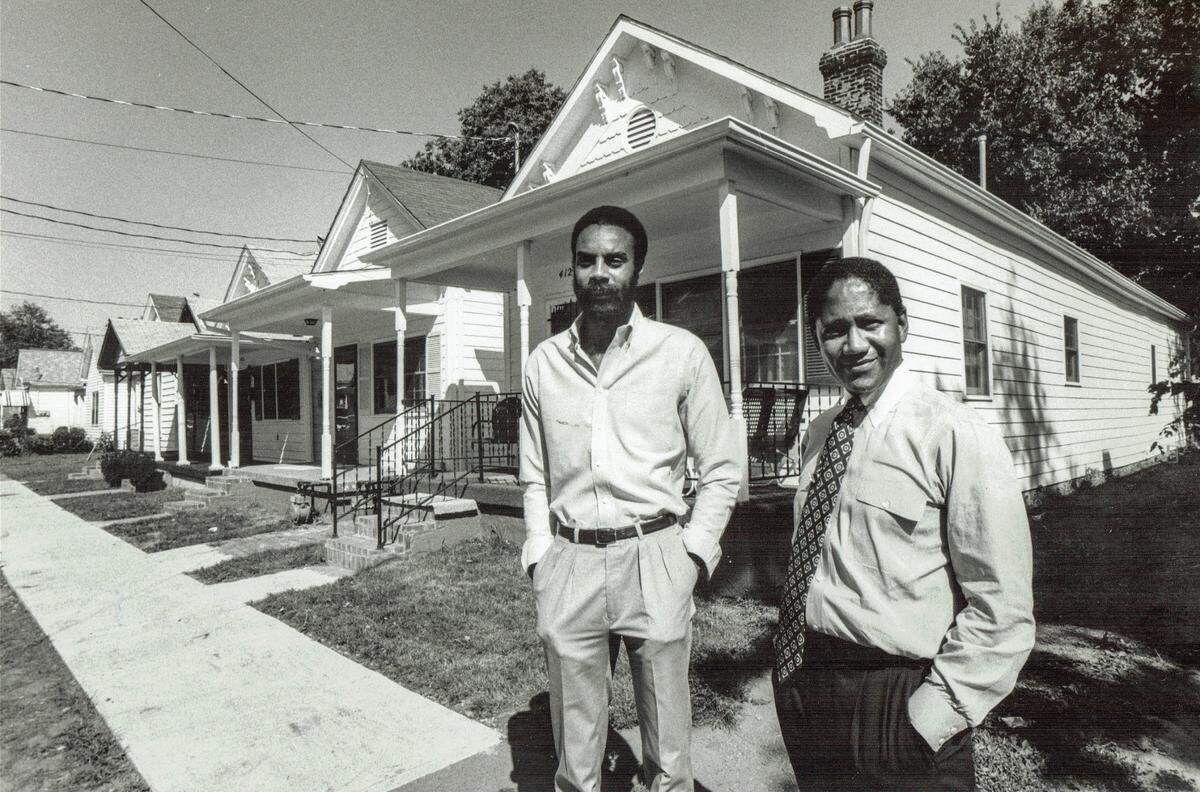
Its affordable housing program began in 1984 with the rehabilitation of four dilapidated shotgun houses on Chestnut Street. The program has rehabbed or built 159 housing units. In the early 2000s, the Urban League started on affordable rental units. As of 2019, it had 261 affordable rental units.
The league’s job training program started with a typing class taught by Geraldine Sykes, wife of Harry Sykes, a driving force behind the creation of the Urban League and its first chairman in 1968.
Since then, job training programs have morphed and changed to address the changing times. Those programs include building trade classes, technology courses, summer youth programs, mentorship programs, scholarships and professional development.
Davia Jones saw an email in 2018 about a new Urban League program to become a certified fiber-optic technician. Jones was working in the food business at the time. She took the course and now works for Spectrum/ Charter Communications as she seeks additional certifications to get additional promotions. As she said in the book, the Urban League program gave her a career.
“It was the best thing I have actually ever done (for my career) so far,” Jones said.

The story of the Urban League is also the story of Peeples, who was 24-years-old when he became executive director in 1971, then the youngest director of an Urban League in the country. A chapter of the book is dedicated to Peeples, his work with the Urban League and his five decades of advocacy in Lexington and across the state to address inequalities in housing, education and employment.
Raised in Lynch in Harlan County and one of nine children, Peeples first attended community college and then moved to Lexington to attend the University of Kentucky. He graduated in 1968.
He was one of about 50 Black students at UK.
Racism at UK at the time was “very, very open,” Peeples said in the book. When he walked along Rose Street, he often heard the n-word coming from passing vehicles.
During the Facebook Live kickoff for the book launch on Monday, Peeples said it took courage and diligence to start the Urban League in 1968. White people in power in Lexington were fearful of it. They thought it would become a radical group. Yet the white and Black organizers pushed forward and raised the $27,000 needed to start the local affiliate.
“It started with that founding group of courageous people that spoke truth to the power,” Peeples said.
The book was edited by Jacalyn Carfagno, a former editor and writer for the Lexington Herald-Leader.