
Lexington area has many pretty roads, but none were a National Scenic Byway until now
Bluegrass residents who feel they live in one of the most scenic parts of the United States could be forgiven for asking the Federal Highway Administration, “what took you so long?”
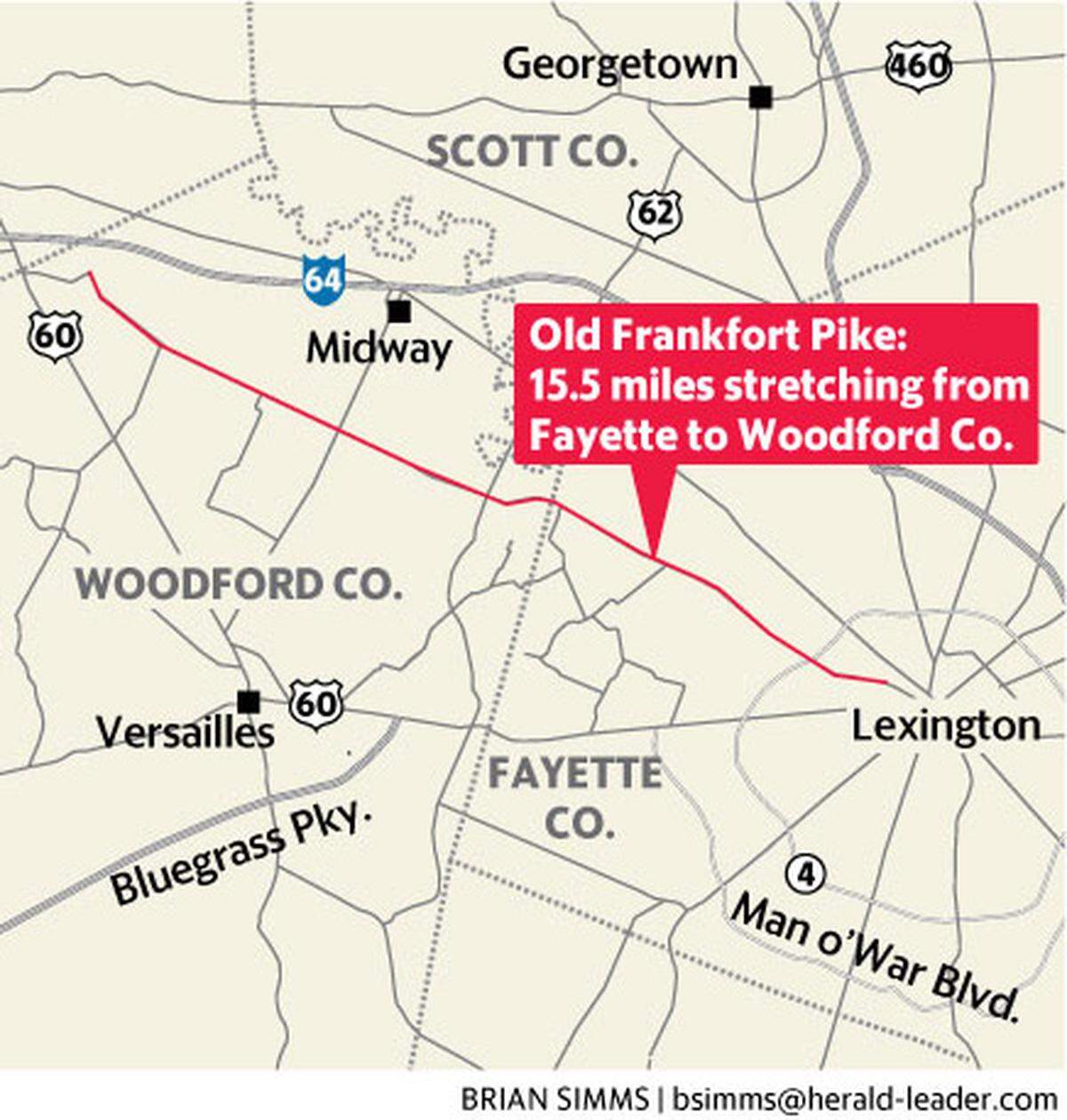
I am referring to the Administration’s recent announcement that 15.5 mile long Old Frankfort Pike has been selected as one of this year’s 34 National Scenic Byways. While six other Kentucky roads have been so honored (the Country Music Highway and Lincoln Heritage Scenic Highway most notably), this is a first for the Lexington area.
Scattered across America — 184 in 48 states — these scenic byways, often described as “the roads less traveled” in this era of interstates and superhighways, are chosen based on six categories.
Beauty, of course, is key, but other factors include archaeological, cultural and historical significance as well as recreational opportunities and a mostly intact natural landscape. It doesn’t hurt if that landscape can be found in practically no other part of the country.
Old Frankfort Pike, originally known as the Old Lexington-Frankfort Road, has been in existence longer than Kentucky has been a state. Work on it took place between 1775 and 1780, while Kentucky became the 15th state in 1792.
Leaving Lexington, a shift from urban to rural
If you haven’t taken a scenic drive down Old Frankfort Pike lately, you can celebrate this honor and see some of the reasons for it.
Start at the Distillery District, and see both the remarkable re-development of what was Lexington’s oldest bourbon distillery, and the only place where the buried Town Branch Creek is currently above ground and visible.
A short detour off this portion of the Pike leads to McConnell Springs, where Lexington began in 1775, and a great place for a quick hike to its bubbling blue hole.
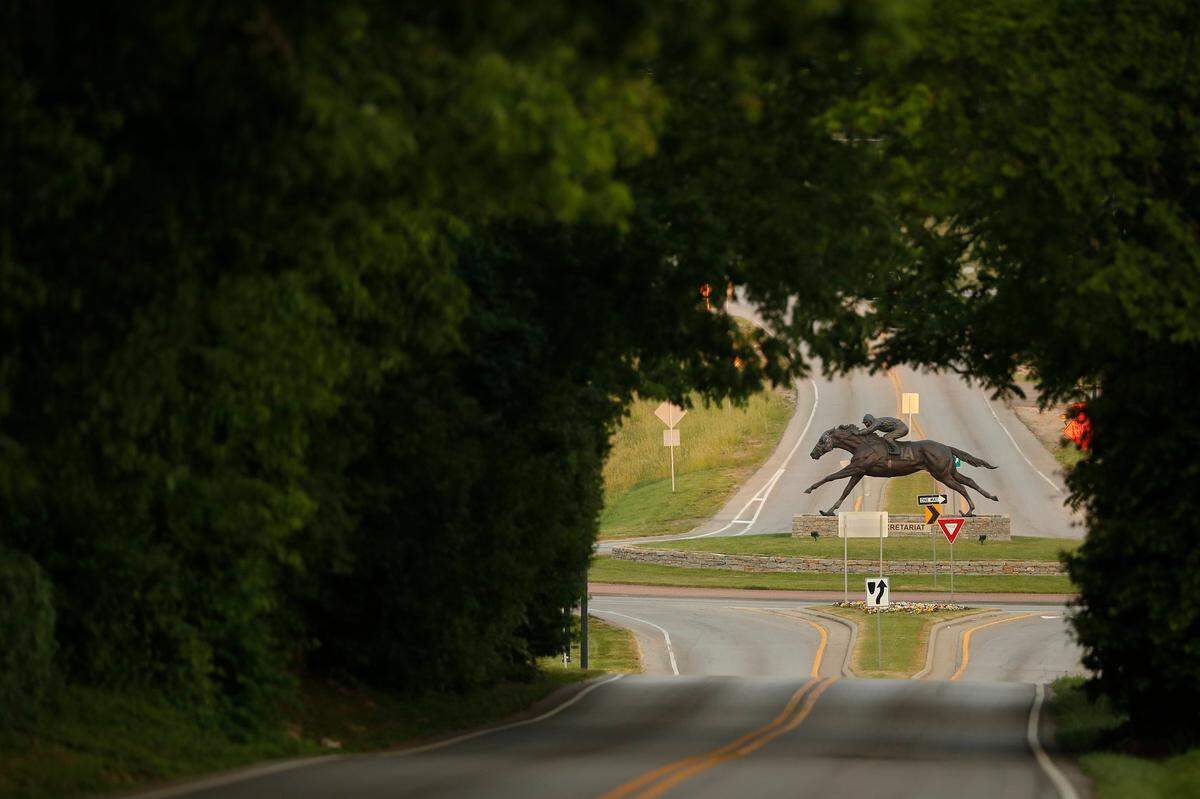
Back in the car, head away from the city and when you reach the roundabout connecting Old Frankfort Pike and Alexandria Drive, dominated by the statue of Secretariat, notice how the landscape shifts from urban to rural.
This is horse country at its best, with famed Thoroughbred farms such as Darby Dan, Donamire and Windhaven stretching along both sides of the road. Only Darby Dan is open for touring, and you must book a tour through visithorsecountry.com.
Just past Donamire is one Old Frankfort Pike attraction that you can visit on your own, but not until the fall. There was no spring exhibit at the Headley-Whitney Museum due to COVID, but it will re-open September 10th with a new exhibition, “Informed by Nature,” featuring works by local artists Helene Steen and Alex K. Mason. The grounds, including the Mary Lou Whitney Rose Garden and the Shell Grotto, will also be open to visitors, along with a few surprises.
Into Woodford Co., surrounded by iconic rock fences
Continue driving and cross the Fayette County line into Woodford County where another brief detour will take you to Weisenberger Mill, one of Central Kentucky’s most photogenic and photographed spots.
Arriving at Mt. Vernon Baptist Church, you’ll see an example of both the Pike’s architecture and history. The red brick church is done in a faux Romanesque style and upon examining the plaque, you’ll note that it was built in 1822 and still in use today.
This stretch of Old Frankfort Pike is also a good place to see examples of the Bluegrass Region’s iconic rock fences. These fences, made by artfully piling the stones on top of each other without the use of mortar, were first built by 18th century settlers, and later by Scottish and Irish immigrants to the region.
The fences prove a fitting frame for more sprawling Thoroughbred farms, most famous of which is Three Chimneys, long-time home to Seattle Slew, the only undefeated Triple Crown winner.
If by now you’re getting a little hungry, there’s no better meal stop than Wallace Station. Not only does it offer the best of deli and bakery options, the building itself is a historical treasure.
Listed on the National Register of Historic Places, it was built in the early 20th century and served as a store providing goods to residents of Midway, the first town in Kentucky built by a railroad.
The structure has many stories to tell. One involves Dora Brock, the young bride of emancipationist Cassius Clay. According to historian Dr. Thomas Clark, upon her death in 1914, Brock’s wake was held in the store.
She had lived on an adjacent farm prior to her marriage, and after her divorce from Clay, he bought her a small house on the property where she remained until her death.
Another compelling slice of history can be found on the Pike at its intersection with US 62. The white Colonial-style Offutt-Cole Tavern dates back nearly 250 years and has been a tavern, a stagecoach stop, and one-time home of Zerelda Cole, mother of outlaws Frank and Jesse James.
Finally, you’ll have a chance to see one more of the Bluegrass Region’s premier Thoroughbred farms, Lane’s End, also open for tours through visithorsecountry.com.
Old Frankfort Pike doesn’t go all the way to Frankfort, culminating near the intersection of US 60 and I-64. But before it ends, visitors will have ample opportunity to see why it’s Kentucky’s newest addition to America’s Scenic Byways.