New grant will help preserve a building significant to Black history in Lexington
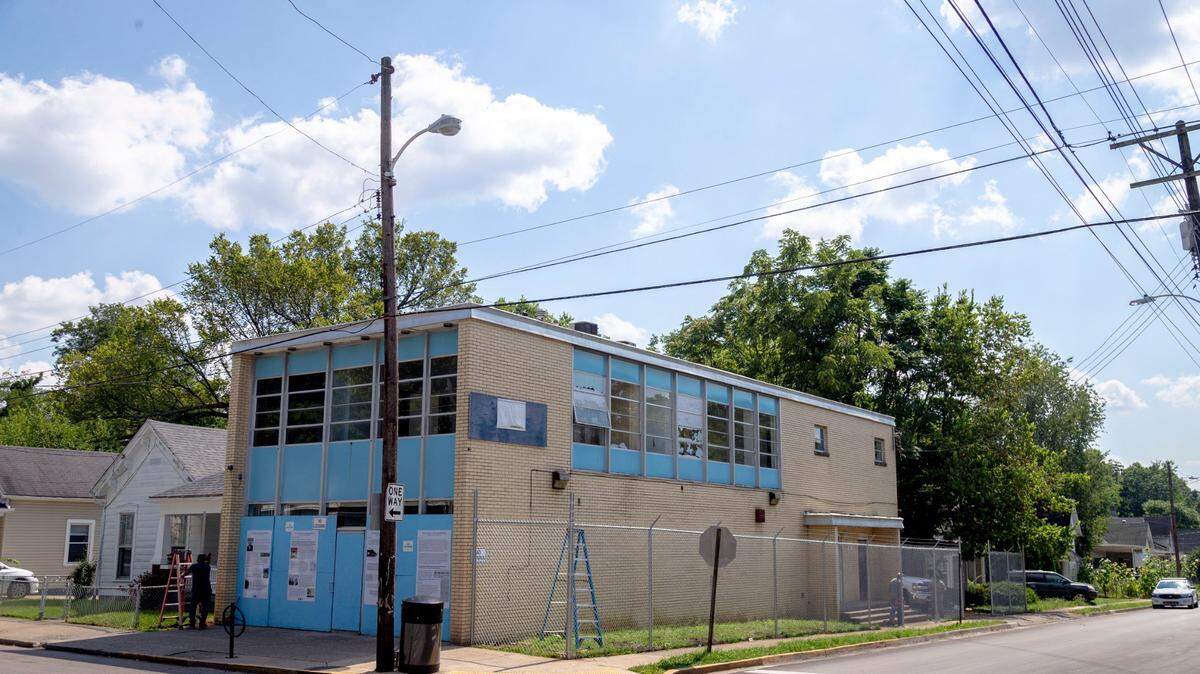
A national fund for preserving significant African American historical sites will help restore a Lexington building that housed the first Rexall drug store franchise in the country owned by a Black pharmacist.
The Palmer Pharmacy building at Fifth and Chestnut streets, the former site of the Catholic Action Center’s day shelter, is the recipient of a grant from the African American Cultural Heritage Action Fund operated by the National Trust for Historic Preservation.
“We’ve been very concerned about this building being demolished,” said Brittany Sams, a historic preservation specialist at the Blue Grass Trust for Historic Preservation.
Sams said the Blue Grass Trust will get $50,000 from the National Trust to help save the site, which is owned by the city.
The Lexington-Fayette Urban County Government committed last winter to spending $300,000 on the building. So far, one potential tenant has expressed interest.
Aside from its cultural significance to Lexington’s history, “the Palmer Pharmacy building is a wonderful example of midcentury modern architecture,” Sams said.
The Palmer Pharmacy was operated by the late Zirl Palmer, a pharmacist who moved to Lexington in 1951 and opened a drug store in the East End, first at the corner of Race and Fifth streets and later at Fifth and Chestnut.
When he moved to Lexington, Palmer said in a 1978 oral history interview, there were nine Black physicians, four Black dentists and no other Black pharmacists.
“Segregation really prevailed then, and I thought that if I came to an area where they had that many physicians as well as dentists, that I couldn’t miss, so far as making a success in the drug business,” Palmer said in the oral history interview preserved by the University of Kentucky Libraries. “...When I came here, there wasn’t any place that a Black person could sit down and drink a soda, and people used to line up ... all the way out the door waiting to sit down at the soda counter.”
Palmer opened a second pharmacy location in a shopping center on Georgetown Street in the mid-1960s and eventually closed the Fifth and Chestnut drugstore, where a Black lawyer and Black doctors also had office space.
In 1968, the Georgetown Street store was bombed by a member of the Ku Klux Klan, injuring multiple people and damaging some other businesses. Palmer, his wife and their 4-year-old daughter had to be rescued from the rubble.
Palmer never reopened his pharmacy. In the 1978 oral history interview, he said: “It was the first time I’d ever experienced being afraid.”
More money needed to save key part of Lexinton’s past
To protect Palmer’s past and namesake, the Blue Grass Trust for Historic Preservation applied for the heritage grant in previous years before winning it, Sams said.
In addition to the grant, the Blue Grass Trust has set aside $25,000 for the property and an anonymous donor has contributed $25,000, Sams said, bringing the total the trust has available to $100,000.
Even with that funding and the $300,000 the city is putting toward the project, whoever operates the building in the future will need to spend an estimated $350,000 to $450,000 to make the structure habitable, those familiar with the property said.
Fayette County Commissioner of General Services Chris Ford said estimates for a complete renovation of the property have ranged from $750,000 to $850,000.
Even though preservation efforts are moving forward, the building’s future use remains uncertain.
The city’s goal has been to attract a partner to take over the building and bring community programs to the East End area, which is in keeping, Sams said, with Palmer’s commitment to serving his community.
The city acquired the property as part of a 2015 settlement agreement with the Catholic Action Center, and the building has been vacant since 2017 when the Catholic Action Center moved into its location on Industry Road.
The city has sought proposals from organizations interested in the property, but it did not receive any formal responses.
However, Ford said, “we know that there is interest” in the building. “We believe some of the concern was redevelopment cost,” he said.
To alleviate some of the expenses and stabilize the property, the city’s $300,000 paid for recently completed environmental work, including asbestos removal. By the end of this year, the city expects the roof will be replaced. Inside, the building has been mostly gutted.
With that accomplished, he said, the city can revisit the question of “the best community-based purpose for the facility.”
Ford said the city never intended to run its programs from the building.
Ford said United Way of the Bluegrass has “demonstrated the highest level of interest thus far” in occupying the property.
Timothy Johnson, president and CEO of United Way of the Bluegrass, said the organization prepared but didn’t submit a proposal for the property because of concern that it couldn’t guarantee it had the amount of money needed to get the building in shape.
He said United Way continues to seek funding.
“I’m hoping that we’ll be able to raise these dollars,” Johnson said. “We’d like to be the partner to make that happen.”
“There is a lot of great potential here,” Johnson said.
And he has a vision for what the building could become.
This month, United Way of the Bluegrass is launching WayPoint Centers, which serve as “a one-stop shop” where nonprofit organizations can meet with people in the community to offer help, such as mentoring, financial literacy, basic needs assistance or substance abuse and mental health services.
The first two WayPoint Centers in Lexington opened at the Charles Young Center and the Black & Williams Center. Another will open in Paris later this month.
Johnson said he’d like to open seven to eight WayPoint Centers in the region over the next five years, including one or two more in Lexington. One could be at the Palmer Pharmacy building.
This story was originally published July 21, 2021 at 12:23 PM.