‘Trying to hold on.’ Rural Kentucky losing people as urban areas grow.
Most counties in Eastern Kentucky and several in the western end of the state lost residents between 2010 and 2020 as urban areas in the state picked up population, according to U.S. Census figures released Thursday.
The state’s overall population rose to 4,505,836 as of April 1, 2020, an increase of 3.8 percent from 2010.
That was less than in previous decades, and the gains and losses were uneven.
Only about half the 120 counties had growth, including many in the Lexington, Louisville and Northern Kentucky areas — places with benefits that drive growth such as universities, major road networks, larger airports and more jobs than in rural areas of the state.
Scott County grew the fastest, with an increase of 21.2 percent, followed by Warren County at 18.2 percent and Boone County at 14.4 percent.
Scott County Judge-Executive Joe Pat Covington said the county’s location and abundance of jobs, including those at the Toyota manufacturing plant in Georgetown and suppliers, help explain the growth.
“It just makes us very attractive for people looking to relocate,” said Covington, a Republican.
Lexington and Fayette County grew by 9 percent during the decade, and every surrounding county grew as well. Behind Scott County, the most growth in Central Kentucky was in Madison County at 11.8 percent.
Warren County Judge-Executive Mike Buchanon said key factors in his county’s “phenomenal” growth include being the home of Western Kentucky University and the county’s location on Interstate 65 between Louisville and Nashville.
“Transportation is so important,” said Buchanon, a Republican in his seventh term.
Most of the growth in Kentucky was in the middle part of the state between Interstates 75 and 65, with the population losses concentrated in counties on the east and west ends of the state.
The counties with the largest populations in 2020 were Jefferson, at 782,969; Fayette, 322,570; Kenton, 169,064; Boone, 135,968; and Warren, 134,554.
The shift from rural to urban places mirrored what happened across the country. Less than half of U.S. counties gained residents from 2010 to 2020, while 80 percent of metro areas grew, according to the Census Bureau.
The five Kentucky counties with the lowest populations were Robertson, 2,193; Owsley, 4,051; Hickman, in the far western end of the state on the Mississippi River, 4,521; Carlisle, another river county, 4,826; and Cumberland, 5,888.
All of them lost population during the 10-year period. Owsley had the second-biggest loss, 14.8 percent, behind only Bell County, a coal county in the southeast corner of the state, which recorded a loss of 16 percent of its population.
Accuracy questioned
Local officials in several counties that lost population questioned the accuracy of the count, taken during the first wave of the coronavirus pandemic, the worst public-health crisis in a century.
“I’m very skeptical of the number,” said Bell County Judge-Executive Albey Brock, a Republican.
The 2020 count of the county’s population was 24,097, down from 28,691 10 years earlier.
Brock said he doesn’t doubt the county lost residents but said factors on the ground such as the real estate market don’t indicate the decline was more than 4,000 people, as the Census said.
Across the state in Ballard County, another county on the Mississippi River, Judge-Executive Todd Cooper also said he didn’t think the count was precise.
Local officials pushed people to complete the census, but the participation rate was not as high as he wanted, Cooper said.
The population in the farming county dropped 6.3 percent, to 7,728.
Cooper pointed to the loss of thousands of manufacturing jobs in the region as a factor in the population decline. Some people have moved for work, and when young people go away to college, many don’t come home, he said.
“We, unfortunately, have a brain drain in this part of the state,” Cooper said.
However, Cooper said the county is seeing growth these days from people moving in to get out of more crowded, expensive places elsewhere in the U.S.
Nearly every county in Eastern Kentucky lost population, including double-digit declines in Bell, Martin, Letcher, Knott and Magoffin.
The region has been hurt by a steep loss in coal jobs since 2011, and efforts to boost and diversify the economy haven’t resulted in enough economic growth to replace those jobs, forcing some people to move.
“People are basically having to leave the community to get gainful employment,” said Martin County Judge-Executive Victor Sloan, a Republican.
The county lost 12.7 percent of its residents between 2010 and 2020.
That has cut the amount of revenue the county receives from property and occupational taxes, forcing cuts and hindering the ability to offer services and try to recruit more jobs.
“We’re basically trying to hold on,” Sloan said.
Magoffin County Judge-Executive Matt Wireman said the loss of population will hurt not just because of the reduction in people paying taxes and buying goods locally, but because much of the federal aid to local governments is based on the number of residents.
The coronavirus relief money his county received, for instance, was based on population, he said.
“There’s all kinds of impacts,” said Wireman, a Democrat. “That’s gonna kill me on funding.”
Floyd County Judge-Executive Robbie Williams said he didn’t think the county lost 3,509 residents — 8.9 percent of its population — as the Census showed.
He hasn’t noticed a drop that big, and there are few homes for sale or apartments for rent in the large coal county.
Williams said many residents use post office boxes to receive mail, and the Census doesn’t mail forms to those.
“We were set up for a loss,” said Williams, an independent. “I hope that our elected officials come up with a better system for areas like Eastern Kentucky, rural areas. I just want to make sure everyone is counted and make sure we have access to the resources that everyone else does.”
The population in Pike County dropped 9.8 percent. Judge-Executive Ray Jones compared the decrease to the whole city of Pikeville picking up and moving.
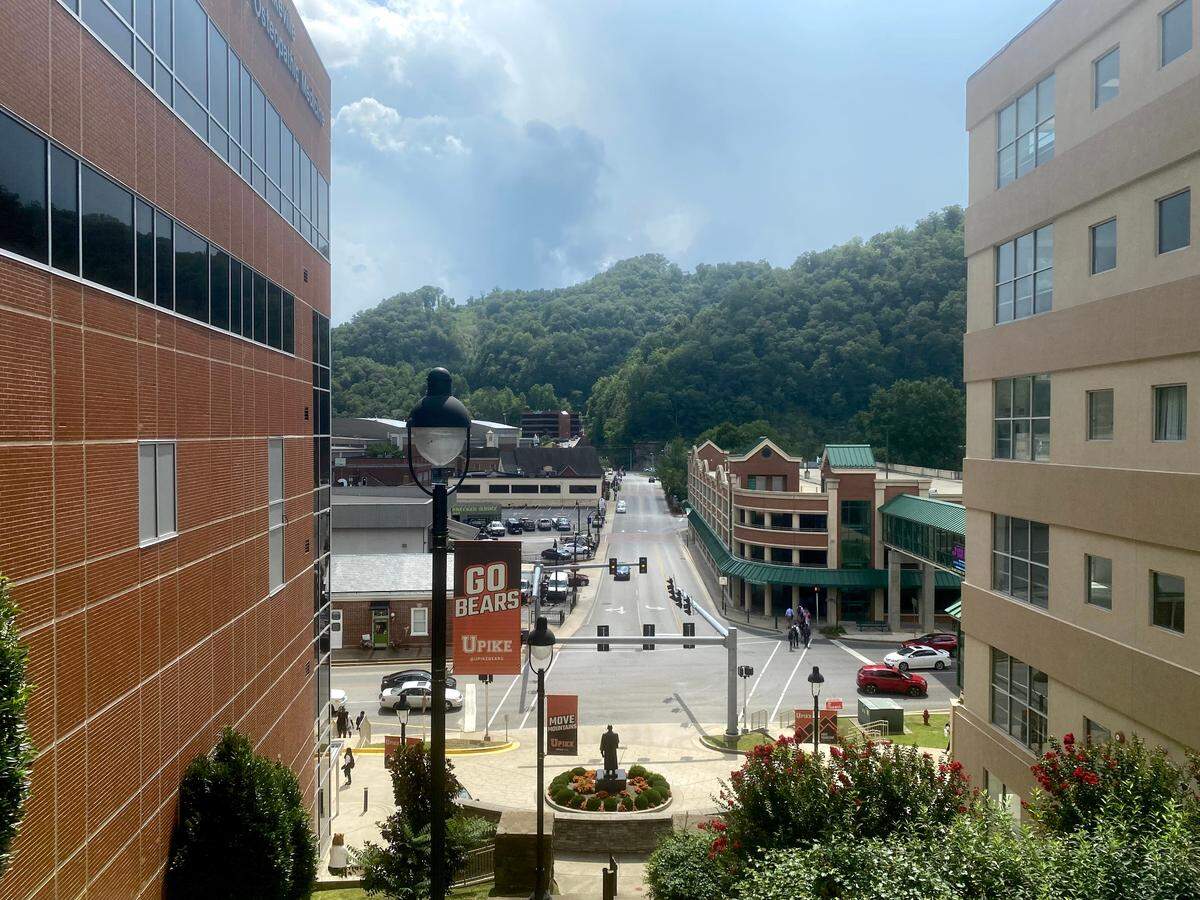
Jones said advantages such as Pikeville Medical Center, the University of Pikeville and a bigger retail base than many surrounding counties will help the county weather the downturn, but said he worries about neighboring counties with less infrastructure.
Some counties already have struggled to provide services at times.
Political redistricting
The changes in population, and shifts from rural to urban areas, also will have a significant impact on political redistricting.
For instance, it is likely the loss of population in Eastern Kentucky and the gain in Central Kentucky means the boundaries of the Fifth and Sixth Congressional districts will change. Many state House and Senate districts also could see shifts.
The census showed the percentage of people in Kentucky who listed their race as white only dropped to 82.4 percent of the total population, while people recorded as Black or African American rose to 8 percent of the total population.
Kentucky ranked No. 9 out of 51 states and Washington, D.C. in the percentage of people identified as white only. Maine was highest, at 90.8 percent.
Nationally, the count listed 61.6 percent of the population as white only.
The number of people listed as Hispanic or Latino also went up in Kentucky.
Kentucky remained one of the least diverse states. The Census measures that by calculating the chance that two people chosen at random would be from different racial and ethnic groups.
Kentucky’s rate was 32.8 percent. California, Texas, New York, Nevada and Maryland were all above 65 percent, while Maine was least diverse at 18.5 percent.
This story was originally published August 13, 2021 at 9:50 AM.