
New book highlights past, including slaves, of Lexington landmark linked to Daniel Boone
Beginning in April, history aficionados and the curious are expected by the busload at Waveland in southern Fayette County, passing through the Doric columns of the entryway, to tour a 4,400-square-foot antebellum Greek Revival mansion once home to the celebrated Bryan family.
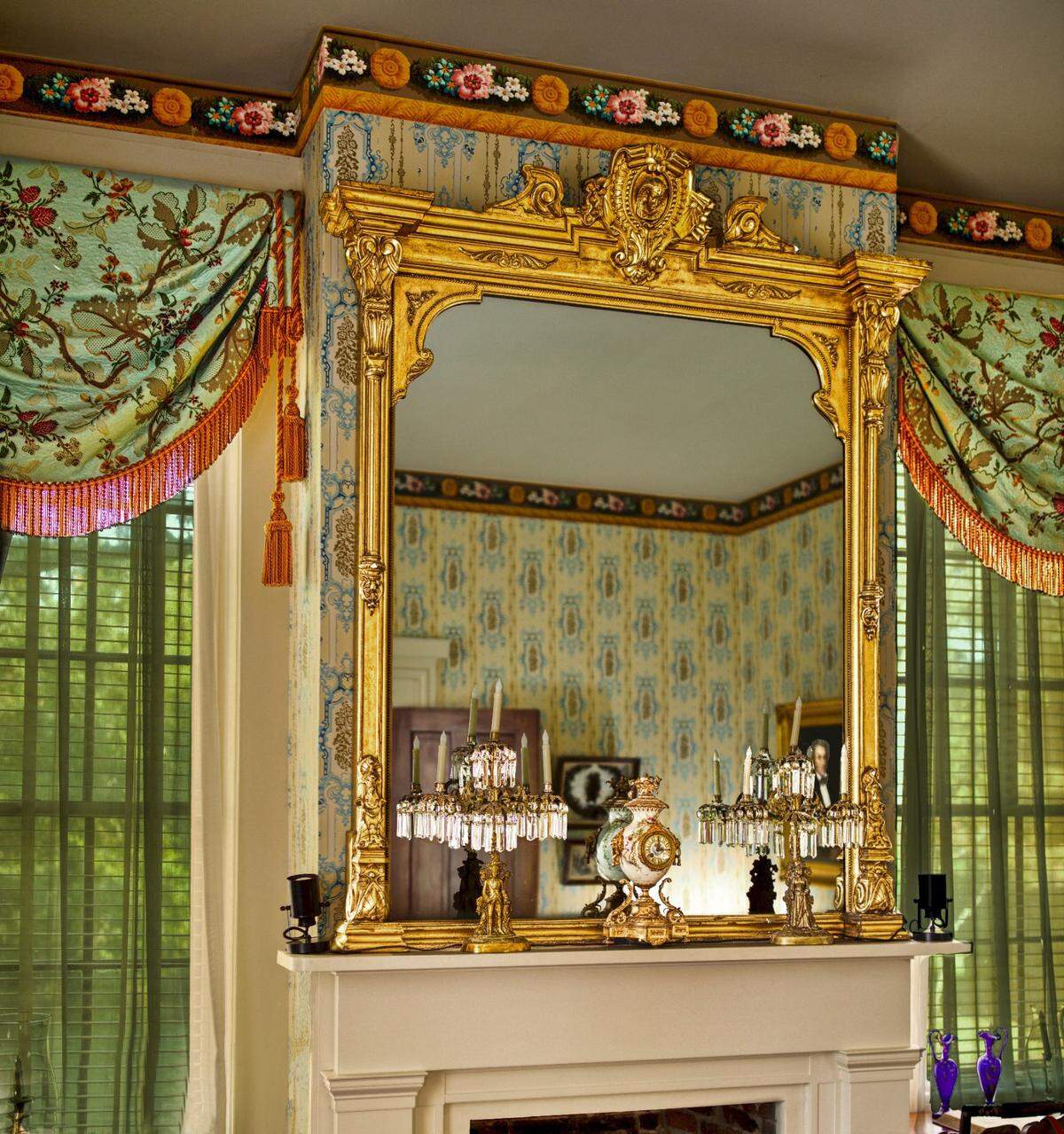
They’ll climb the grand staircase, examine the ladderback chair owned by Squire Boone, admire the gold-leaf mirror above the parlor mantel, snap photos of a rare 1835 Kentucky long rifle forged right on the property and pause to consider the plight of the slaves laboring in the hemp fields that ensured the family’s wealth,
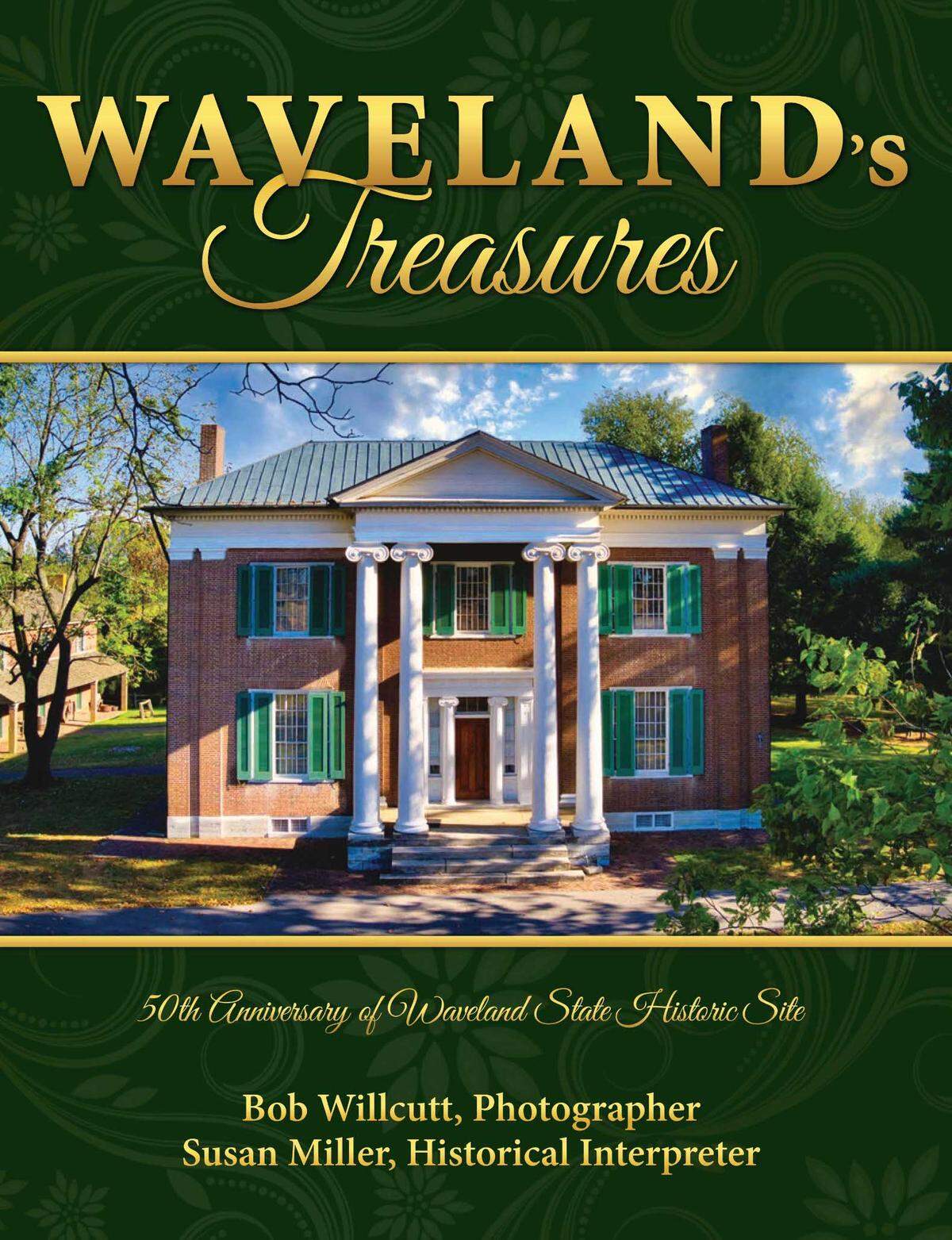
“Waveland’s Treasures,” a new book by Bob Willcutt and Susan Miller, brings the Bryan family into focus, and commemorates the 50th anniversary of Waveland as a State Historic Site operated by Kentucky State Parks. The large format and high-quality color photography suggest “coffee table book,” but that label might belie the hours of research behind the compelling narrative.
“Waveland is one of Central Kentucky’s best kept secrets,” said Miller, historical interpreter and acting curator. She frequently hears comments such as “I live in Lexington and have been driving by on Nicholasville Road for years, and always wondered what this place was.”
Those first-time visitors often become converts. “Once they come for a tea, a tour, the art fair or the Dickens Christmas in the mansion, they’re hooked and they come back,” Miller said.
Waveland’s connections to Daniel Boone
The Waveland story begins in late 1700s North Carolina, where the Squire Boone (father of frontiersman Daniel Boone) family and Morgan Bryan family had neighboring farms on the Yadkin River.
“There were five marriages between the Boone and Bryan families within two generations,” Miller said. Among those was the marriage of Daniel Boone’s sister Mary Boone to Revolutionary War Captain William Bryan.
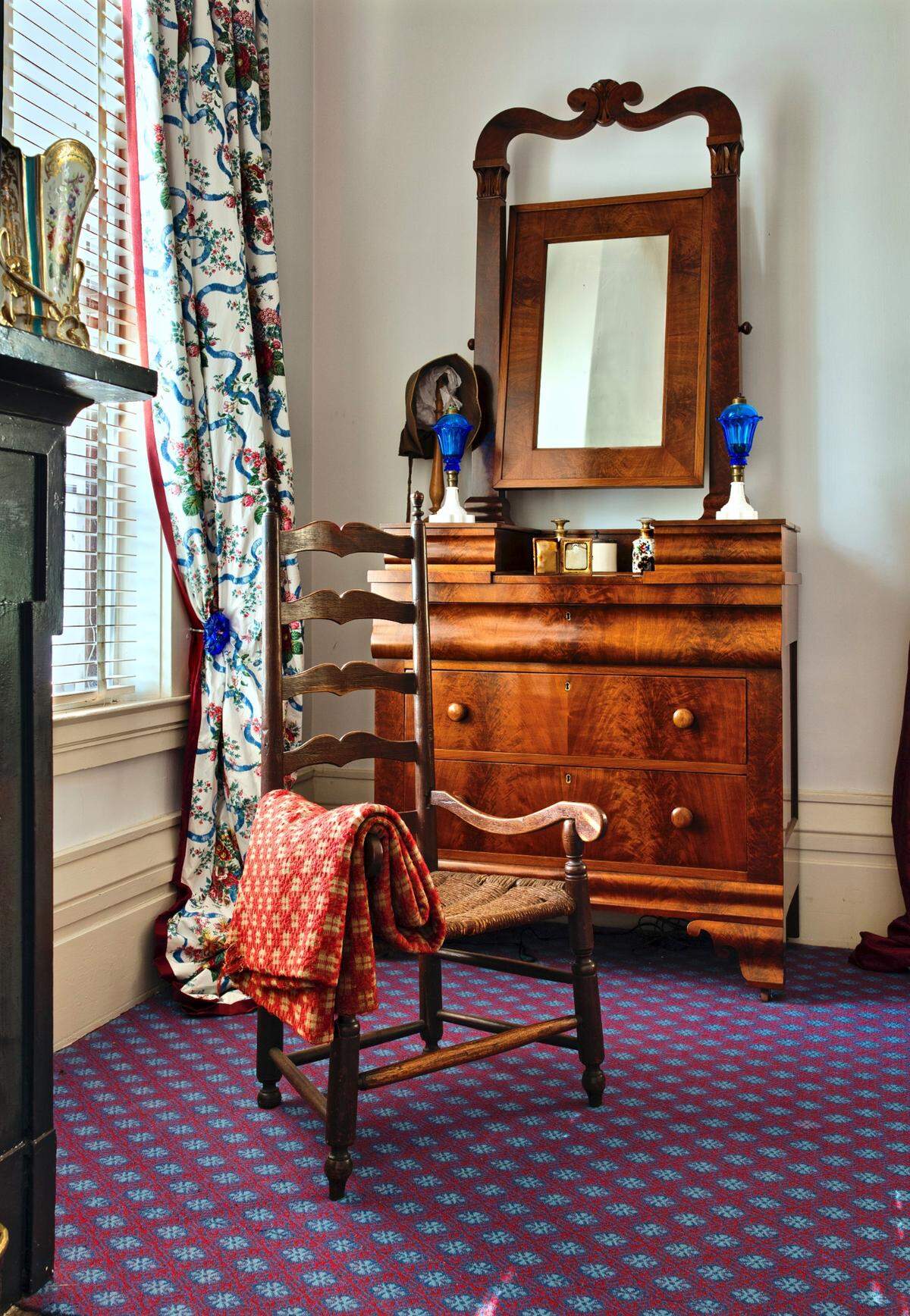
“In 1779 William Bryan led about 300 Boone and Bryan family members through the Cumberland Gap and over the Wilderness Road to settle at Bryan’s Station,” Miller said. The Squire Boone ladderback chair now in the Waveland Mansion made the trip attached to a pack horse.
Within six months of the trip Mary Bryan lost her husband and three sons to fighting with natives. A surviving son, Daniel “Boone” Bryan, later settled on 400 acres in southern Fayette County of what was probably bounty land awarded to his father in return for service in the Revolutionary War. In 1790 Daniel Bryan built a stone house on this property that later became known as Waveland.
A popular oral tradition tells that Daniel Boone surveyed the original Waveland Estate acreage before it was inherited by his nephew Daniel “Boone” Bryan. No records have been found to substantiate the claim, according to Miller.
But it’s not out of the question, Miller says, that Daniel Boone would have visited his nephew on the Waveland property when he was living at Boone’s Station in Athens or later in Limestone (which is now Maysville.)
Wealth built on slavery
Daniel “Boone” Bryan and his progeny were impressive businessmen. Many successful enterprises were launched on the property. There was a gunsmith shop employing 25 men, a gunpowder factory, sawmill, gristmill, paper mill, distillery, a Baptist church, and a seminary for young women.
In later years both Standardbred and Thoroughbred horses were bred and raced. Tremendous amounts of corn and wheat were produced, but above all, hemp was the major cash crop. The Bluegrass Region became known for its prodigious hemp and rope production, built on the backs of slaves.
Construction of the Waveland Mansion spanned from 1844 to 1848 under the direction of Daniel “Boone” Bryan’s son, Joseph. A surprising number of construction materials were readily available on the plantation.
The cherry banister, ash floors, and walnut doors and trim were milled from trees on the property. Wrought iron was made at the blacksmith shop. Even the bricks for the mansion, slave quarters and smokehouse were fired from the red clay soil.
The Joseph Bryan House later became known as Waveland, a poetic description of the way the wind swept through the hemp and grain fields.
New life as a Kentucky museum
By 1894, the fortunes of the Bryan’s had turned, and the estate went into foreclosure. Other families managed the property into the 20th century, notably the Hueletts, whose descendants continue to live in the area.
The estate was purchased in 1956 by the University of Kentucky for a new experimental research farm operated by the College of Agriculture.
Dr. Hambleton Tapp, a history professor, was named the director and curator of an ambitious concept known as The Kentucky Life Museum. Tapp turned the mansion and 13 surrounding acres into a showcase for collecting, preserving, and displaying Kentucky relics.
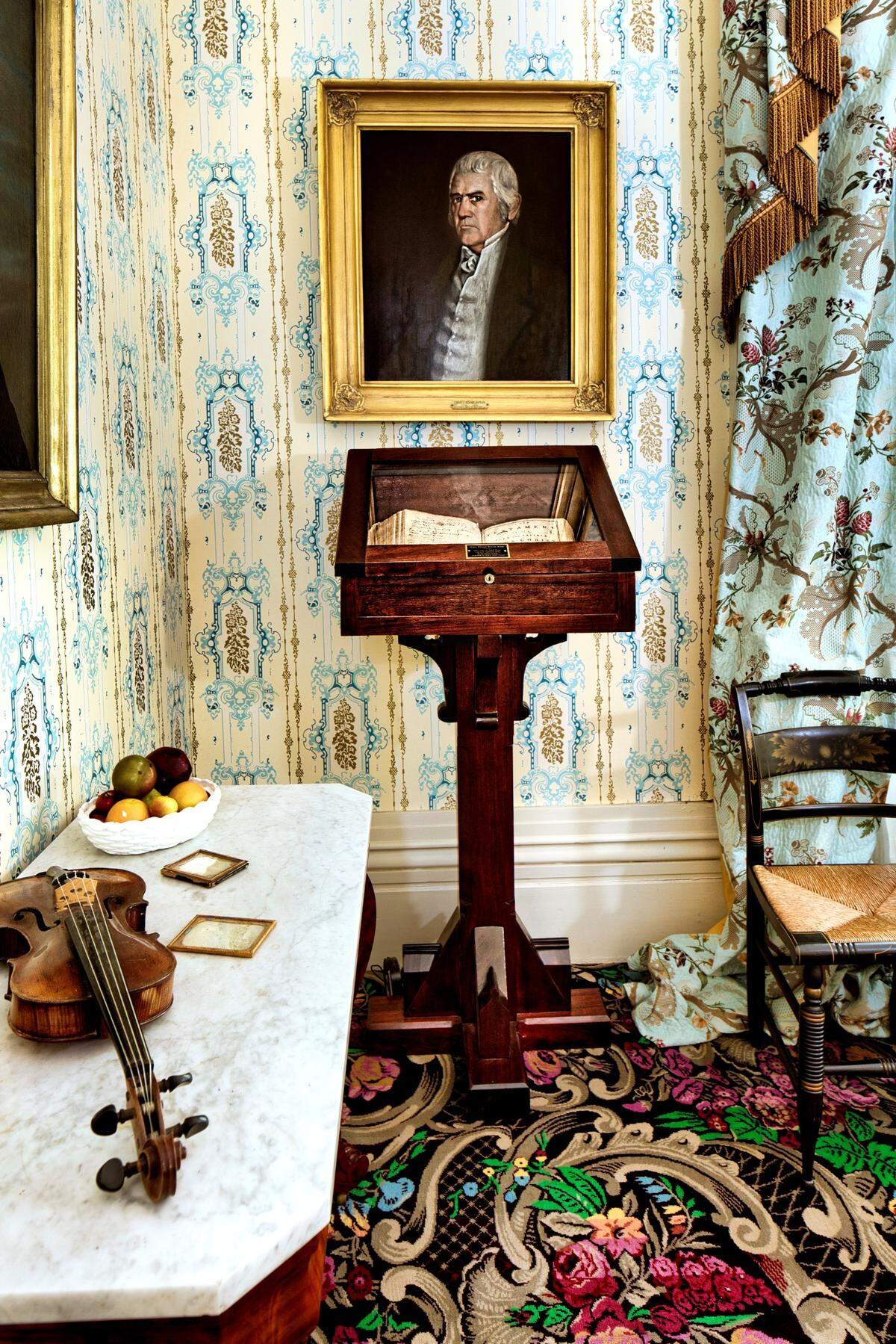
“We’re indebted to Dr. Tapp,” Miller said. “He collected 98 percent of the artifacts that you see in the house,” Miller said. Along the way, Tapp developed a friendship with Volney Bryan, a descendant living in Louisville, which led to many key acquisitions of original family furniture and artifacts.
As curator, Tapp found it hard to say no to donations. “It didn’t matter if it was a World War II machine gun or a portrait of a cockfight,” Miller said. “Today we might call him a hoarder.”
When Waveland became a State Historic Site, Tapp’s collected artifacts helped populate the Kentucky Horse Park, the Thomas D. Clark Center for Kentucky History and other museums.
The University of Kentucky Agricultural Research Farm continues to operate today on about 100 acres at the corner of Man O’ War and Nicholasville Road.
New book celebrates anniversary
“Waveland’s Treasures” photographer Bob Willcutt is probably best known as founder of the Willcutt Guitar Shop on Rosemont Garden in Lexington. However, his reputation as an art photographer has risen with the publication of recent books like “Feathers of Fayette, Wild Birds of Lexington, Kentucky” in 2018 and “Henry Clay’s Ashland, A Pictorial Tribute to one of America’s Greatest Statesmen and his Lexington, Kentucky Estate” in 2019.
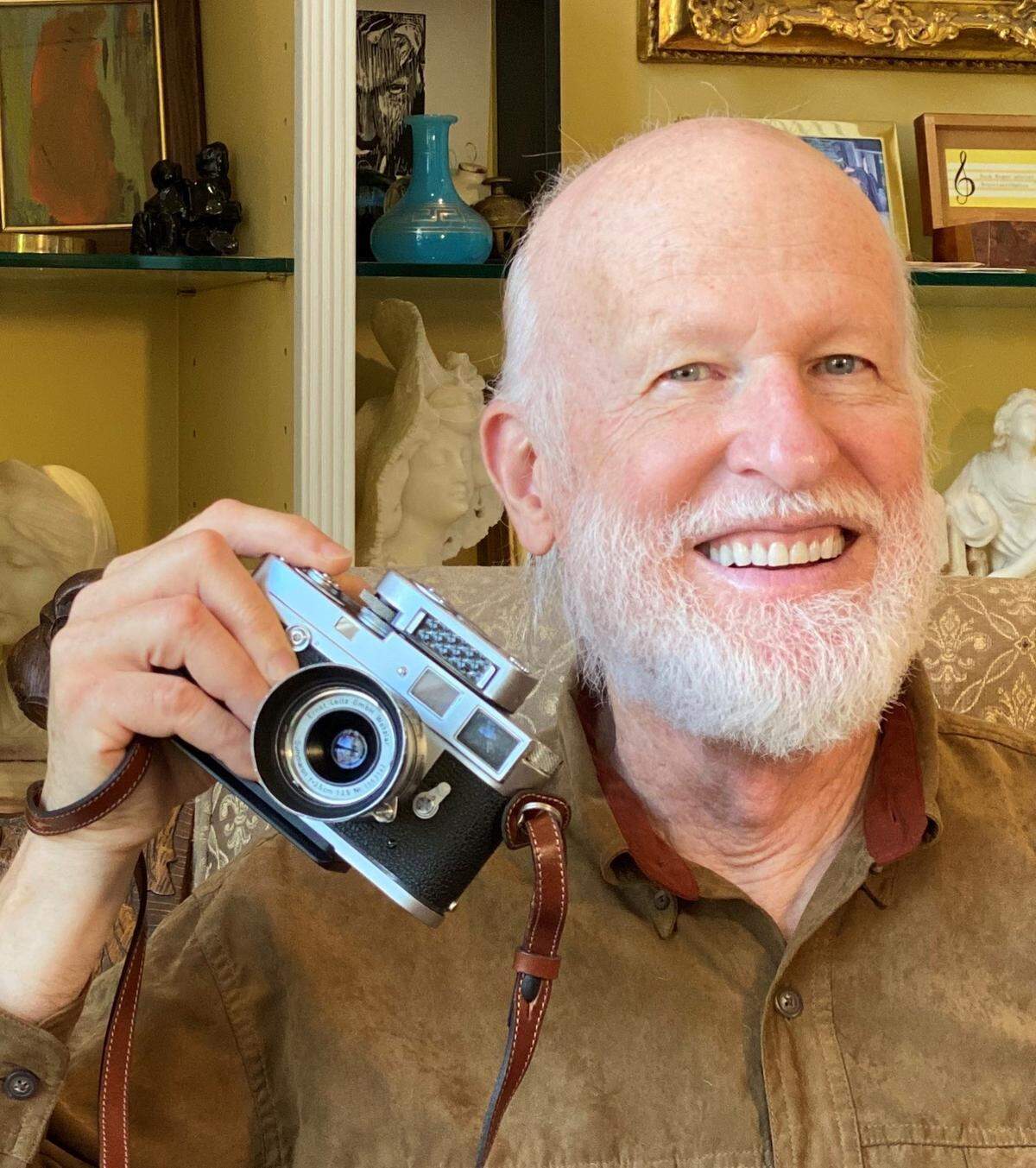
“Back in high school I was photo editor of my high school paper in Washington, DC,” Willcutt said. During what he calls “the turbulent ’70s,” Willcutt had opportunities to shoot guitar shop patrons like Eddie Van Halen and Ann and Nancy Wilson of Heart.
“I really think it’s important to save and document the old historic sites and appreciate the architecture, craftsmanship and the fine antiques,” Willcutt said.
When the subject matter at Waveland called for a certain old-timey warmth, Willcutt ditched his high-end digital gear in lieu of a 1961 Leica camera and old-fashioned film. He explains that the small imperfections in the hand ground and polished glass lenses are closer to what the human eye sees.
Some pages of the book hold symbolic subtleties. “They’re not just pretty pictures, some tell little stories that I hope people will give more than a glance,” Willcutt said.
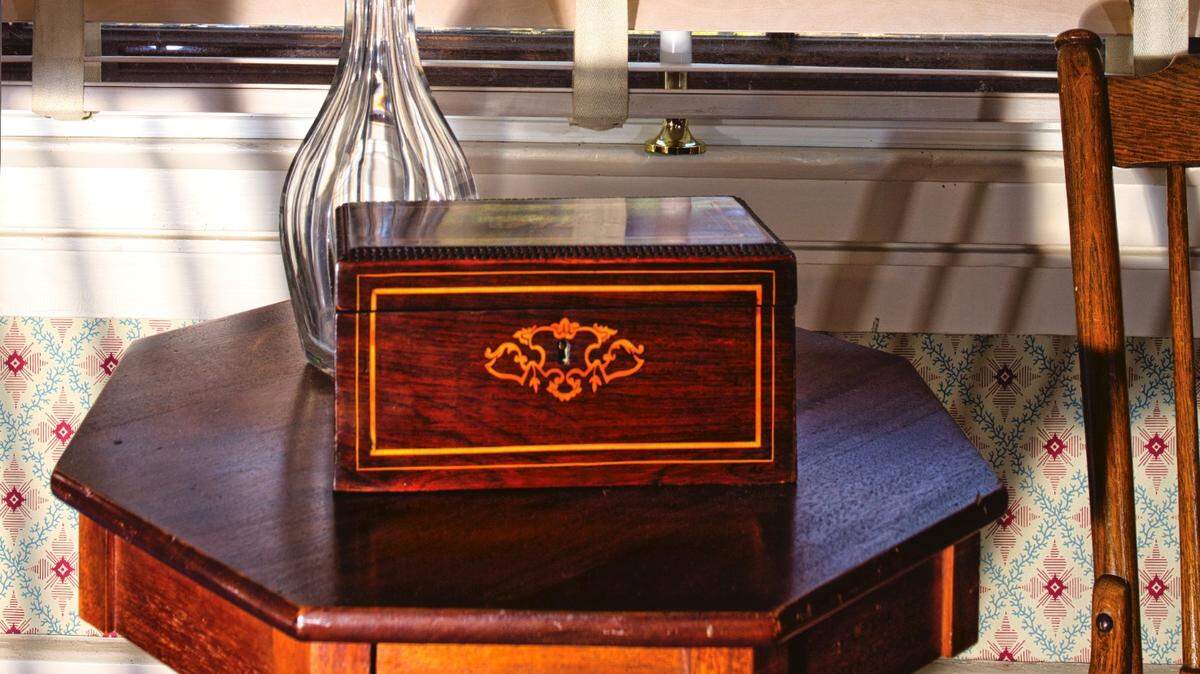
One poignant image shows a crystal wine decanter and an ornate tea box on an octagonal rosewood table framed by a mansion window. The slave quarters looms in the distance. “So, you’re looking at all the grandeur of the mansion that was paid for by the slaves,” Willcutt said.
It was 2019 when Willcutt got the green light from the state to create a Waveland photography book. At the outset, Susan Miller, Waveland’s historical interpreter, was enlisted to help Willcutt with captions. But as work progressed, Miller’s role expanded to collaborator.
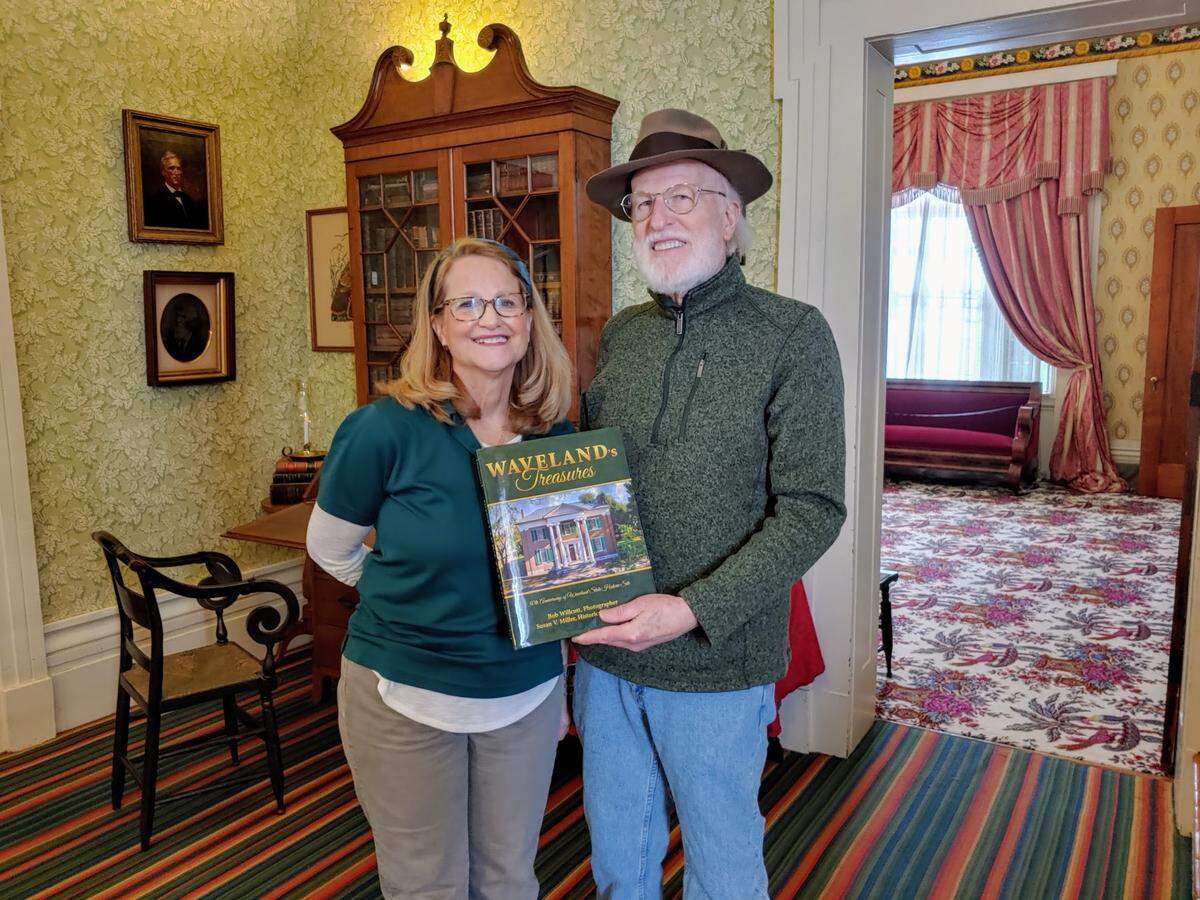
“Clearly this was Bob’s book,” Miller said. “But as we incorporated new discoveries about artifacts and dug into why Waveland is historically significant, it turned into something different.”
Miller first became interested in historical interpretation during a career as program services director for the Girl Scouts of Kentucky’s Wilderness Road Council.
“For the Lincoln Bicentennial back in 2009, I got a Kentucky Humanities Grant to do educational Girl Scout events,” Miller said. “I really got enamored of Mary Lincoln, I started really researching her.”
Miller ventured into doing first person presentations of Mary Lincoln after retiring from the Girl Scouts.
“After that I was hooked,” Miller said. “I started with one 1860s-style ‘hoopy’ dress and now have a closet full.” Today she is a member of the Association of Lincoln Presenters serving as Second Vice President and the national Mary Lincoln Chair.
Miller began volunteering at Waveland in 2016 as a costumed server at the Tuesday Teas. That same year she became part of the State Parks staff working as a historical interpreter.
Waveland’s Treasures
Where: “Waveland’s Treasures,” published by Acclaim Press, is locally available at the Waveland Gift Shop and Joseph-Beth Booksellers. It’s also available from major online bookstores.
Visit: Tours at the Waveland State Historic Site, 225 Waveland Museum Lane, Lexington. After April 1, tours times are Wednesday through Saturday at 10 a.m., 11:30 a.m., 1 p.m., 2:30 p.m., 4 p.m., and on Sunday at 1, 2:30 and 4 p.m.
Tickets: Tour tickets can be purchased in the Waveland gift shop. Adults $15, seniors $12. children (6-12) $6. Call ahead for group rates and arrangements, 859-272-3611. Walking trails, playground and garden are open to the public year-round from 8 a.m. till dark.