Fired Blue Grass Trust executives experienced ‘hostile and discriminatory conduct,’ lawsuit says

The Blue Grass Trust for Historic Preservation, a non-profit that advocates for saving historic Kentucky properties, is facing accusations of verbal attacks against the former executive director and discriminatory conduct against her assistant.
Former executive director Sheila Ferrell and former assistant executive director Ashley Grigsby filed a lawsuit in Fayette Circuit Court against the Blue Grass Trust and board president Janie Fergus alleging wrongful termination.
Other current board members include vice president Mike Meuser, secretary Maureen Peters, treasurer Matthew Brooks, Kathy Chopra, Geneva Donaldson, Steve Gardner, John Hackworth, Wanda Jaquith, Lucy Jones, Lindy Karns, Teri Kelly, Debbie Long, Carol Martin, Brenna Pye, Rick Queen, Richard Schein, Megan Winfield, Dan Vivian, Eugene Young and executive director emeritus Richard DeCamp.
Neither Fergus nor an attorney for the board responded immediately to a request for comment on the lawsuit.
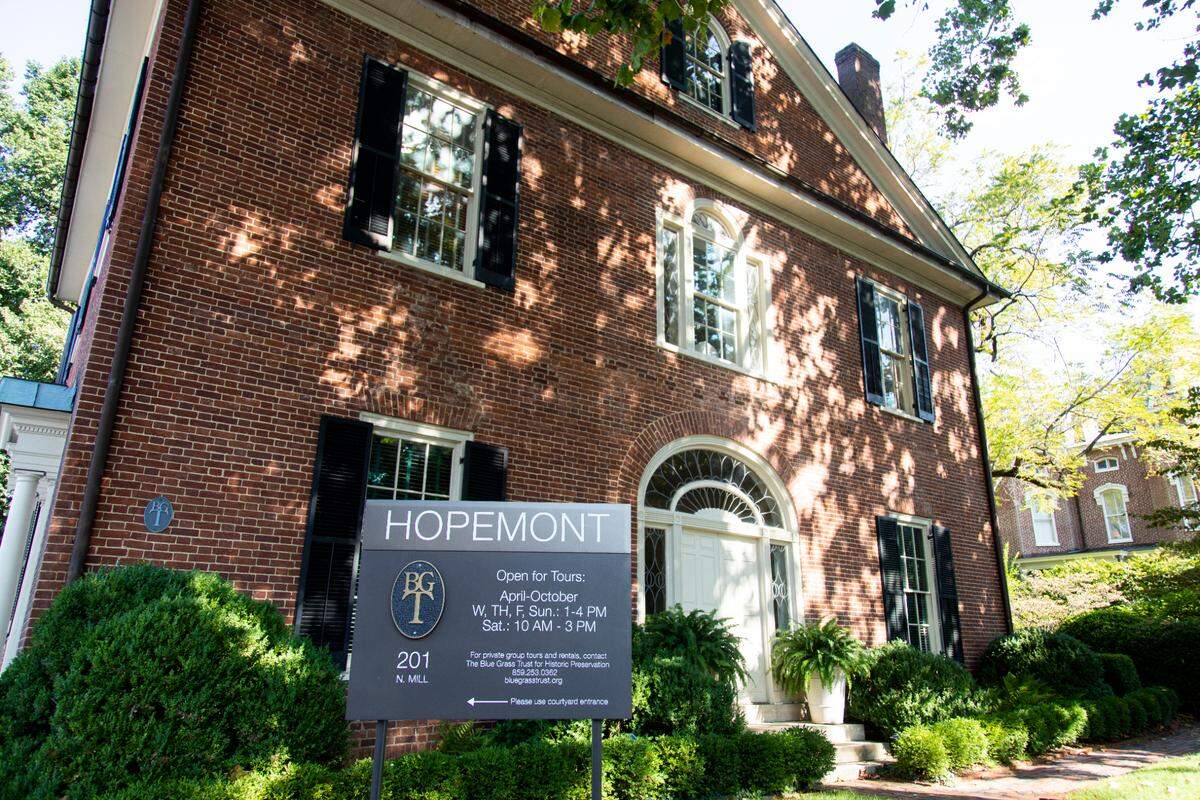
The Blue Grass Trust was founded in 1955 to save the John Wesley Hunt house at 201 N. Mill Street in Gratz Park from demolition. They purchased and restored the property, known as Hopemont, and pushed for the creation of Lexington’s first local historic district, Gratz Park, in 1958.
The trust has been instrumental over the decades in saving many other historic properties, including Shakertown of Pleasant Hill, the Mary Todd Lincoln House, Benjamin Latrobe’s Pope Villa, and the Dr. Thomas Hunt Morgan House at 210 N. Broadway, which houses the offices of the trust.
Every year Blue Grass Trust hands out awards for historic preservation efforts in and around Lexington. And the trust is frequently involved in battles with developers. The trust also has awarded “BGT” plaques for buildings of architectural or historical significance to more than 900 Lexington buildings.
Many influential Lexington people have served on the trust’s board in the past, including the late former mayor and trust president H. Foster Pettit, for whom the trust’s auditorium is now named.
Fergus, a retired healthcare executive, was elected president of the trust’s board in July 2018.
Allegations by Ferrell, Grigsby
According to the complaint, filed on April 21, Ferrell and Grigsby were fired on April 1, 2020. Ferrell, who had been executive director since fall 2010, was notified via email; Grigsby was fired by Fergus on a Zoom video call, according to the suit.
The complaint alleges that tension between Fergus and Ferrell blew up at a closed-door meeting where “Fergus continued to yell about how mad she was at Ms. Ferrell and stated, repeatedly, ‘I don’t like you. I don’t want to work with you. I don’t trust you. You lied to me.’”
According to the lawsuit, Ferrell became so distressed she developed vertigo, a migraine and had to vomit.
In November 2019, Fergus and the board of directors’ attorney informed Ferrell “she was being forced to take a leave of absence for her own health,” according to the lawsuit. Grigsby, who had been assistant executive director for about two months, was pressed to take over Ferrell’s duties.
Before she became assistant executive director, Grigsby had served on the trust board of directors since 2017 and had served on the committee that put BGT Trust’s popular deTours events touring historic properties.
Despite placing her on involuntary leave, the board asked Ferrell to help organize and host the 2020 Antiques and Garden Show, the trust’s largest annual fundraiser. Ferrell agreed; she was fired weeks after it ended, the suit reads.

Board failed to act, according to complaint
During meetings for the show, according to the lawsuit, Fergus was “very hostile” to Ferrell and targeted Grigsby, who is Black, “in a discriminatory and retaliatory manner.” Fergus’ actions were often witnessed by other board members, who did nothing, according to the complaint.
According to the suit, “Fergus often directed her ire towards other BGT employees who she felt were close with Ms. Ferrell, including Ms. Grigsby, by targeting Ms. Grigsby and engaging in certain discriminatory actions based on Ms. Grigsby’s race.”
Fergus asked “why it took so long for Ms. Grigsby to do her hair” and complained “to others about her demeanor, the ‘tone’ of her voice, or why she was ‘loud,’” the complaint alleges.
Both women sought medical treatment “as a result of Fergus’ hostile conduct and the discriminatory conduct of Fergus and members of the BGT Board of Directors,” according to the lawsuit.
Ferrell and Grigsby are seeking compensatory damages for mental anguish, embarrassment and humiliation, as well as lost wages and punitive damages.
This story was originally published May 5, 2022 at 11:30 AM.