
As eviction rates rise, these Lexington organizations are helping renters find funding
Eviction rates in Fayette County are trending upward, but several organizations are offering assistance for those in need.
Following the evictions moratorium beginning in March 2020, evictions across Lexington have risen to almost pre-pandemic numbers. May 2022 saw a recorded 446 cases in Fayette County, according to the Administrative Office of the Courts; there were 567 in May 2019.
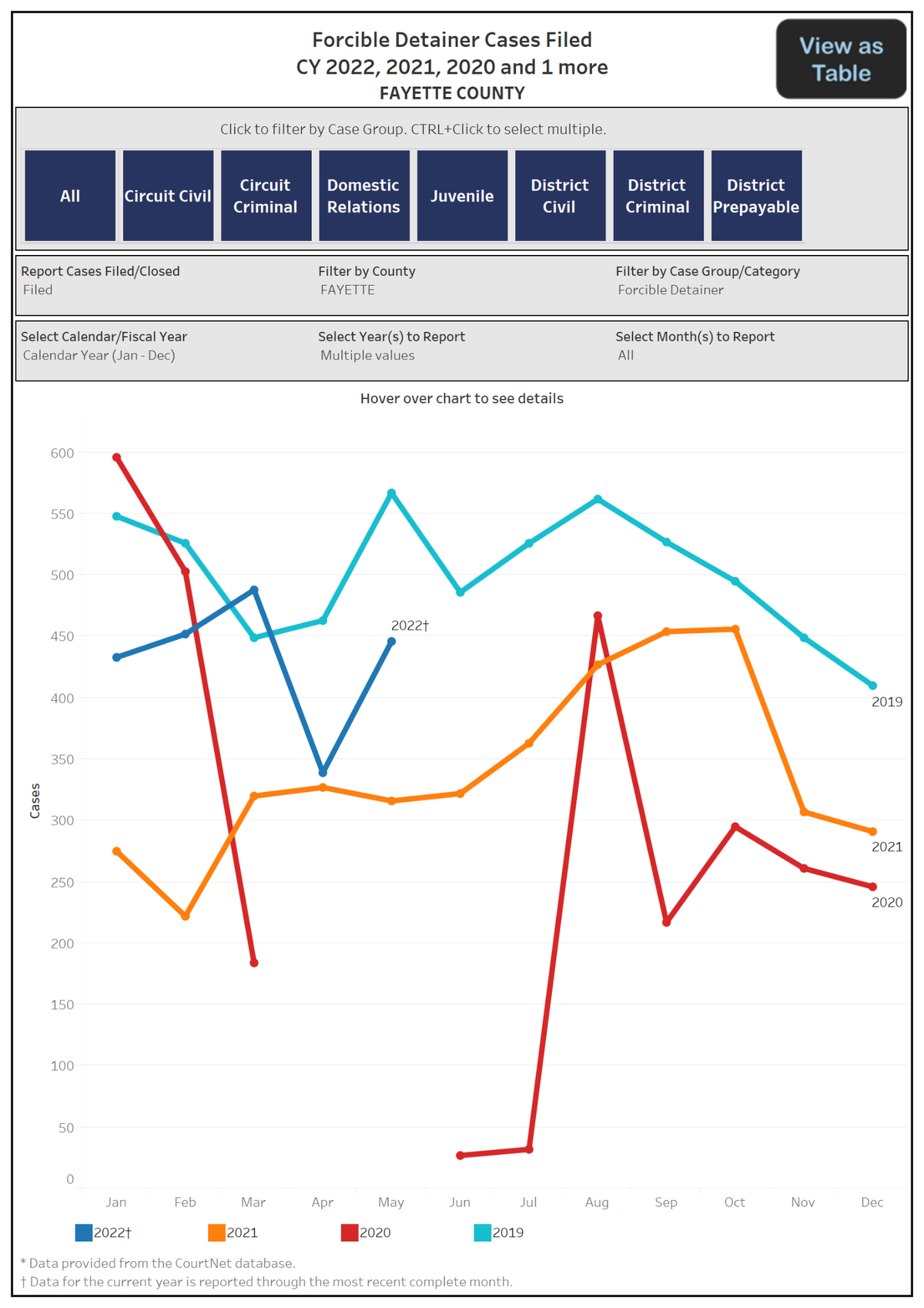
Monthly eviction rates in Fayette County so far this year have typically been in the mid to high 400s, with a dip in April. According to the Fayette County courts, there were 433 forcible detainer cases filed in January, 452 in February, 488 in March and 399 in April.
Hundreds of Kentuckians are facing eviction and even homelessness, but two nonprofit organizations are stepping up to fight this crisis.
Housing Stabilization Program
In October 2021, the statewide nonprofit agency Community Action Council began operating the City of Lexington Housing Stabilization Program.
The program provides complete past-due rent funding dating back to April 2020 for those eligible. It also offers future rent assistance in three-month increments, usually for up to 12 months, although additional funding may be provided for up to 15 months with additional documentation.
Fayette County tenants can apply for the program by visiting the Council’s website, and more information for renters and landlords can be found on the participant guide.
Patrice Muhammad, communications manager for Community Action Council, said the initiative is a partnership between the state of Kentucky and the City of Lexington intended to help those impacted financially by COVID.
“We know many people early on in the pandemic had job loss during the initial shutdown. Some businesses were not able to reopen, and we have people who may have lost income because they did not have sick time, and then they had to take off because they caught the virus,” she said. “So that could cause them to fall behind on their rent.”
According to the program’s website, applying households must have one or more individuals who meet criteria including:
- Making 80% or below the area media income.
- Resident of Fayette County.
- Qualified for unemployment benefits or “experienced a reduction in household income, incurred significant costs, or experienced other financial hardship due directly or indirectly to the COVID-19 outbreak.”
- Having a pending eviction, past due notice or unsafe/unhealthy living conditions to show the household is at risk of homelessness.
The Council provides assistance with past-due and future rent and utility bills, as well as other housing expenses. To date, Muhammad said over 3,000 cases have been processed since October 2021.
“One in every 18 renter households in Fayette County have been affected as of March,” she said. “The average payment was about 7.2 months’ rent for people ... so it’s over $6,000.”
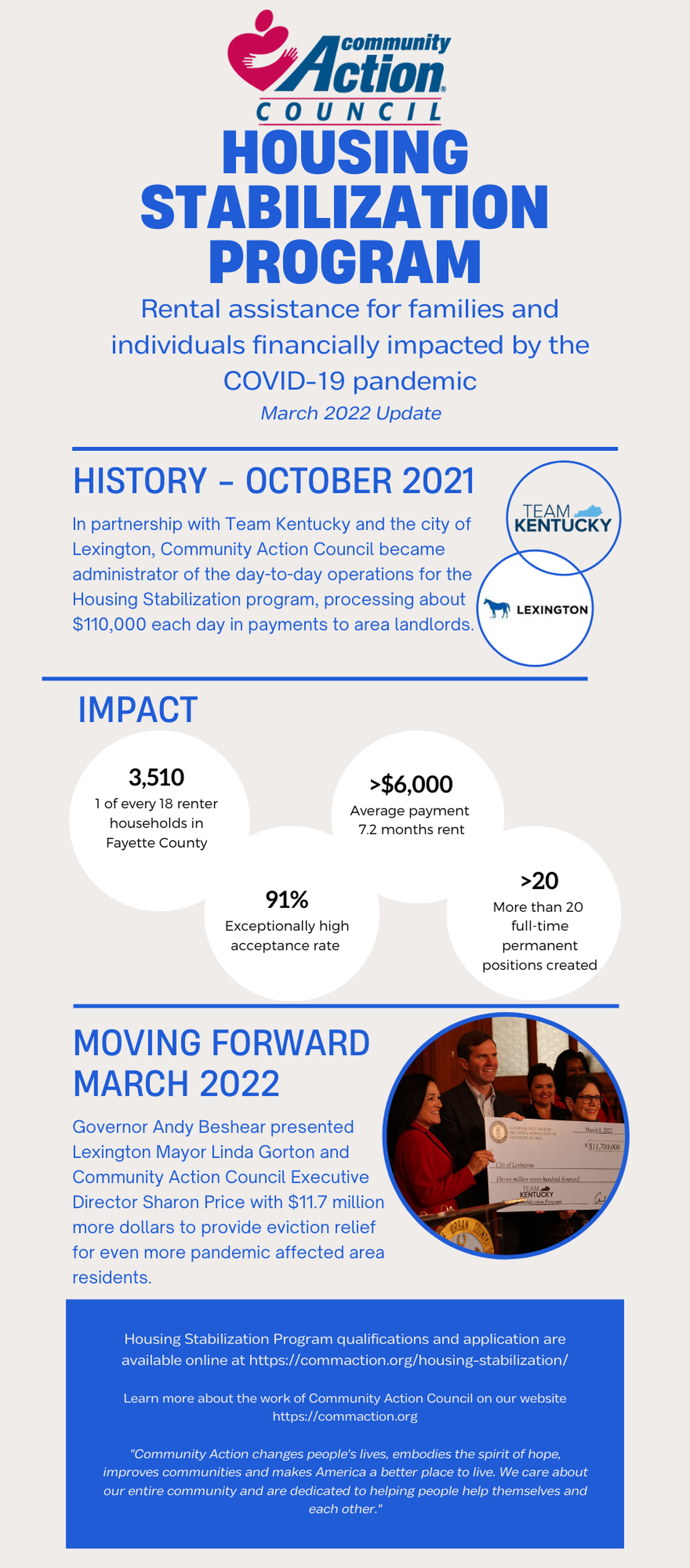
Although the program was created during the height of the pandemic, Muhammad said there are no plans to shut it down as long as money is available. She added that the Council received an additional $11.7 million in March from the governor to continue helping those facing eviction.
Muhammad said that 90% of families that come through the program are able to stay in their homes rather having to relocate.
“The goal of the program is to keep people where they actually are, because if people end up having to leave and try to find a new place, that makes the process even harder on them,” she said.
Muhammad said that issues like rising rental prices and eviction rates are real concerns for many Kentuckians, but organizations like the Council are providing relief.
“Bottom line, there is a need for more affordable housing units in our city,” she said. “But we’ll say the good news is that the Housing Stabilization Program works, and most people who have requested help were able to stay in their homes.”
Catholic Action Center
Ginny Ramsey is the director and co-founder of the Catholic Action Center, a community response and advocacy group located in Lexington.
The Center provides relief for Kentucky’s homeless population, offering shelter and meals to those in need. Ramsey said since the organization began almost 23 years ago, it has provided over 8.2 million meals served by volunteers and 2.1 million nights of shelter.
Now, the Center is starting a new initiative to connect tenants facing eviction with rental assistance programs.
“A lot of them don’t know where to go. A lot of them don’t know what help is available,” Ramsey said. “They go and they talk to somebody, and they tell them they’re not eligible, and they give up ... We’re not here to give them rental assistance, but we’re going to help them find it.”
Since each applying household comes with its own unique set of challenges and needs, Ramsey said the Center can help them come up with a unique plan to find rental assistance through FEMA or other organizations like Community Action Council.
“We’re not gonna judge them, we’re not going to turn them in for anything. We’re just community members lending a hand,” she said.
The Center also runs the Second Chance Rentals program, which helps connect families facing homelessness to landlords willing to rehouse them.
Ramsey said renters seeking help can email the Center at caclex2000@gmail.com to be connected with a trained volunteer advocate to assist them.
She added that the Center is looking for community members with a “passion to make a difference” to volunteer for the program.
“We’re asking for their time and their hearts,” Ramsey said. “We always base It on the people’s schedules. You can do three hours one day a week. That’s great. Three hours can help save a person’s house.”
This story was originally published June 21, 2022 at 6:00 AM.