Lexington landlord forced domestic violence victim to pay rent after she fled, lawsuit claims
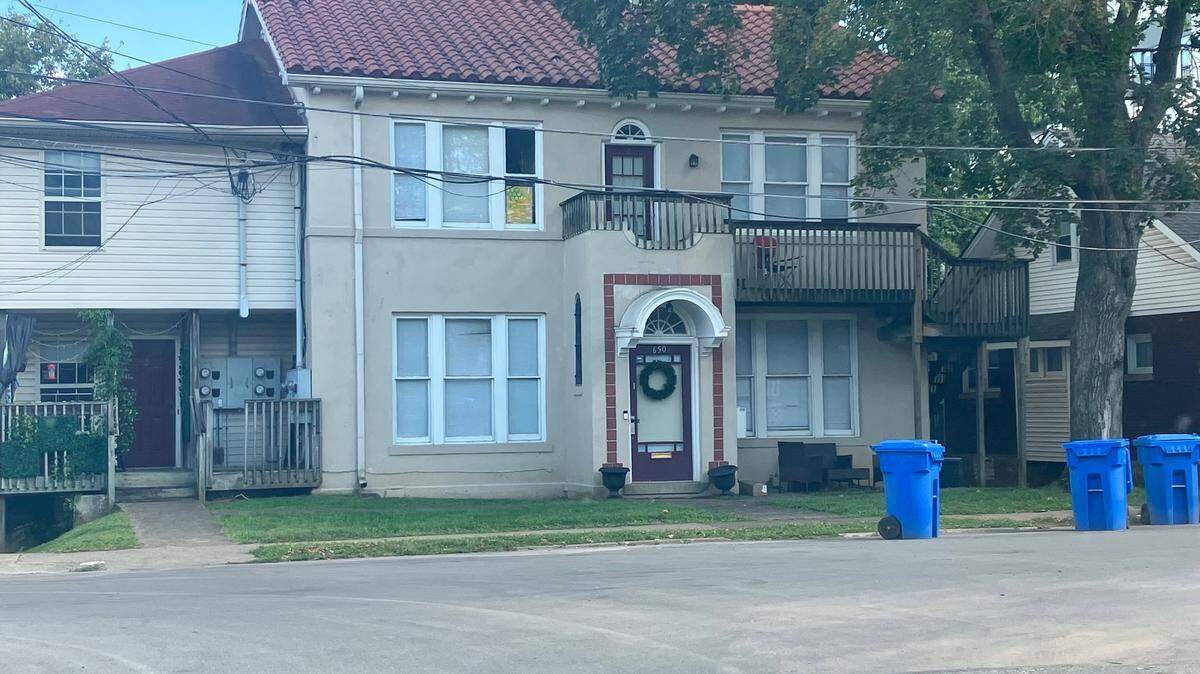
The Lexington-Fayette Human Rights Commission is suing Anderson Campus Rentals alleging they forced a woman to continue to pay rent after fleeing her apartment due to domestic violence in violation of a 2017 state law.
As part of its defense, Anderson Campus Rentals, which is part of Anderson Communities, is alleging the 2017 state law, the gives protections to tenants involved in domestic violence situations, is unconstitutional.
Anderson Communities is one of Lexington’s largest rental property owners and has multiple rental properties near the University of Kentucky.
The case could have ramifications for domestic violence victims across the state, housing advocates say.
“Anderson Campus Rental Properties is making efforts to undo the recent bi-partisan domestic violence protections. If they are successful, it would create a situation where victims of domestic violence would be stuck in their lease and left in a place that could put their safety at risk,” said Art Crosby, the executive director of Lexington Fair Housing Council, a nonprofit fair housing group.
Lawyers for Anderson say they were not properly notified under the 2017 law.
“Far from discriminating against the plaintiff, a former resident, Anderson Campus Rental Properties simply acted on rules designed to ensure the safety of the premises and the terms of the lease,” said Trip Redford, a lawyer for Anderson.
An EPO and what the law says
The woman involved in the lawsuit rented an apartment from Anderson Campus Rentals on Maxwelton Court near the University of Kentucky campus in 2019.
The Herald-Leader typically does not name victims of domestic violence and is concealing the woman’s identity to protect her privacy and safety.
In May 2020, Lexington police were called to the woman’s apartment due to a domestic violence incident involving a man. The courts later granted the woman a protection order, prohibiting the man from contacting her, according to the court filing.
The woman provided the protective order to then-manager of the property Haley Boyd and the keys to the apartment. She needed to leave the apartment for her own safety, the court documents allege. Boyd is no longer employed by Anderson.
But the woman was told that she still had to pay the remaining months rent and there was not an early release from the lease. She had three months remaining on the one-year lease.
“On or about July 9, 2020 (the woman) received an invoice from co-Defendant Ron Morton requesting that she pay $1,596.00 for the months of June, July and August, 2020,” according to the lawsuit.
Morton works for Anderson Communities.
Morton continued to seek payment from the woman in July and August and threatened to turn her over to debt collectors, according to the complaint.
The woman filed the complaint with the Lexington-Fayette Human Rights Commission in December 2020. The commission, which is tasked with investigating fair housing complaints, investigated and issued a probable cause order against Anderson. Anderson choose to take the issue to court, according to court documents.
The Human Rights Commission argues in court documents that KRS 383.300 says the woman could terminate the lease because she had a protection order. Furthermore, the woman cannot be discriminated against because of her sex, according to Fair Housing laws. Moreover, Anderson continued to demand payment from the woman after she had filed a complaint with the Human Rights Commission.
In court documents, Anderson Communities said KRS 383.300 says someone with a protection order has to provide that order to the landlord and give written notice 30 days prior to termination of the lease. The woman never gave written notice, they allege. She only gave verbal notice.
Anderson also alleges KRS 383.300 is unconstitutional for multiple reasons including a provision in the Kentucky Constitution that prohibits “any law impairing the obligation of contracts.”
The man reportedly involved in the domestic violence incident was not on the lease and did not live in the apartment, Anderson Communities argued.
“The statute is overly broad, because it permits a tenant to invalidate a lease agreement even where the non-party against whom the tenant obtained the protective order does not also reside in the leased premises and where the tenant is not in any articulable danger from the party against whom the protective order was obtained,” lawyers for Anderson Campus rentals wrote.
At the same time, the law also does little to protect domestic violence victims “because it does nothing to protect the tenant during the 30-day time period between the required written notice and the date on which the tenant may unilaterally treat the contract as having been terminated,” Anderson Campus Rentals wrote in court documents.
“We believe the statute should be redrafted to remove these flaws,” Redford said.
Because Anderson Communities is challenging the constitutionality of KRS 383.300, Attorney General David Cameron’s office has been notified. The attorney general’s office represents the state when the constitutionality of a law is in question.
The court record indicates Cameron’s office has declined to intervene.
Lawyers for Anderson wrote in a court filings that they wanted to put on the record “confirmation that the Attorney General does not wish to intervene and will merely ‘monitor’ this case per the email received today,” said a document filed in August.
An email to a spokesperson in Cameron’s office about the case was not immediately returned.
Anderson Communities has asked the case be dismissed. Fayette Circuit Court Judge Lucy VanMeter has not issued a ruling yet on the motion to dismiss.