Developed at UK, Green Dot helps people nationwide prevent domestic violence

One person may not be able to fix the problem of domestic violence, Lexington Green Dot Coordinator Dawn Runyon said, but enough people making small behavior changes can.
That’s what the Green Dot program hopes to do in Lexington, and beyond.
The program developed at the University of Kentucky is now used across the country to help people recognize signs of domestic violence and understand small steps they can take to intervene in a potentially violent situation.
Here’s what to know about Green Dot.
What kinds of violence does Green Dot address?
Runyon works to teach people about domestic or dating violence, which she describes as a pattern of behavior in any relationship that one partner uses to gain power or control over the other partner. It can include physical, sexual, emotional, financial, verbal or psychological abuse.
“It is a pattern that a person lives under day in and day out,” she said.
The program also wants to address sexual violence, stalking and child and elder abuse.
“It’s not just those extreme forms of physical violence,” Runyon tells participants. “It can be subtle.”
She says more than 10 million people are victimized by power-based violence in the United States every year.
What’s up with the name ‘Green Dot?’
The Green Dot program encourages people to think about incidents of violence in their community as a “red dot” in that place.
“For every action, there is an opposite and equal reaction,” Runyon said.
The goal is to have regular people intervening to stop each act of violence, filling the community with positive reactions and expressions of intolerance for violence, or “green dots.”
“None of us know really how many green dots it’s going to take to change our culture,” Runyon said. “It’s going to change when enough of us stand up and do our part.”
“No one has to do everything,” Runyon tells attendees in her training sessions, “but everyone has to do something.”
What does the program train bystanders to do?
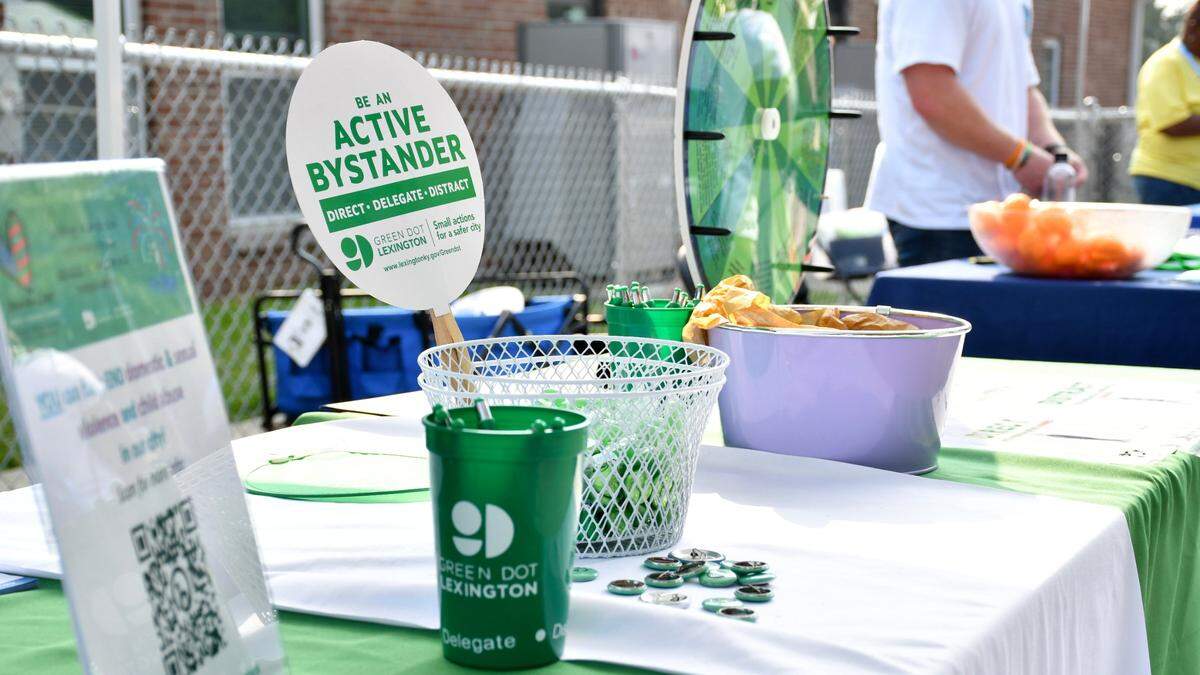
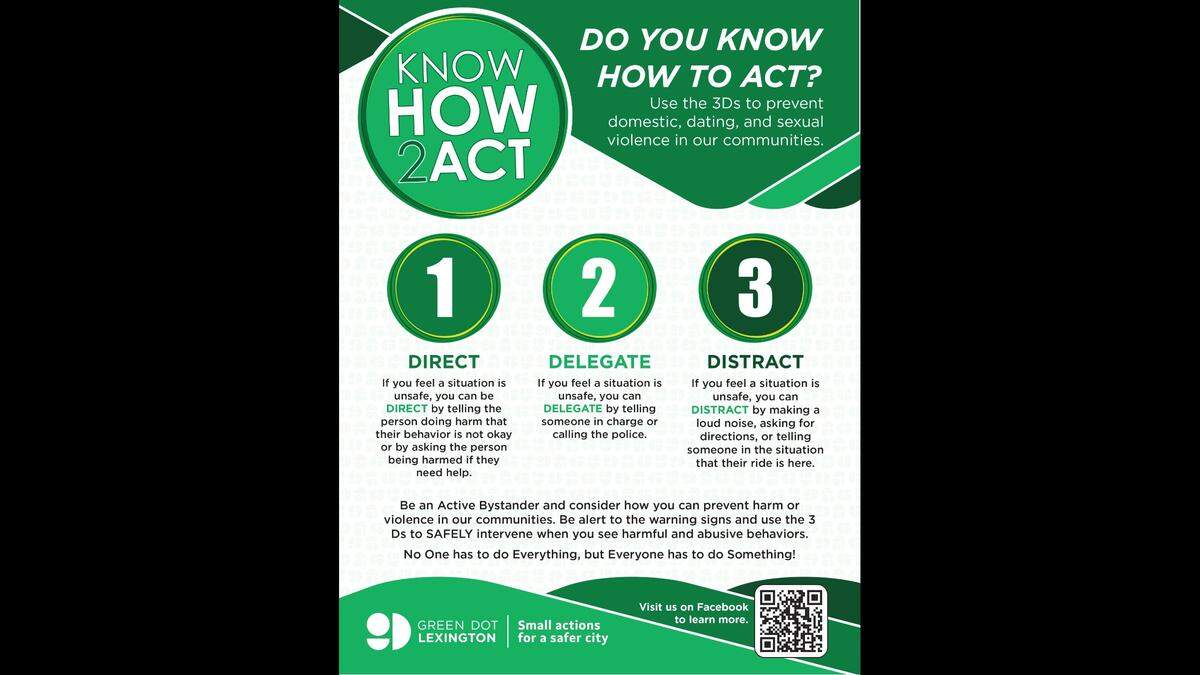
Green Dot teaches people to recognize warning signs of abuse and encourages them to use one of three strategies to intervene: direct, delegate or distract.
Here’s how Green Dot explains each of those:
“Direct: Address the situation head-on by talking to any of the people involved. Examples: ‘Are you alright?’ “That’s not okay with me.’
Delegate: Ask for help defusing the situation. Examples: Get help from another bystander. Ask a friend of one of the people involved to help.
Distract: Create a diversion to de-escalate a potentially violent situation. Examples: Spill your drink. Ask for directions. Tell a joke!”
Runyon says the strategies can be applied in any situation.
How can I learn more?
Visit Lexingtonky.gov/greendot to learn more about Lexington’s Green Dot program. To schedule a training or get more information, call 859-258-3831 or email greendot@lexingtonky.gov.
This story was originally published August 30, 2023 at 7:07 AM.