Lexington collects $479 million in property taxes. Why is it so hard to track?
In early November, Fayette County voters approved a new property tax for capital improvements at Lexington’s 100 public parks.
It was the first new taxing district approved since 2004, when voters passed a new property tax to fund Lextran, the city’s public transportation system.
Lexington city officials are currently working on how the parks tax will be managed —it’s estimated to generate $8 million a year— and how it will be spent. More details will be made public sometime in early 2025, said Susan Straub, a spokeswoman for the city.
That new tax of 2.25 cents per $100 of assessed value will show up on property tax bills next year.
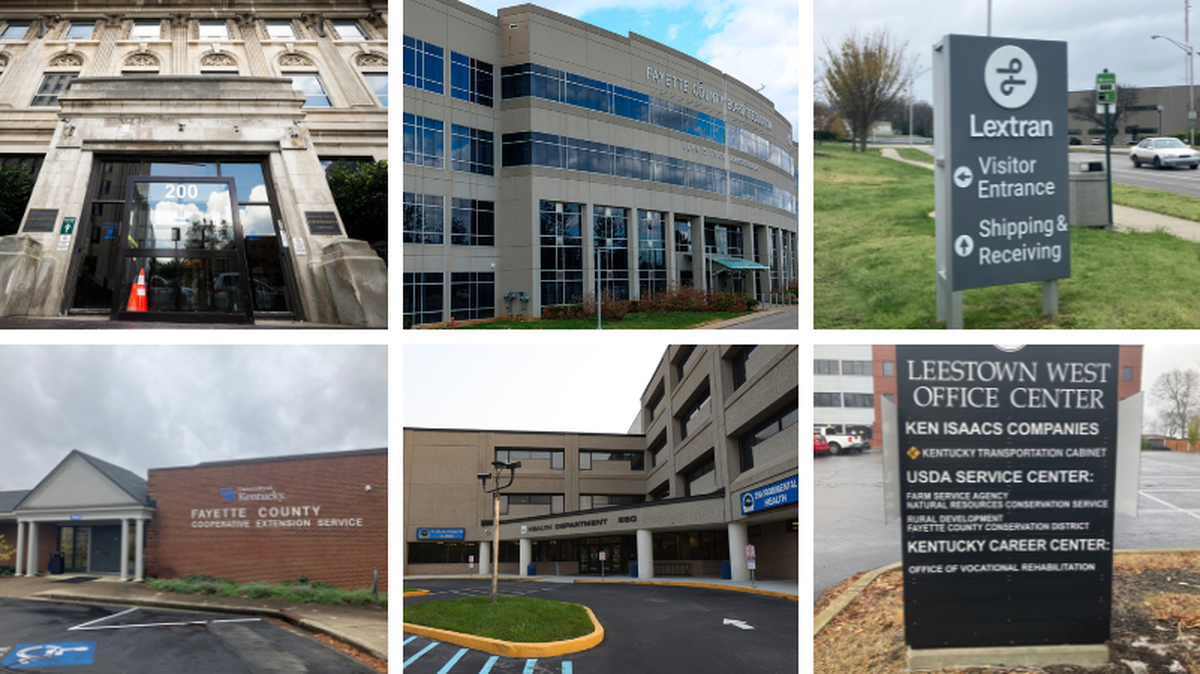
Lexington has six special property tax districts that receive money from local property taxes: Fayette County Public Schools, Lexington-Fayette Urban County Government, Lexington-Fayette County Health Department, Fayette County Extension Service, the Fayette County Conservation District and Lextran.
How much property taxes are generated and collected each year for those taxing districts?
There’s no central location for taxpayers to find that information, the Lexington Herald-Leader found.
The newspaper asked the city, the Fayette County Property Value Administrator, which sets property tax assessments, and the Fayette County Sheriff’s office, which collects property taxes, for a list of how much each taxing district received last year, the most complete data available.
No local government office had that information.
Moreover, there is no requirement or law requiring taxing districts to post financial information on the agency’s websites so taxpayers can see how those property taxes are spent. Some of those agencies —which receive other types of funding besides property taxes—voluntarily post that information.
Others do not.
Lexington city budget officials provided a property tax collection summary from the Fayette County Sheriff’s office. State government also receives a sizable chunk of Fayette Count property taxes.
In total, Fayette County property owners paid $479.3 million in property taxes last year. (That figure excludes an additional property tax paid by downtown property owners for the Downtown Lexington Management District. )
There is a requirement for many special taxing districts to provide audited financial statements to the state Department of Local Government. That requirement was put in place in 2013 after several spending scandals at some quasi-government agencies that include special taxing districts -- such as the board that oversees the Blue Grass Airport and the Bluegrass Area Development District.
Taxpayers can access those financial statements through a database online at the Department of Local Government’s website at dlg.ky.gov through a database at the top of the page labeled SPGE, which stands for special purpose government entities, said Logan Fogle, a spokesman for the Department of Local Government.
However, not many taxpayers know about the database or how to access it.
How much does each taxing district receive?
By far, the taxing district that receives the most money from property taxes is Fayette County Public Schools.
The school district posts a lot of its financial information online for taxpayers to see. It has a financial transparency page on its website that is kept updated with the latest expenditures by category.
It received $317 million in property taxes last year.
That’s roughly 66% of all local property taxes.
Its budget for last fiscal year, which ended June 30, was $836 million.
The Lexington-Fayette Urban County Government also posts its budgets and financial statements online. In the previous fiscal year, it received $30.1 million in property taxes. The bulk of the city’s revenues come from an occupational tax or a tax on wages.
Its total budget last year was $505 million.
However, Lexington-Fayette Urban County Government does not get to keep that $30.1 million.
Due to a lawsuit over property taxes and libraries, each year the bulk of those taxes goes to the Lexington Public Library system, which under state law gets 5 cents of $100 of assessed property value. Last year, more than $20 million of the merged government’s local property taxes was transferred to the library, according to the city.
Other taxing districts are hit-and-miss on financial and tax information readily available to taxpayers. In total, those other smaller taxing districts received $86 million in property taxes, according to a break down of tax collections.
The county health department also provides information on its website about its finances.
The Lexington-Fayette County Health Department received approximately $9.8 million in property taxes in the 2023-2024 fiscal year, according to budget documents. It posts its financial information on its website. Its total budget is around $24 million.
It has three years worth of financial information available online.
Lextran and the Fayette County Extension Service have no financial information available on their respective websites.
According to documents provided to the newspaper, Lextran received more than $24.4 million in property taxes last year. It’s total budget is $36.5 million.
Emily Elliott, director of planning and development, said Lextran is in the process of revamping its website and plans to post financial information soon.
“That information hasn’t traditionally been on the website outside of board related documents, but it’s something that we have been working on and refining to get to the public,” Elliott said.
“There is not a timeline for the information to be available. We are working on compiling more than just the financial data and provide a comprehensive overview of the service. It will likely be into the next year before we get the final product ready to share with the public, but it is in the works.”
The UK extension service, which provides help to farmers, runs 4-H programs, nutrition and other services, has no budgets or audited statements available on its website.
It received more than $1.3 million in property taxes last year, according to an audited financial statement. Its total expenditures last year was $1.7 million.
Whitney Siddiqi, a spokesperson for the University of Kentucky, where the extension service is housed, said the service provides financial information to the Department of Local Government. Taxpayers can access that information there.
“As for public reports, detailed financial information and other budgetary reports are all public on the SPGE (special purpose government entities) website,” Siddiqi said. “Each county also publishes details of their programs and activities in reports on their respective websites.”
The county health department also provides information on its website about its finances.
By far the most transparent of the smaller taxing districts is the one that receives the least amount of money— the Fayette County Conservation District, which runs various conservation programs for farmers and back-yard gardeners. Its website has its budgets dating back to 2017-2018.
It receives the least amount in property taxes of any of the six districts—$187,000 last year. Its total budget is a little over $421,000.
Heather Silvanik, director of operations for the Fayette County Conservation District, said the district decided to make all that information public six years ago.
“(The conservation district) has published that information on our website for six years, but I’m not aware of it being a statute requirement--just a good practice of transparency,” Silvanik said.
This story was originally published December 3, 2024 at 4:00 AM.