
Neighbors object, council approves: Affordable homes coming to old Transy baseball field
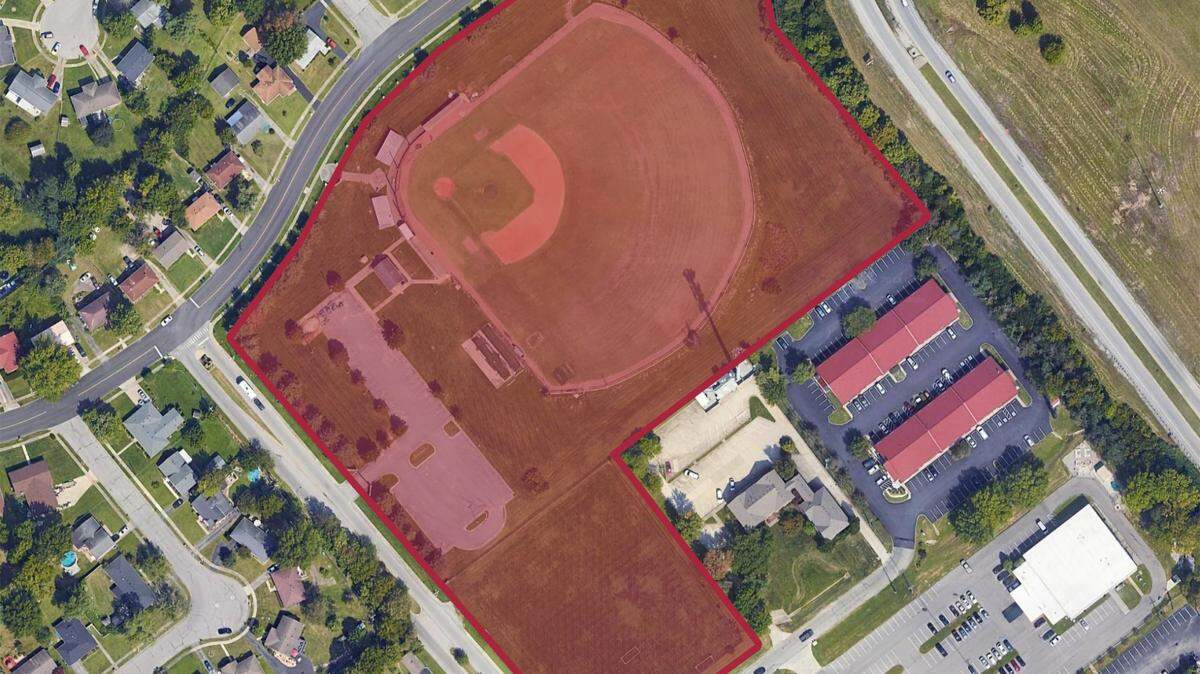
Despite neighborhood objections, Lexington city council approved a zone change that will allow multi-family homes to be built on the old Transylvania University baseball field off North Broadway.
At a five-hour public hearing Tuesday discussing the zone change, the Radcliffe-Marlboro Neighborhood Association said the proposed 12.5-acre affordable housing project would be disruptive to their way of life and worsen already existing problems, such as high traffic congestion and local flooding.
Ultimately, council decided the positives outweighed the negatives.
“With the concerns that have been brought forward today, your decision will show us that we’re not one Lexington and money is ranked higher than people,” said Michelle Hutchinson, president of the neighborhood association.
“Marlboro neighborhood input was useless. This was just a formality to say the box was checked.”
Winterwood, AU Associates, Habitat for Humanity and Urban League of Lexington will work together to develop the land, which will bring up to 234 new affordable homes to the city: 26 houses, 29 townhomes and 179 apartments – some of which are designated as senior housing.
Though the council approved a zone change, the planning commission will have to approve a final development plan before construction begins – so the plans are not set in stone.
A 2024 housing study showed Lexington needs over 22,500 homes -- right now -- to meet the housing need in the city. That number will only go up, said council member Whitney Elliot Baxter.
“We all know that this current housing shortage is real and that the housing prices are out of control,” she said.
“In all of Fayette County, there are 130 homes for sale under $330,000 (Lexington’s median sales price). This development alone will provide roofs for more people than there are currently houses available.”
The 26 houses and 29 town homes will be available for purchase for those who qualify. The entire development is aimed at those who make 80% or less of the median income in Lexington — or under $76,150 for a family of four.
Transylvania sold the land to Central Bank, Community Trust Bank, Republic Bank and Trust, Stock Yards Bank and Traditional Bank, who pooled $2.8 million for the purchase in March 2024. The field hadn’t been used by Transylvania since 2019 when the baseball team moved to Lexington Legends’ Whitaker Bank Ballpark.
The Kentucky General Assembly also approved $10 million to help pay for public infrastructure associated withe the project, including building roads, relocating utility lines and storm water and sewer projects.
People who live nearby said they did not oppose development of the lots, but wanted to stick with low-density housing instead of changing the zoning to allow medium-density housing, to preserve the integrity of the neighborhood.
Greg Widener, a resident of the Radcliffe-Marlboro neighborhoods, said changing the zoning to allow mid-density housing would let the developers cram too many units on a small piece of land. With over 50 buildings on the lot, some homes will be accessed by alleyways that he called substandard.
“There’s too many buildings. You emphasized density at the very sacrifice of livability,” Widener said.
Zach Worsham, vice president of Winterwood, said the apartment buildings could have supported a taller build, but input from the neighborhood swayed developers to keep the tallest building at five levels.
Jessica Winters, the neighborhood association’s lawyer, said the development is not context sensitive, since the surrounding neighborhoods are mostly one-story homes.
Council passed a density cap along with the zone change approval, limiting the developers from adding any more units to the current proposal.
Other complaints from residents focused on the lack of communication from the developers. Despite holding neighborhood meetings over the course of one year, Radcliffe-Marlboro residents said the proposed development plan disregarded public input.
Scott Sloan, a resident of the Radcliffe-Marlboro neighborhood, said the developers originally presented a plan that highlighted multi-family homes that resembled single-family homes, such as duplexes and triplexes instead of apartment buildings. He said his neighbors were victims of a “bait-and-switch,” once the plans changed to traditional apartment buildings.
The developers agreed to involve the neighborhood association in the process of creating the finalized construction plan. Jon Woodall, the lawyer for the developers, said the construction will be transformative for Lexington and replicated across the nation.
“Sometimes you just can’t do everything the neighborhood wants you to do and keep an affordable housing project like this one viable,” Woodall said.