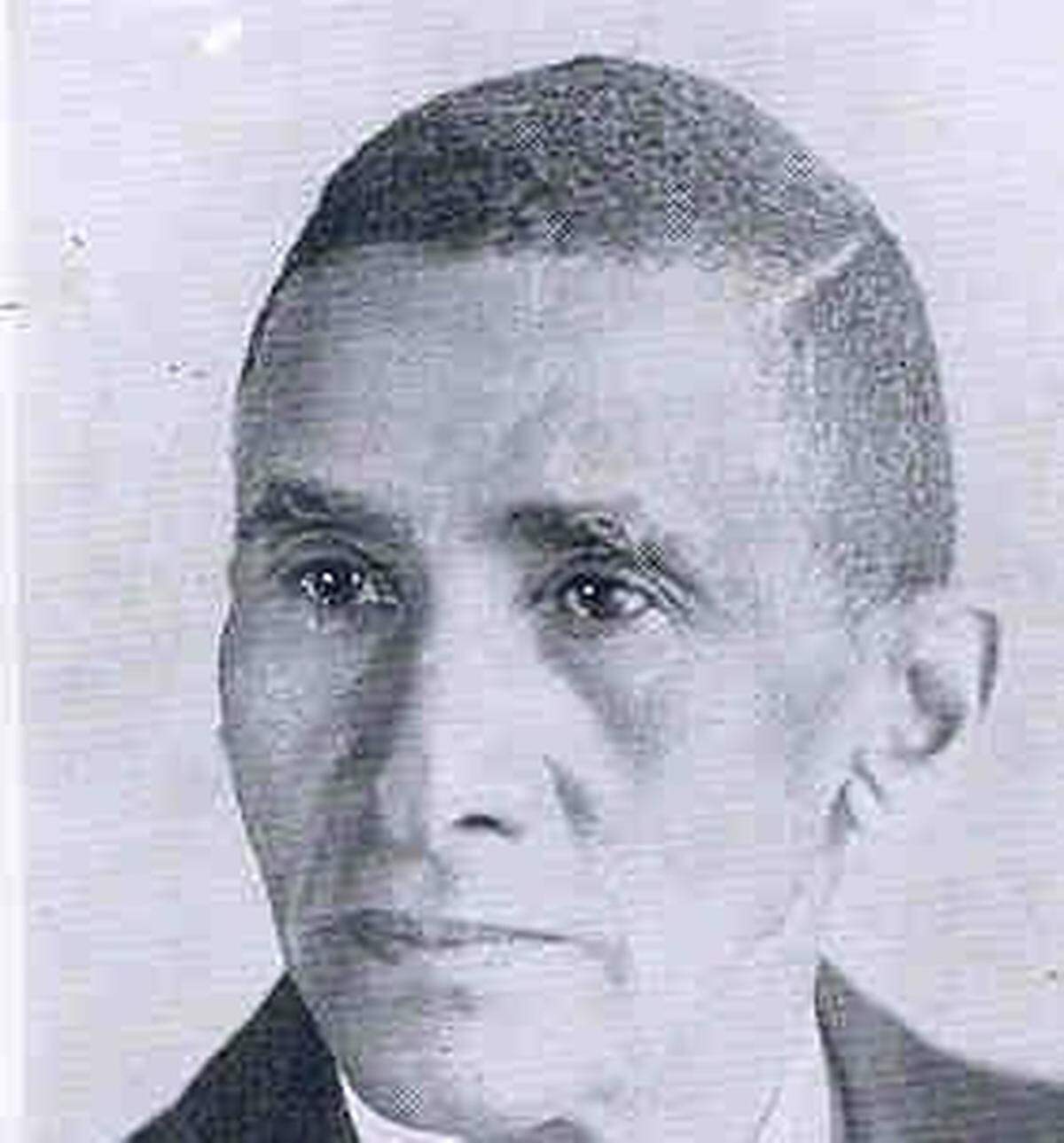
Lexington sculptor left an indelible impression on American culture
Editor’s Note: As Lexington celebrates the 250th anniversary of its founding, the Herald-Leader and kentucky.com each day throughout 2025 will share interesting facts about our hometown. Compiled by Liz Carey, all are notable moments in the city’s history - some funny, some sad, others heartbreaking or celebratory, and some just downright strange.
Isaac Scott Hathaway left an indelible impression on American culture in the form of two U.S. coins featuring Black Americans.
Hathaway was born on April 4, 1872, in Lexington, the son of Reverend Robert Elijah Hathaway and Rachel Scott Hathaway. Robert’s father had been enslaved. Tradition holds that Hathaway visited a museum as a child and noticed there were no pieces of art made by or depicting African Americans.
At that point, he said he was determined to represent his people.
After attending Chandler Junior College in Lexington, Hathaway began his formal studies at the New England Conservatory of Music in Boston. It was there that he sculpted his first bust of Bishop Richard Allen, the first bishop of the African American Episcopal Church.
Later, he went to the Cincinnati Art Academy for a formal training in ceramics.
In 1897, Hathaway returned to Lexington to teach at Keene High School, and to open his first art studio where he made plaster casts of human anatomy for educational purposes. He was also commissioned to do sculpture work, including being hired to cast a death mask for Cassius Marcellus Clay.
Ten years later, Hathaway moved to Washington, D.C., and started making busts of African American leaders including Frederick Douglas, Booker T. Washington, poet Paul Laurence Dunbar, and W.E.B. Du Bois, as well as the death masks for other celebrated figures.
By 1915, Hathaway had moved to Pine Bluff, Arkansas, and was teaching college and high school ceramics classes in 1937, when he moved to Tuskegee, Alabama, to establish the Ceramics Department at Tuskegee University.
In 1945, he developed Alabama kaolin clay as a medium. Not long after, he was commissioned by the Fine Arts Commission of the United States Mint to design a half-dollar with Booker T. Washington’s face on it.
That coin was minted from 1946 until 1951. He was commissioned to do a second coin, this one of George Washington Carver which was minted from 1951 to 1954.
Hathaway also served as the Director of Ceramic at Alabama State College where he worked until his retirement in 1963. Over the course of his career, he won numerous awards including honorary degrees and fine arts awards from various colleges and universities where he helped to introduce ceramics as a field of study in the arts.
Hathaway passed away in March 1967 at his home in Montgomery.
Have a question or story idea related to Lexington’s 250-year history? Let us know at 250LexKy@gmail.com.