UK study: Economic impact of Fayette County farmland tops $2 billion

AI-generated summary reviewed by our newsroom.
- Fayette County agriculture generates $2.6B annually and supports 16,000 jobs.
- Sector also contributes $1.1B in income and $12.9M in occupational tax revenue.
- Study warns 10% farmland loss could cut $19M from county’s economic output.
Fayette County’s agriculture sector has an estimated economic impact of $2.6 billion annually and contributes 16,000 jobs to the county, a new study showed.
The University of Kentucky study is an update of a similar 2017 economic analysis, which looked solely at jobs in agriculture. The study released Monday also counts other agriculture-related jobs, including those in retail, tourism and transportation that are 100% tied to agriculture.
“This updated study helps us clearly understand the vital role agriculture continues to play in shaping Fayette County’s diverse and growing local economy,” said Simona Balazs, research director of UK’s Blueprint Kentucky, which conducted the study. UK’s Blueprint Kentucky was formerly known as the Community and Economic Development Initiative.
Other key findings from the study include:
- The agricultural cluster directly and indirectly supports over 16,000 jobs, or roughly 1 in 12 jobs in the county.
- The total annual economic impact of agriculture is over $2.6 billion, contributing an additional $1.1 billion in income, profits, and dividends into the pockets of Lexingtonians.
- Occupational taxes, a tax on wages, generated by the agriculture industry are estimated at $12.9 million per year.
- There was a slight increase in the number of farms from 2017 to 2022 — 622 farms in 2017 compared to 682 farms in 2022. However, the amount of land dedicated to agriculture has decreased over the past 50 years from 162,299 acres in 1969 to 124,247 acres in 2022, the latest data available.
What it means for KY agriculture community
The study, which is paid for by various agriculture industry groups, said the $2.6 billion in annual receipts was conservative or low. The study only counted jobs directly tied to agriculture.
Balazs said other revenue — including number of hotel or short-term rental stays associated with visitors to Keeneland or the Kentucky Horse Park — were not counted as part of the economic impact study.
“This new study proves the value of our agricultural lands to our economy and our quality of life,” said Bluegrass Land Conservancy Board Chair Margaret Graves. “Hopefully, elected leaders will continue to pursue land use policies that conserve Fayette County farmland for agricultural use — this study makes clear why it’s in the best interest of our community.”
The release of the study comes as the Lexington-Fayette Urban County Council is poised to take its first vote Tuesday on a zone text amendment that outlines where solar can be located in Fayette County. The council’s General Government and Planning Committee voted in July to approve a previous Urban County Planning Commission’s recommendation that nixed large-scale solar on land zoned agriculture.
Lexington council to vote on solar on ag land
A proposed amendment pushed by Council members David Sevigny and Liz Sheehan would allow some solar in some agriculture-zoned lands, which many agriculture-related groups have opposed because it is not clear if solar will affect soil quality.
Others have pushed to allow some solar on farmland as the county and state look for alternative energy sources to be less dependent on coal and other non-renewable energy. Without allowing solar on farmland, the city will never reach its goal of being carbon-neutral by 2050, Sevigny and Sheehan said in a recent editorial.
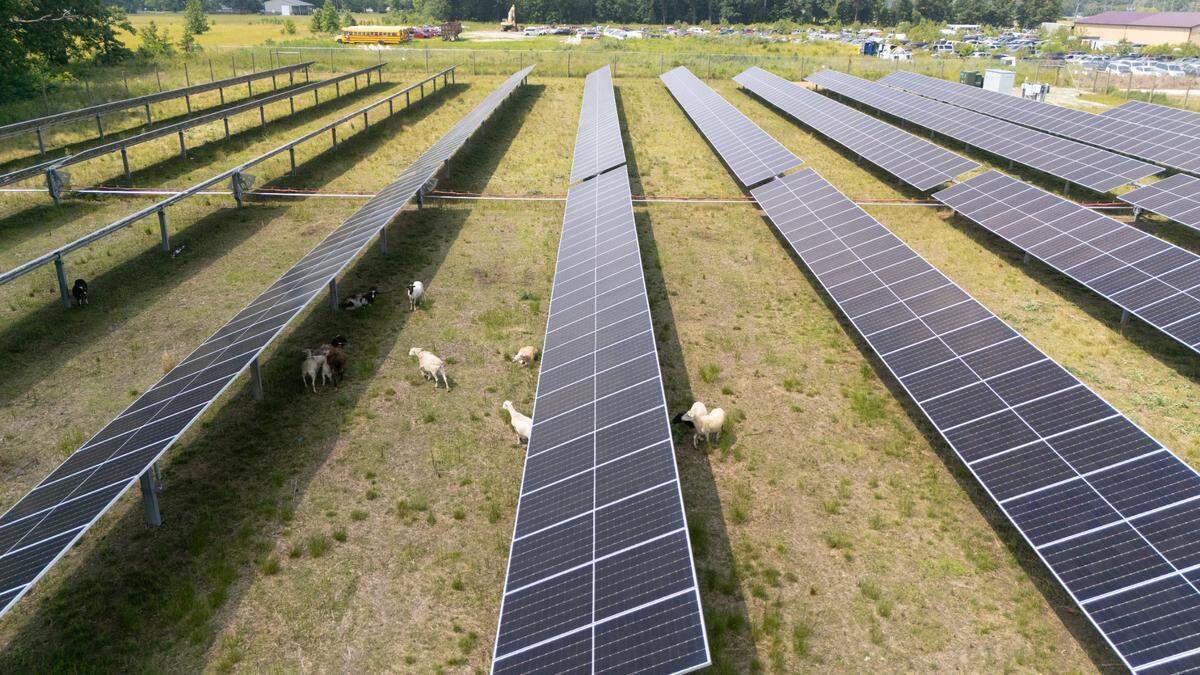
The zone text amendment was initiated by Nashville-based Silicon Ranch, a Shell-backed solar company that wants to put an industrial solar farm in Eastern Fayette County on 800 acres of agriculture land. Silicon Ranch wants to put sheep on the property to help it maintain the land.
The UK study showed converting agriculture land to other uses also has a cost.
If 10% of the agriculture land is removed or converted to other uses, the loss would be about $19 million. The study did not calculate gain or loss if the agricultural land moved to a different use, such as housing or commercial development.
“Our signature agricultural industries rely on our ‘factory floor’ — our prime soils and Bluegrass farmland,” said Brittany Roethemeier, executive director of Fayette Alliance. “Promoting these industries, our quality of life, and our unique brand depend on sustainably growing our community and ensuring we continue to support innovative land use planning practices. ”
This story was originally published August 18, 2025 at 1:10 PM.