Eviction support program that began during pandemic gets more funding in Lexington
Lexington’s fiscal budget for the new year will maintain funding for a program that provides key services to people facing eviction.
The city’s Housing Stability Services Program provides grant funding to Legal Aid of the Bluegrass, which in turn administers services including eviction prevention, legal representation in eviction court, and mediation for tenants of Lexington Housing Authority, which oversees affordable housing in the city.
The first few years of data for the program in Lexington, and similar ones nationwide, is encouraging — especially the effectiveness of providing a lawyer for people facing eviction.
“From the fall of 2023 to the end of 2025, we settled 216 mediations, and that resulted in us collecting over $500,000 in delinquent rent,” said Andrea Wilson, program and policy analyst for the Lexington Housing Authority. “It was good for us, it was good for our clients, and this helped the Housing Authority with our bottom line.”
And according to a 2023 study by New York City’s Office of Civil Justice, 89% of people who have legal counsel in eviction court avoid being displaced from their home.
Lexington’s program began during the COVID-19 pandemic, and it’s had various format changes and funding structures since then, said Erin Hensley, Lexington’s commissioner of finance. Initially, the program used funds from federal grants for rental assistance in response to skyrocketing eviction rates during the pandemic.
“We had tens of millions of dollars that we were providing rental assistance for during the height of the pandemic,” said Charlie Lanter, the city’s commissioner of housing advocacy and community development. “As that program began to wind down, the feds allowed you to use some small percentage of your money to do what they call housing stability services, meaning the services that kept people in their homes, other than just paying their rent.”
Now, the program focuses on three categories of housing stabilization, rather than emphasizing only direct assistance.
Promising results
Lexington’s program was structured with the goal of leveling out the power imbalance between the property owner and the renter. This aims to ensure the housing market is working for everyone and the lower-income population is not left defenseless, Lanter said.
“I think people think when you go to court in the United States court there is a fair and equal playing field,” Lanter said. “But that’s not entirely the case when we go to eviction court.”
If a tenant fails to appear for an eviction summons in court, they lose. A big struggle for many low-income people facing eviction is simply making it to court, due to a lack of information or not having the means to get there.
It is not a landlord’s responsibility to explain tenant rights or provide legal defense, and you are nearly nine times more likely to have success in court and be able to stay in your home if you have an attorney, said Karen Hoskins Ginn, advocacy director at Legal Aid of the Bluegrass.
And if you do get evicted, it can affect your future housing opportunities.
Nationally, 90% of landlords conduct background checks, and many rule out people with evictions on their records. In Kentucky, an eviction technically stays on record permanently, but it is typically disclosed for up to seven years.
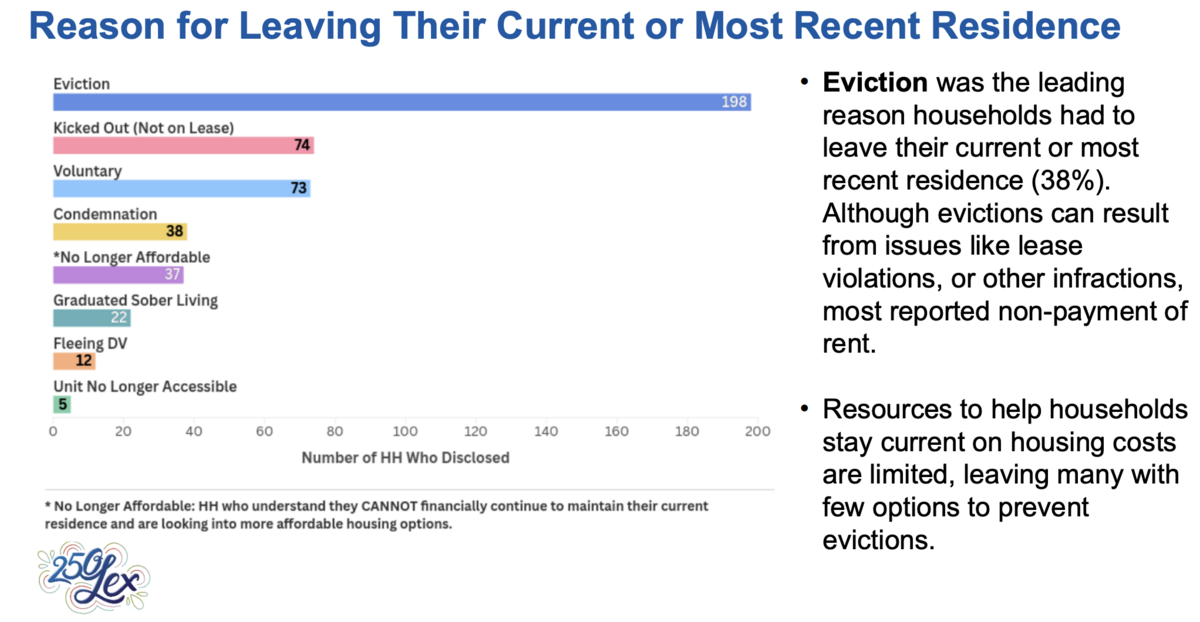
In all, 7,000 people have been served in Lexington, and there has been between a 70-90% success rate avoiding eviction, according to data provided by Lanter. People who receive help are often needing to be referred to mediation only once, proving the long-term effectiveness of the program in housing stabilization, said Wilson.
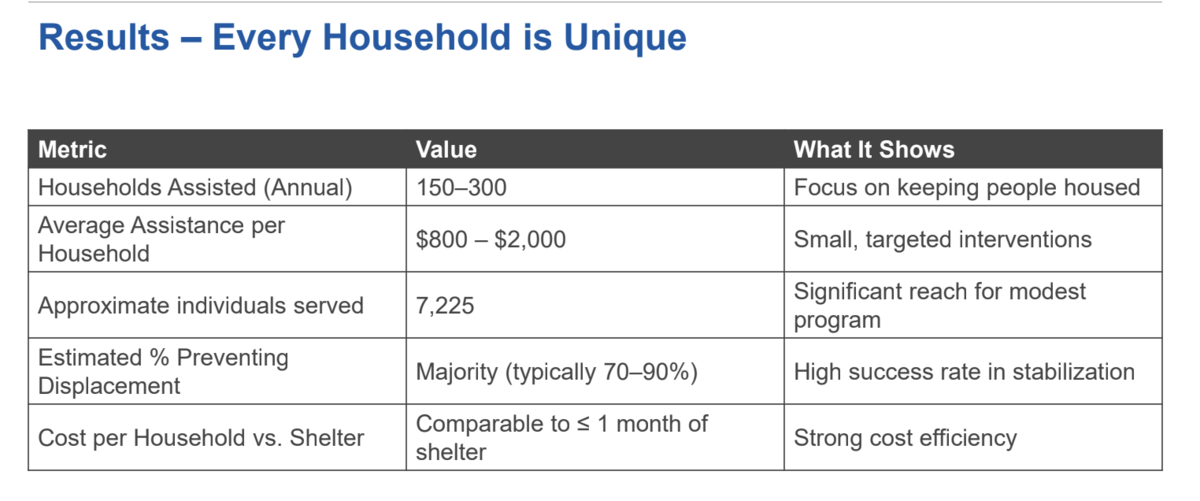
Of the 4,865 people served by Legal Aid of the Blue Grass, 41% of cases involved children.
Children are especially affected long-term by housing instability, with worse reported health and more likely to develop depression, according to a study by the CDC and Kaiser Permanente.
And the money is a prudent investment, advocates say.
Providing someone with an eviction prevention programs costs city governments just one-third of what it would cost to house them in an emergency shelter, and for every dollar invested in civic legal aid, there is a $7 economic return, Ginn said.
The need for funding security
In Lexington’s FY27 budget is $400,000 in pre-allocated funding for the program. This is the first time the program has been included in the city budget at the start of the fiscal year.
In November 2024, when federal dollars dried up, the program was moved to the city’s general fund, and $500,000 was allocated from the $20 million FY24 fund balance. This refers to money that was left over from the previous year’s budget.
A little over a year later, in December 2025, the city council voted to earmark an additional $150,000 to ensure the program did not run out of funding before the end of the fiscal year. However, going more than a year without guaranteed money took a toll on the program.
Without being able to budget resources, some parts of Legal Aid of the Bluegrass had to shut down, Ginn said. With no money available, attorneys were unable to schedule mediations, and they could not hire new staff, all while the number of eviction cases on court dockets remained high.
“We’re going to do the work as best we can anyway, but we serve 33 counties across central, northern, and northeastern Kentucky, and we have 24 attorneys working those 33 counties,” Ginn said. “That means for Fayette County, we may not have attorneys available for every docket of those five days a week, and we also may have to slot those resources to other places than housing.”
Funds were expected to run out by the end of the current fiscal year, and last fall Lanter started planning ways to ensure the program could survive. Working with the mayor’s office and city council to make the case for the program, the data proved that continued funding would be meaningful for Kentucky’s second-largest city.
The funding for FY27 was approved on June 3 during the Urban County Council Working Session and officially passed on June 10. The 2027 fiscal year starts July 1.
Talks for next year’s budget are months away from beginning, but Lanter is optimistic for continued support from the city. His department is constantly looking for ways to increase the effectiveness of the program and expand further.
While $400K marks a major step, affordability and housing security are complex issues that $400,000 alone will not solve, let alone meet current levels of need, Ginn said.
“It will help, and it will do a lot of good for a lot of people, but it will not fully serve the needs of Fayette County,” Ginn said. “There were years during the (federal) funding when we had multiples of that amount of money, and we didn’t run out of clients.”
Trends in the typical clients served have changed over time, shifting toward single-parent families and the elderly facing the risk of eviction, said Ginn. Those two types of households often have complicated financial needs and limited avenues to increase income, while the rising costs of everyday goods can mean the difference between paying rent or putting food on the table.
“The other thing I would say to people is this could happen to anyone, think all of us think this is somebody else’s problem, because maybe it’s never happened to us, but anyone is one bad medical diagnosis or a job loss or both away from needing this program,” Lanter said. “This is the system we built, this is the system we have to operate within, so this is the program we have to help us do that.”