Inside Lexington’s recent 911 upgrade and the state initiative behind it
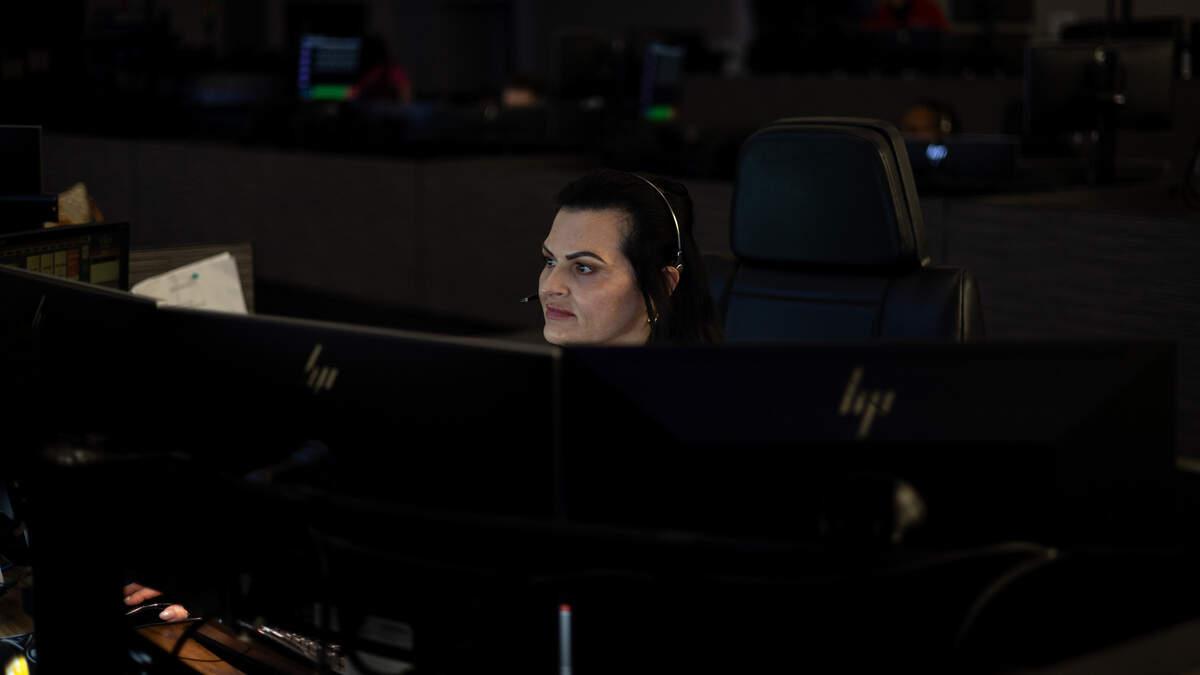
Tucked within the concrete walls of what was once a juvenile detention center, Tracy Wells has spent the past 30 years answering 911 calls for Fayette County.
The most stressful part of being a supervisor at Lexington’s Enhanced 911 Center, she said, is when someone experiencing an emergency can’t be located.
“We get those calls that you can tell immediately, okay, this is bad. They’re really dependent on me to be quick and get information,” Wells said. “And they’re hysterical, they’re not able to really tell you a whole lot, and every second that goes by, you know it’s going to get worse.”
In cases like this, Wells and her team have historically had to rely on cell tower data provided by the caller’s phone provider to locate them and send help — a process that has not always been fast or accurate.
This is just one issue that Kentucky’s Next Generation 911 initiative seeks to eliminate, bringing Geographic Information System mapping technology and a new digital infrastructure to the state’s public safety answering points.
Gov. Andy Beshear announced the statewide implementation of Next Generation 911 on June 4, calling it “one of the most significant public safety technology upgrades in our history.”
“This project is modernizing how emergency calls are handled,” Beshear said. “The faster dispatchers and first responders can access accurate information, the better.”
A week later on June 11, Next Generation 911 was introduced at Lexington’s emergency call center, making it the 23rd of 117 answering points in the state to switch over.
The Lexington center’s copper wire and analog system was replaced with an IP-based system known as an Emergency Services IP Network, or ESInet. Once fully integrated, the ESInet will allow dispatchers to easily share information across counties, determine callers’ locations more efficiently and receive texts, photos and videos from the scene of emergencies.
Amy Hess, executive director of the Kentucky Office of Homeland Security, emphasized the significance of a silent option to contact 911 becoming available statewide.
“A victim of domestic violence may not want their abuser to know that they’re calling 911 because that’s just going to make the situation worse, right? Same thing with an active shooter situation. You don’t want your voice to be heard, you don’t want to give away your location, and so text is huge for that,” Hess said.
While Lexington dispatchers already had the technology to receive texts, they will soon be able to receive photos and videos under the new system.
Lexington’s Enhanced 911 Center Manager Mario Cheek said his team will use this feature for “pre-arrivals,” or to get a look at the scene before emergency services arrive. He said this will be especially helpful when first responders must guide callers through CPR over the phone.
“Having that visual aid there to assist you when you’re walking through those protocols with someone who’s in that type of an emergency would be huge, because all of a sudden someone who’s not used to doing it is responsible for trying to save a life,” Cheek said.
In the first week under the new system, the main change Cheek said dispatchers have already utilized is the improved location mapping.
“The biggest piece is the physical location of where you’re calling from, and it’s presented in a more accurate format and independent of the databases that we used to use before,” Cheek said.
In emergency situations, Hess said, time is of the essence, and she believes the impact of Kentucky’s Next Generation 911 project will not go unnoticed.
“It’s just a huge thing for Kentucky, and for not just public safety, for the first responders, but also for the people who may need those services,” Hess said. “To be able to get them in a timely, accurate, reliable way saves lives, and it will save lives.”
Since Lexington switched over, another public safety call center has been introduced to Next Generation 911. River County 911, covering Carlisle County and Ballard County, was integrated on Wednesday, June 17.
Hess said the remaining 93 call centers are expected to receive the new systems by the end of 2027.
Here is the list of Next Generation-integrated call centers at the time of publication, provided by the Kentucky Office of Homeland Security:
- Bluegrass 911 (Covering: Garrard, Lincoln, Mercer and Casey counties)
- Clay County 911
- Edmonson County 911
- Bath County 911
- Fleming County 911
- Jessamine County 911
- Grayson County 911
- Carter County 911
- Bracken County 911
- Scottsville – Allen County 911
- Adair County 911
- Green County 911
- Rowan County 911
- Knox County 911
- Campbellsville-Taylor Co 911
- Lebanon-Marion County 911
- Regional Public Service Communications Center-Boyd County 911
- Greenup County 911
- London-Laurel County 911
- LaRue County 911
- Woodford County 911
- Meade County 911
- Lexington Division of E911-Fayette County
- River County 911 (Covering: Carlisle and Ballard counties)