
Voters might have to wait for official winner between Ben Chandler, Andy Barr
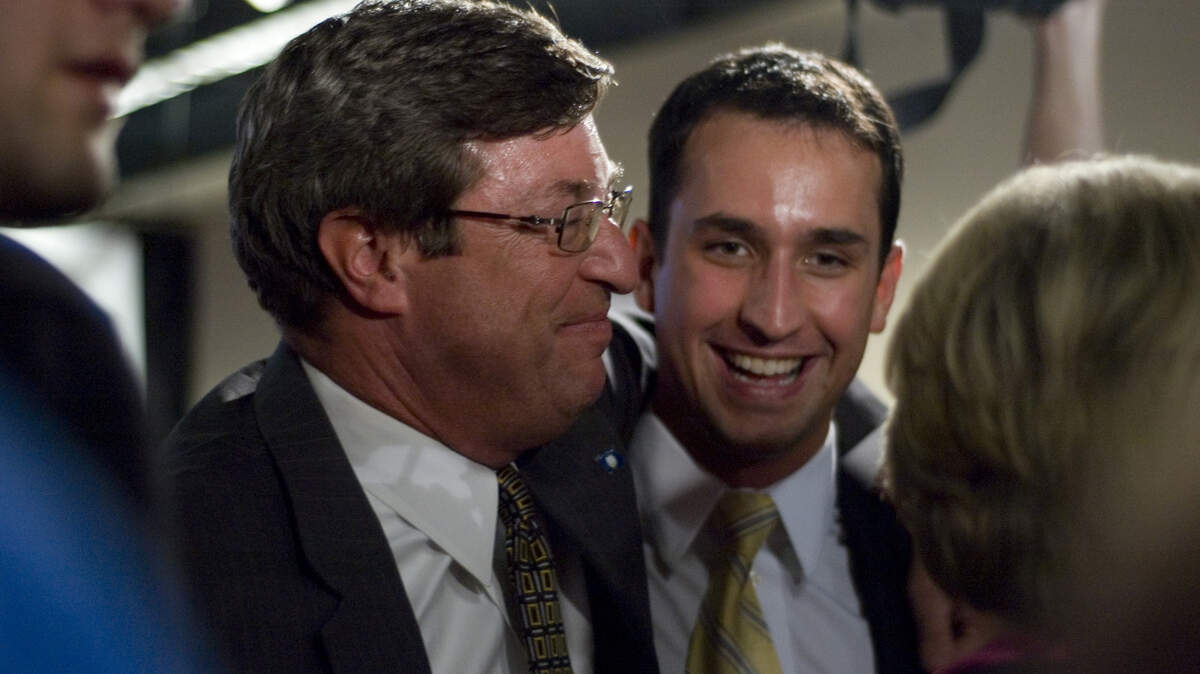
It might be a while before Central Kentucky voters get the official word on who will be their congressman in January.
U.S. Rep. Ben Chandler, D-Versailles, claimed victory Tuesday night with a 600-vote lead over Andy Barr, his Republican challenger, out of more than 239,000 votes cast in the 6th Congressional District.
With all 640 precincts reporting, numbers from The Associated Press show Chandler leading Barr 119,845 to 119,245. The Kentucky Board of Elections' Web site, which still lacks numbers from at least one precinct, shows Chandler with a 644-vote lead.
Although an election-law expert said Wednesday it's highly unlikely Barr can overcome a 600-vote deficit, Barr would not concede defeat.
He said he would wait until Friday, when the district's 16 counties must present their unofficial vote returns to the secretary of state's office in Frankfort for verification. After that, if he wishes, he can challenge the results.
"The people of Central Kentucky have spoken," said Barr, a Lexington lawyer making his first run for elected office. "However, it remains to be seen exactly what they said."
As of Wednesday afternoon, only Clark County had submitted its returns to Frankfort, with no errors found in its numbers, said secretary of state spokesman Les Fugate.
The national news media, which is carefully tracking Tuesday's Republican takeover of the U.S. House, have not declared a winner in the 6th District because Chandler's 600-vote lead seems potentially vulnerable to challenge, Fugate said.
"The ball at this point is in Barr's court because Kentucky doesn't have a provision for automatic recounts in close races," Fugate said.
The Kentucky Board of Elections meets Nov. 22 to certify the election results. Chandler's 600-vote lead is enough to make him the winner. But Barr has several options if he wants to keep fighting, said Kathryn Gabhart, the board's general counsel.
Barr may approach county boards of elections by next Tuesday to request a recanvass, a second check of totals from their voting machines. This would be relatively quick and cost him nothing.
Or he may file a petition within 10 days in circuit court for a court-supervised recount of all votes, which could last weeks or months and cost him thousands of dollars because the expense would be billed to his campaign.
Finally, if Barr thinks fraud, voter intimidation or other malfeasance played a role, he could file a petition within 30 days in circuit court. A judge would hear evidence to decide whether the election was legitimate. If it was not, the judge could vacate the results. As with ordinary lawsuits, the parties — Barr and Chandler — would pay their own legal costs.
Although math errors can happen, the gap between Chandler and Barr probably would be hard for a recount to eliminate, said Joshua Douglas, who teaches election law at the University of Kentucky.
"With a 600-vote difference, that's a good number of votes to try and overcome," Douglas said. "If it was in the 100-vote range, then I could see that swinging. But not so much with 600."
Douglas said the most famous recount reversal in recent political history was the 2008 U.S. Senate race in Minnesota between Democrat Al Franken and Republican Norm Coleman. Initially, Coleman was declared the winner by 206 votes out of more than 2.9 million cast. After a recount, Franken was ahead by 225 votes, and he went to the Senate.
Chandler was wise to grab the microphone Tuesday night while the race remained in dispute and deliver his victory speech, Douglas said.
"There's something smart about quickly declaring yourself the winner and acting that way, as Chandler did," he said. "That's what George W. Bush did in the 2000 election. That gives you an advantage, at least publicly if not legally."
On Wednesday, the Chandler campaign stuck by its victory proclamation.
Chandler is confident he'll return to Washington, spokeswoman Jennifer Krimm said.
In a related matter, he still should have his seat on the powerful House Appropriations Committee, which decides federal spending, Krimm said.
With Republicans claiming a House majority, the 60-seat committee is going to lose many of its 37 Democrats to make room for new Republican members. But Chandler, despite his relative lack of seniority — he was first elected in 2004, is confident he won't get squeezed off, Krimm said.
This story was originally published November 4, 2010 at 12:00 AM with the headline "Voters might have to wait for official winner between Ben Chandler, Andy Barr."