
Judge considers extradition of woman accused of Bosnian war crimes
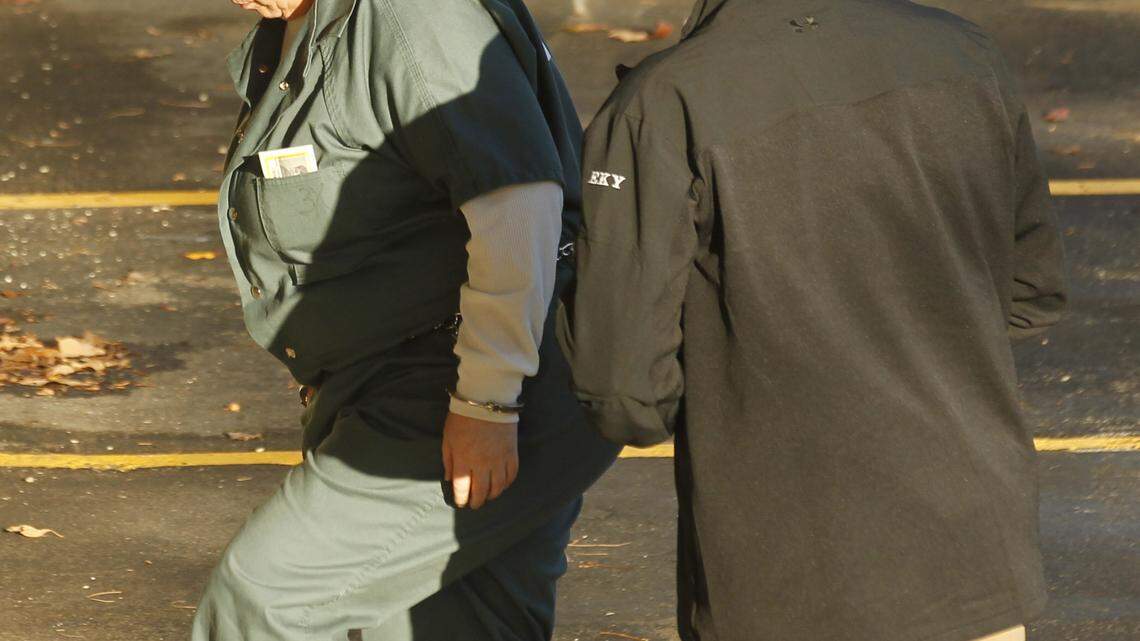
For three hours Monday, a federal judge in Lexington heard testimony on whether a Croatian-born woman accused of murdering and torturing civilians during the Bosnian civil war in the 1990s should be extradited from Kentucky to face charges in Bosnia and Herzegovina.
Azra Basic, 52, a former Croatian soldier, is accused of murdering and torturing ethnic Serbians at prison camps from April to June 1992. She'd lived in Kentucky for several years when she was taken into custody in March by federal authorities.
Patrick Nash, Basic's attorney, told U.S. Magistrate Judge Robert E. Wier that Basic was in two Croatian army brigades, but not the two brigades that authorities in Bosnia and Herzegovina cite in documents. Basic, Nash said, did not serve in a military police unit or as a guard or commander of a prison camp.
Nash said that a prisoner Basic is alleged to have fatally stabbed in the neck, Blagoje Djuras, is clearly identified as a soldier and not a civilian in documents supplied to the U.S. government. And Nash said there were indications that at least some alleged witnesses to atrocities alleged to have been committed by Basic were also soldiers and not civilians.
Nash also said there were two Azras that overseas witnesses in the case talk about.
The "great big hole" in the case is how witnesses get from the Azra who did these things to the Azra in the U.S., Nash said. He questioned the validity of a six-photo lineup in which Basic was the only non-Serbian.
Assistant U.S. Attorney James Arehart said several people positively identified Basic as the person being sought from the photos. He said he didn't think there is any evidence contradicting assertions that the witnesses were civilians at the time of the alleged crimes.
"I think Mr. Nash makes a good argument for acquittal beyond a reasonable doubt," Arehart said. But he added that that was not at issue in an extradition hearing.
The attorneys also argued Monday over whether a required warrant for Basic's arrest had been produced. Nash said a warrant has never been produced, while government attorneys maintained that a notice issued by Interpol after that agency received a letter from a Bosnian prosecutor is the warrant.
More than 100,000 people were killed in the war that followed the collapse of Yugoslovia. Muslim Bosnians, Catholic Croats and Christian Orthodox Serbs were pitted against one another in the war.
Nash said records show that Basic's father was a Muslim and her mother was a Croatian Catholic, and that Basic had citizenship in both Croatia and Bosnia. Basic and her then-husband entered the United States as refugees in 1994, Nash said.
"In 2007, she became a U.S. citizen, right here in this courthouse," he said.
Three people testified at Monday's extradition hearing, including Karen Mingst, a University of Kentucky professor, who discussed the history of the former Yugoslovia and the cultural differences there. Also testifying were Lucille Loman of Stanton, with whom Basic was living when she was taken in by federal marshals, and Edith Fultz of Cynthiana, Loman's sister-in-law, who also had come to know Basic. Nash indicated that he called the latter two witnesses to show that Basic was not trying to hide from anyone or hide her past while living in Kentucky.
Loman said she first met Basic about eight or nine years ago, when she and Basic worked together at Tanbark Health Care Center in Lexington. Basic was a nurse's aide; Loman was a private sitter. At the time, Basic lived in an apartment in Jessamine County, she said.
Loman said people knew Basic by the names "Isabelle" and "Azra." Some people called Basic "Easy" because they could not pronounce Azra, she said.
"She just became one of our family," Loman said. "She don't have no family, you know. I wanted her to live with us because she didn't have no family in the United States."
Loman said Basic lived with her and her family in Lexington for about a year, paying her share of the bills. When Loman's family decided to move to Powell County, she invited Basic to move there with them, and she did, Loman said. Basic worked at a nursing home in Stanton for a time. She was working at a Nestle's food plant in Mount Sterling at the time of her arrest.
Loman said Basic told her "some" about her military service. Basic told her she became sick to her stomach when she killed a man while in the military, she said.
"It was her or him to be killed," Loman said.
Basic also told Loman she had been taken prisoner by Serbs, and was beaten and raped by Serbs, Loman said.
Wier gave attorneys about two weeks to file post-hearing briefs and said he would rule on the extradition issue as soon as possible.
This story was originally published November 8, 2011 at 12:00 AM with the headline "Judge considers extradition of woman accused of Bosnian war crimes."