
Federal judge: Evidence of excessive force by Fayette jail officers in 2012 inmate death
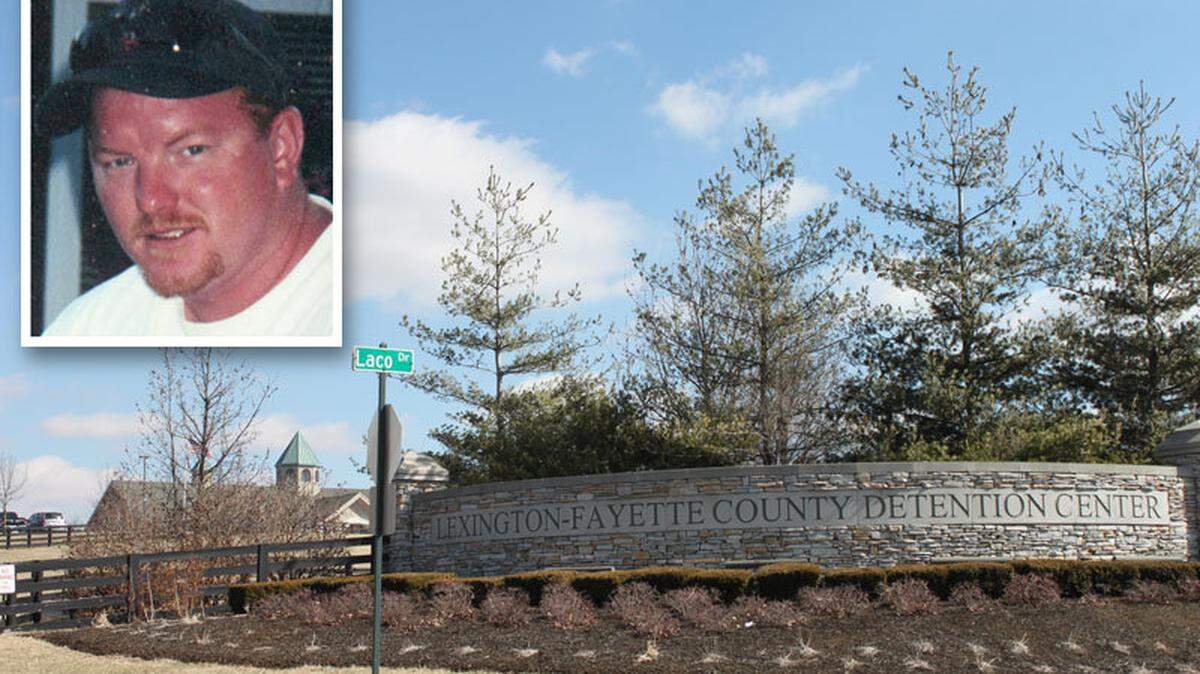
A federal judge has ruled there is evidence that officers at the Fayette County jail used excessive force on an inmate who died when he was being held in 2012.
U.S. District Judge Karen Caldwell also said in a strongly worded order dated July 1 that there was evidence some corrections officers and medical staff showed deliberate indifference to Jeffrey McKinney, who died after a seizure while being restrained by corrections officers who perceived his behavior as combative.
"The failure to provide medical treatment detrimentally exacerbated McKinney's medical issues; he died," Caldwell wrote.
A jury is expected to decide claims that McKinney's family has made in a wrongful-death lawsuit filed in 2012. In her ruling, Caldwell said that "fact finders" could determine that excessive force was used and that deliberate indifference was at issue. She ruled that claims against 12 people, including corrections officers and members of the medical staff, could proceed, although she terminated claims in the lawsuit against the Urban County Government and the Division of Community Corrections.
She also ruled against corrections officers who had argued they were shielded from civil liability in the case.
A July 27 trial has been postponed while seven corrections officers appeal on that point to the 6th Circuit U.S. Court of Appeals.
"It is not clear that the officers needed to apply force at all," Caldwell wrote. "The officers were responding to a medical emergency, McKinney only exhibited defensive resistance after officers escalated the use of force, and McKinney did not actively threaten anyone.
"The officers 'got physical' with McKinney, applied mandibular angle pressure-point control techniques, administered a two-second burst of pepper spray, secured him in a restraint chair for over 13 minutes, struck him with their knees, pinned him down ... and physically struggled with him for over seven minutes. Further, this altercation ultimately ended in McKinney's death. McKinney experienced significant injury" because of the use of force, Caldwell wrote.
The judge also said in the order that there was evidence nurses at the jail showed "deliberate indifference for failing to provide any medical assessment or medical treatment while McKinney was secured and lethargic in the restraint chair."
Caldwell's order details what led up to the death of the 37-year-old father of four on May 22, 2012.
On May 17, McKinney pleaded guilty to a second offense of driving while impaired and received a 14-day sentence. He reported to the jail later that day and, during his intake, he stated that he suffered from a traumatic brain injury and had various medical conditions, including seizures that required him to take medicine. He brought his medicines, including Ativan, described in the order as an anti-anxiety drug and an anticonvulsant. But a nurse practitioner ordered that McKinney receive a withdrawal protocol in the medical unit, slowly reducing the Ativan. The day he was returned to the general population, he suffered two seizures, during which jail staff came to his aid.
He was dazed after the second seizure, Caldwell wrote.
During his second seizure, he severely bit his tongue and had a lot of bloody secretions coming out of his mouth, and he spat them out. A nurse did not think McKinney spat intentionally, but the corrections officers interpreted McKinney's spitting as an intentional act and "attempted to control the subject."
Caldwell's order outlines McKinney's last moments after he was removed from a restraint chair: His arms remained handcuffed behind his back, and his legs were shackled. He stood in front of a "boat," a slang term commonly used by jail staff to refer to an upside-down bunk on the floor that often includes additional padding.
Officers directed McKinney to kneel in the boat. He did not kneel voluntarily, so multiple officers began striking McKinney to force him to his knees. Once he was kneeling, the officers forced McKinney into a prone position. Two officers held McKinney in a prone position by keeping a hand or knee on his back.
With McKinney in the prone position, officers removed his spit hood and a nurse administered saline solution to McKinney's face to decontaminate the pepper spray residue. McKinney became listless and unresponsive. The officers told McKinney to turn his head; he did not respond. Officers asked: "Hey Jeff, hey buddy, you still with me?" and "Jeff, can you hear us?" McKinney did not respond; he remained face-down and motionless in the boat for an additional minute before an officer yelled, "Jeff! Jeff! Jeff! Let's get him rolled over. Let's get him rolled over. Let's get him rolled over! Jeff!," and another correctional officer yelled, "We need nurses! We need nurses!"
The officers turned McKinney on his side and removed his handcuffs. The officers continued administering CPR until emergency medical workers arrived and took over McKinney's care. He was taken to University of Kentucky Chandler Hospital and was declared dead at 7:35 p.m., less than an hour and a half after suffering his second seizure in the medical unit. A Fayette deputy coroner declared that McKinney's cause of death was asphyxia due to aspiration of gastric contents as a consequence of a seizure disorder, Caldwell's order said.
William Rambicure, an attorney who represents several of the corrections officers, said Wednesday that the officers were appealing because "we disagree" with Caldwell's rulings.
City officials said in 2012 that they thought jail staff acted appropriately to subdue McKinney, who was "displaying forceful behavior," according to Herald-Leader archives.
Meanwhile, Kevin Fox, an attorney for McKinney's family, said in an interview this week that they were "very happy" with the judge's ruling.
"They are just ready for this matter to go to trial," said Fox. "It's already been three years. It's taken a toll on the family."
This story was originally published July 22, 2015 at 4:25 PM with the headline "Federal judge: Evidence of excessive force by Fayette jail officers in 2012 inmate death."