
State: Bluegrass ADD owes almost $900,000 for improper spending
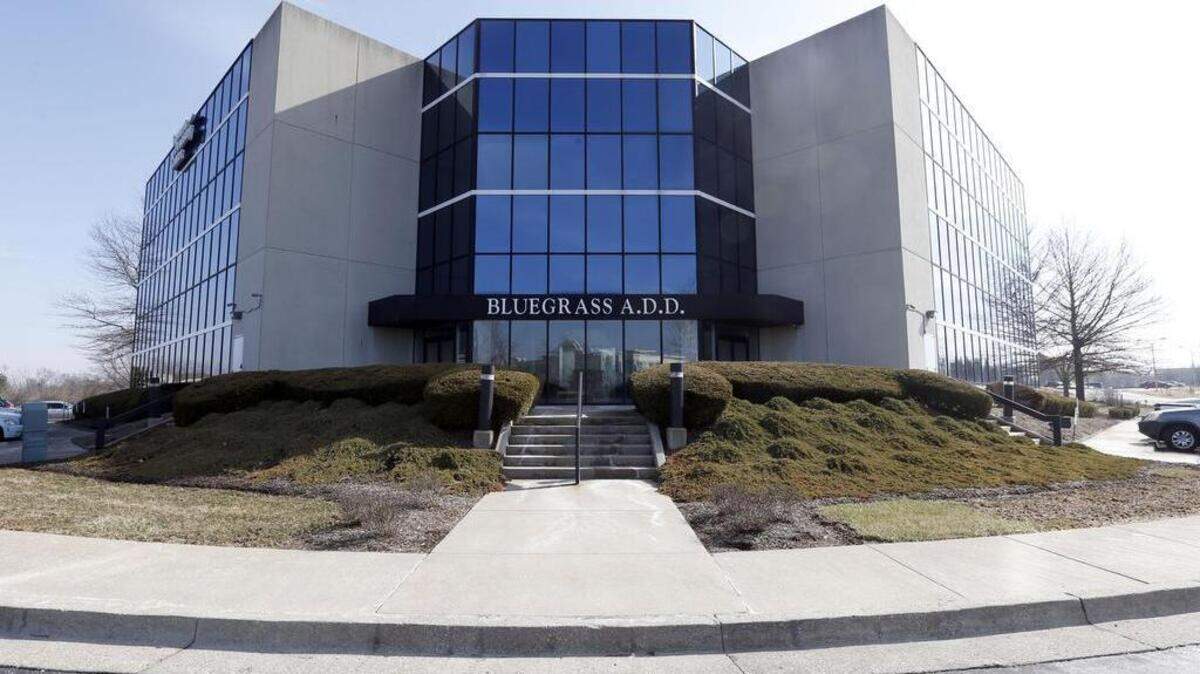
The Kentucky Education and Workforce Development Cabinet has determined that the Bluegrass Area Development District must repay the state $898,525 for money misspent from 2010 to 2013.
A 31-page letter released by the cabinet Friday said that if Bluegrass doesn’t repay the state in 90 days, it could risk immediate suspension. Every dollar of federal work force money the agency spends will be monitored by the state. Bluegrass serves 17 Central Kentucky counties, including Fayette.
The letter also says that despite changes made at the agency over the past two years, there are problems with the way the agency manages federal work force dollars. In 2016, Bluegrass had a $27 million budget, 90 percent of which came from federal and state grants.
David Duttlinger, executive director of Bluegrass, said the agency has not determined whether it will appeal the $898,525 judgment. “The BGADD has $1.1 million dollars in liquid funds,” Duttlinger said. “The BGADD would be in a position to pay this amount if necessary.”
He said the questioned costs were from 2010 to 2013 and not a reflection of current district management.
“The entire process is a reflection of past actions taken in 2010 through 2013 and in no way represent the current state of affairs,” Duttlinger said. “It is important to remove these distractions as soon as possible so that energy and effort can be appropriately applied to the mission at hand — serving the work force needs of the commonwealth and the Bluegrass Workforce Area. In the weeks to come, the Bluegrass ADD board will meet to decide on the most appropriate response as outlined in the appeal rights of the determination.”
The letter — called a final determination of disallowed costs — came two years after a March 2014 state examination of the agency’s books was released.
Adam Edelen, who was state auditor at the time, performed an examination of the development district in 2014. It found a host of problems at the agency that oversees federal work force dollars, and aging and planning services for much of Central Kentucky. The Education and Workforce Development Cabinet and the state Department of Aging and Independent Living conducted audits after the 2014 report. The 2015 education and workforce audit found more than $2.5 million in questioned costs.
Edelen’s examination led to the ouster of then-director Lenny Stoltz.
Much of the disallowed costs involved rent payments to Bluegrass Industrial Foundation, which owned Bluegrass’s Perimeter Drive building in Lexington. The foundation was overseen by Jas Sekhon, the founding director of Bluegrass ADD and Stoltz’s former boss. Those payments totaled more than $300,000 from 2010 to 2013, according to the letter. The agency also must repay more than $25,000 in disallowed travel costs and more than $23,000 in questioned credit card payments. More than $226,000 must be repaid that was spent on staff salaries for a prison re-entry program and $117,000 for one-time bonuses paid to Bluegrass employees through federal work force grant funds.
Some of the $2.5 million in questioned costs were not paid using federal work force money, state officials found. That’s why Bluegrass doesn’t have to repay the full $2.5 million in questioned costs, among other reasons. The money will be paid to the state, which will forward the payment to the U.S. Department of Labor.
Bluegrass has maintained that it has made key changes, including an overhaul of its management structure, since Edelen’s audit. But the final determination letter said the agency “has overall weaknesses in internal controls for expenditures.”
Duttlinger said Bluegrass hasn’t seen any documentation to support the finding that it has not corrected problems regarding its spending of federal work force funds.
“The BGADD and the local elected officials look forward to reviewing all supporting documents and resolving this matter,” he said. “There has not been any evidence of lack of sustained fiscal integrity in any of the monitoring reports.”
Bluegrass has been monitored by state work force officials for the past two years.
Bluegrass’s fiscal integrity is at the heart of a challenge to the awarding of an $11.4 million work force investment contract to the agency. That contract is to help unemployed and underemployed workers in the 17-county region. A group of locally elected officials awarded Bluegrass the contract in January. Many of those same elected officials sit on the Bluegrass executive board.
Cabinet for Education and Workforce Development Secretary Hal Heiner asked the locally elected officials to reconsider the awarding of the contract given the outstanding question of whether the agency would have to repay part of the $2.5 million in questioned costs. The group declined to reconsider its decision.
Lexington Mayor Jim Gray was the sole vote against awarding the contract to Bluegrass. Lexington officials and Gray have been some of the strongest critics of Bluegrass and how it manages federal work force funds.
“We called for an audit in 2013 because we were concerned about business practices at Bluegrass ADD and about the organization’s impact on citizens and businesses in the Bluegrass Region. The audit confirmed my concerns,” Gray said. “Because of the changes I have encouraged since then, a new structure and agreement are now in place that have added transparency, competitive bidding and other best practices. Now, with the cabinet’s release of the final determination of administrative findings and disallowed costs, it’s clear there’s more work to do. Bluegrass ADD must immediately fix the unresolved findings. Fiscal integrity is essential in every organization.”
Meanwhile, Community Action of Kentucky filed a challenge to the awarding of the $11.4 million work force contract to Bluegrass. Community Action was the second-highest-scoring bidder.
Part of that bid challenge questioned whether Bluegrass should be awarded the work force grant because many of the locally elected officials who scored the bid sit on the Bluegrass executive board. To boot, there are outstanding questions about its ability to manage federal work force dollars. Community Action of Kentucky asked that Bluegrass be disqualified as a bidder because of conflicts of interest and Bluegrass’s recent poor audits.
The Finance and Administration Cabinet recently sent Community Action of Kentucky a letter saying it was not the agency to decide the bid challenge. The Cabinet for Education and Workforce Development has not said whether it will hear the challenge.
Bluegrass also faces a federal investigation over how money for aging services were spent during that same period, according to a letter released last month.
The Office of Inspector General for the U.S. Department of Health and Human Services notified state officials last month that it was conducting an investigation into aging-services funds spent by Bluegrass. Deborah Anderson, commissioner of the state Department of Aging and Independent Living, sent a letter in mid-March to the development district informing it that state authorities had been notified of the investigation. Bluegrass has said it has not been notified of the investigation.
Beth Musgrave: 859-231-3205, @HLCityhall
This story was originally published April 4, 2016 at 4:30 PM with the headline "State: Bluegrass ADD owes almost $900,000 for improper spending."