
State to Bluegrass: Don’t use federal workforce money for legal bills
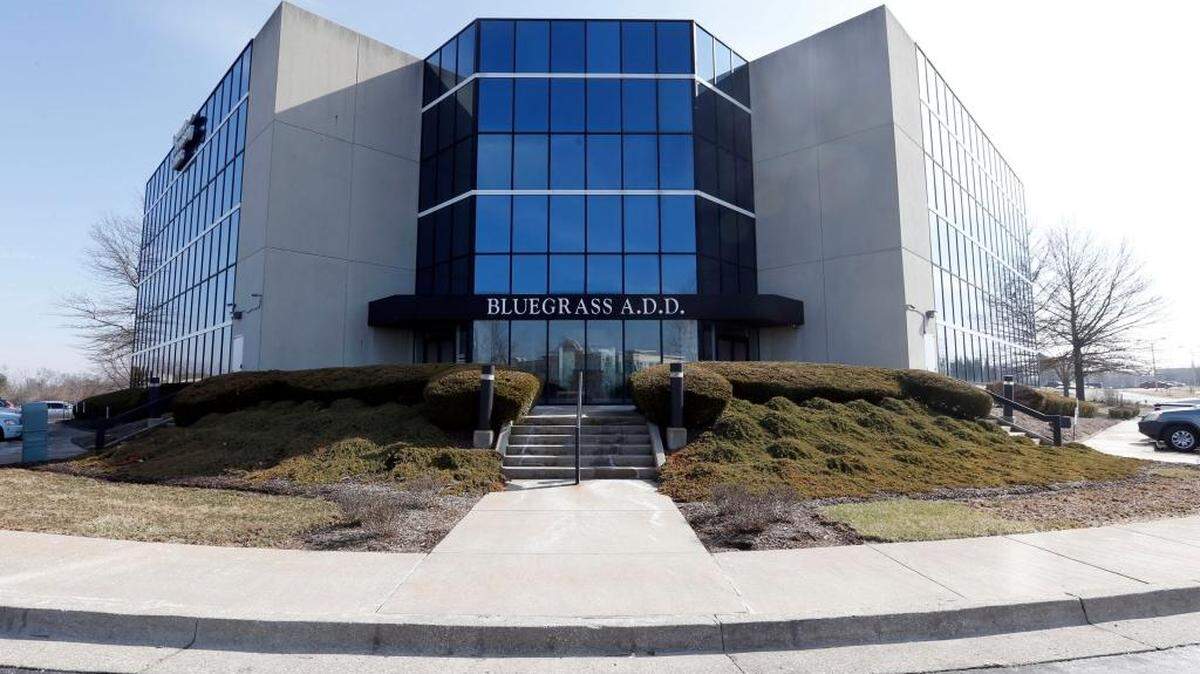
State officials have told the Bluegrass Area Development District it cannot use federal workforce money — meant to help unemployed and underemployed workers — to pay its legal bills to fight state officials over nearly $900,000 in misspent funds from 2010 to 2013.
In a strongly worded letter dated April 27, a lawyer for the Cabinet for Education and Workforce Development told Bluegrass officials they were previously told in a October 2015 cabinet letter that federal workforce dollars cannot be spent on legal bills defending Bluegrass in its fight with the cabinet over how much money Bluegrass should have to repay.
The letter was sent after the cabinet learned that, earlier on that same day, the Bluegrass board voted to use workforce dollars to pay its attorneys. The cabinet provided the letter to the Herald-Leader.
Bluegrass fired back with a letter on April 28 appealing both the nearly $900,000 judgment and the cabinet’s decision forbidding using federal workforce dollars to pay its lawyers. A national workforce expert has told Bluegrass that workforce dollars can be spent on legal fees, Bluegrass officials said.
In its letter, the cabinet’s top lawyer said the cabinet “is very concerned by the fact that such requests for reimbursement have been made and that representations have been made that such future expenses are indeed allowed costs. This concern arises not only from the fact that it is not supported by federal guidance on this question...but because it is directly contrary to directions given to BGADD in October 2015 under the state government’s prior administration.”
The letter was written by Bridget H. Papalia, executive director of legal and legislative services for the cabinet.
Moreover, the Bluegrass Workforce Investment Board, a group of private industry, education and government leaders that oversees federal workforce dollars in the 17-county region, refused at its April meeting to approve spending workforce dollars on attorney fees connected with the disallowed cost.
“Bluegrass WIB approved some legal bills but specifically excluded any bills associated with the disallowed costs,” said Kim Menke, chairman of the Bluegrass Workforce Investment Board. Menke said the workforce board is trying to balance the needs of all parties, but its main purpose is to ensure federal workforce dollars are being spent on workforce training. Several members of the Bluegrass Workforce Investment Board resigned last year due to frustrations with Bluegrass and the spending of federal workforce dollars. The previous Bluegrass Workforce Investment Board had also questioned spending federal workforce dollars to defend Bluegrass in its fights with state authorities. Bluegrass is the fiscal agent for federal workforce dollars, but the workforce investment board sets policy and oversees funding.
“This is one of the reasons the business community walked away from the local board in the past,” Menke said. “The past seems doomed to repeat itself as we continue to deal with the same issues in the same way.”
At a meeting in April, Bluegrass attorneys said the amount of legal bills still unpaid exceeded $27,000.
David Duttlinger, executive director of Bluegrass, said Bluegrass has received additional training on federal grant management over the past year as part of its corrective action plan under the cabinet. As part of that training, it received additional advice from John Chamberlin, a lawyer who is considered an expert on national workforce issues. Chamberlin has told Bluegrass that he believes workforce training dollars can be spent on legal fees and cited a federal Office of Management and Budget circular that governs allowed costs for federal workforce training dollars prior to July 1, 2015. Bluegrass provided the Herald-Leader with a copy of Chamberlin’s letter.
“This circular clearly states that legal fees are allowable unless you are prosecuting an adverse federal final” determination, Duttlinger said. That means unless Bluegrass was fighting the U.S. Department of Labor, federal workforce dollars could be used to fight the state workforce cabinet. A subsequent opinion by the Office of Management and Budget said any federal funds received after July 1, 2015 could not be used to pay legal fees.
The Bluegrass board voted to pay past due legal fees with workforce dollars received prior to July 1, 2015, Duttlinger said.
For decades, Bluegrass has managed federal workforce dollars for a 17-county region that includes Fayette County. The amount of federal workforce dollars it manages fluctuates but can be between $8 and $11 million a year.
The nearly $900,000 in questioned costs stemmed from a 2014 examination by then-state Auditor Adam Edelen that found questionable spending and mismanagement of Bluegrass, which also handles planning and aging money in the 17-county region. That audit was turned over to the Cabinet for Education and Workforce Development and the Department of Aging and Independent Living, which oversees aging and independent living money.
The Cabinet for Education and Workforce Development found more than $2.5 million in questioned costs. Some of those costs included rent paid for Bluegrass’s Perimeter Drive building to a nonprofit run by Bluegrass’ founding director, thousands of dollars in questionable credit card charges for travel expenses and one-time bonuses paid to Bluegrass staff.
On March 31, the cabinet released its final determination of costs. That letter said Bluegrass must repay the $898,525 within 90 days. Not all of the $2.5 million in questioned costs was paid for with federal workforce dollars. The letter also found that there are still ongoing issues with financial oversight of the agency.
The Bluegrass executive committee voted to appeal the $898,000 judgment and the findings that the agency still had financial oversight problems. The agency has been under two corrective action plans —one under Edelen’s office and a second under the cabinet — that have been approved. The findings of ongoing financial oversight issues were not explained in the cabinet’s final determination letter, the executive committee said.
But the March 31 letter from education and workforce officials also says that if the cabinet does not feel that Bluegrass is making changes to correct problems, the cabinet has the authority to suspend Bluegrass immediately from federal workforce training programs. “Determination of compliance and resolution shall be in the sole discretion of the (cabinet),” the March 31 letter said.
Beth Musgrave: 859-231-3205, @HLCityhall
This story was originally published May 2, 2016 at 4:25 PM with the headline "State to Bluegrass: Don’t use federal workforce money for legal bills."