
Kentucky Supreme Court upholds removal of Harlan circuit judge
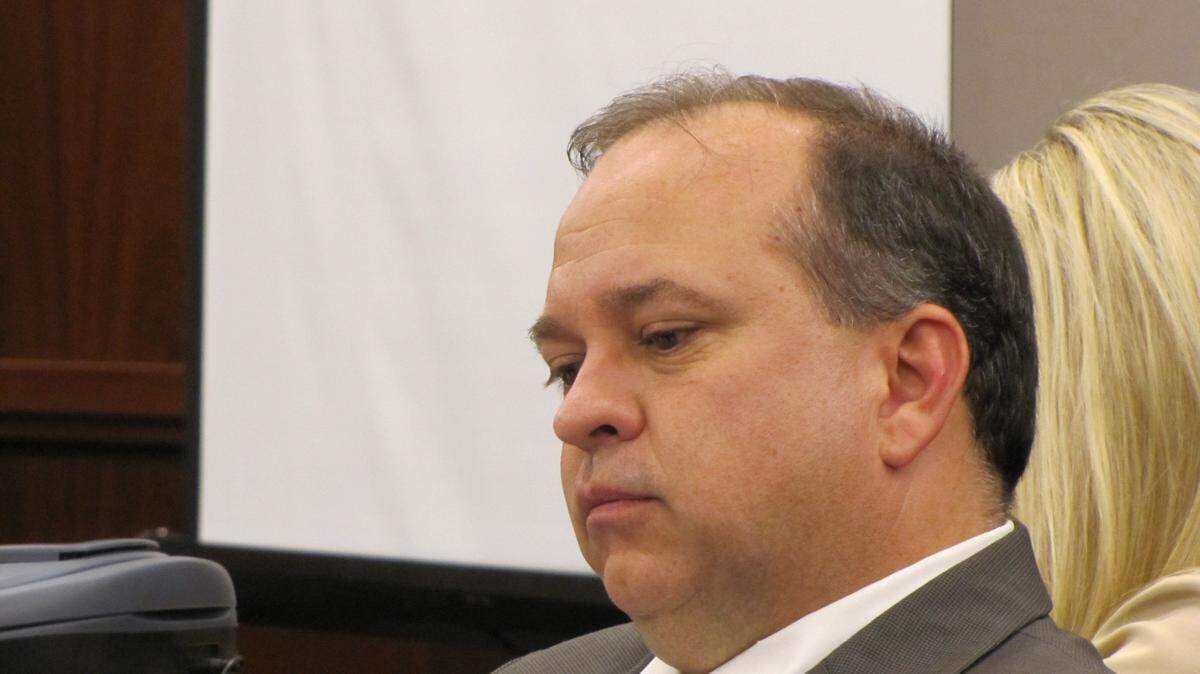
The circuit judge in Harlan County engaged in a pattern of misconduct that justified removing him from office, the Kentucky Supreme Court ruled Monday.
The high court upheld the removal of Russell D. Alred, who was elected in 2006 to the $124,618-a-year post as Harlan County's sole circuit judge.
The state Judicial Conduct Commission ruled in September that Alred, 41, had violated ethics rules in nine separate instances and should be removed from office.
The panel said Alred had improper involvement in cases, failed to dispose of cases fairly, used his office to advance personal interests and misrepresented his actions.
In one case, for instance, Alred appointed a special grand jury in April 2010 to investigate alleged drug dealing by county Judge-Executive Joe Grieshop, who was being opposed for re-election by Alred's cousin. Alred tried to discredit Grieshop as the election approached, the commission said.
A grand jury exonerated Grieshop.
Alred is only the fourth judge ordered removed by the commission since 1984.
On Monday, the Supreme Court upheld eight of the nine charges against Alred, saying he had shown disregard for the law and for ethics rules.
"He continually refuses to accept responsibility for his actions or acknowledge his wrongdoing," chief Justice John D. Minton Jr. wrote in the majority opinion.
Justices Mary Noble, Wil Schroder, Daniel J. Venters and Lisabeth Hughes Abramson joined the decision to uphold Alred's removal.
In a dissent, Justice Bill Cunningham acknowledged that Alred made serious mistakes, but he said those mistakes didn't justify removing him from office.
Cunningham said he would have recommended a 60-day unpaid suspension. Justice Will T. Scott joined in Cunningham's dissent.
Alred has been off the bench with pay while appealing the commission's decision.
He said earlier that if the Supreme Court upheld his removal, he would appeal to federal court.
On Monday, however, he referred comment to his attorney, Marcus Carey. Carey said the two had not decided on their next move.
Alred could ask the Supreme Court to reconsider, or he could appeal to federal court.
Carey said he and Alred respect the court's decision but have a right to disagree, just as two justices did.
Alred did not take part in any criminal conduct, Carey said.
"He didn't do anything for personal gain," Carey said.
Alred has consistently said he did nothing intentionally wrong, and that his political enemies were behind the effort to charge him with ethics violations.
Stephen Wolnitzek, chairman of the Judicial Conduct Commission, said he didn't doubt that political antagonists targeted Alred.
"But ultimately, the question is, did you do it?" Wolnitzek said Monday.
Gov. Steve Beshear will appoint someone as circuit judge in Harlan County from a list of three nominees submitted by a committee.
The next election for a full eight-year term is 2014.
Wolnitzek said his understanding is that Alred could run in that election to try to regain the office.
Among other things, Alred argued in his appeal to the Supreme Court that some standards in the ethics rules are unconstitutionally vague; that an investigator for the ethics panel did not interview witnesses favorable to him; and that the ethics panel was biased — in part because the panel both investigates complaints and then sits in judgment on them.
The Supreme Court, however, said that Alred could have presented his own witnesses.
The high court also said the state's ethics standards and other information, including commentary with the rules and ethics opinions, provide sufficient guidance for judges.
And Alred failed to show that the ethics panel, made up mostly of other judges, or Wolnitzek were biased against him, the Supreme Court said.
In fact, the panel dismissed 11 of the original 20 charges against Alred, the high court said.
The question before the Supreme Court was whether the conduct commission's decision was clearly wrong. On eight of the nine counts, it wasn't, the court said.
One charge against Alred was that he barred a woman charged with fraud from teaching at an elementary school his children attended.
The ethics panel said Alred's order was not justified, but the Supreme Court said there was insufficient evidence against Alred on that count.
The Supreme Court upheld the ethics panel on all its other findings, however, including that Alred asked authorities to investigate alleged crimes, then improperly presided over the resulting cases; barred a public defender from his courtroom without a hearing; viewed evidence in a pending criminal matter when he shouldn't have; and improperly raised money for playground equipment for a school where his children attended.
Judges are barred from using the prestige of their office to raise money, even for worthy causes, the Supreme Court said.
In addition to the allegation that Alred appointed a special grand jury to discredit the county judge-executive, another key issue in the case involved two Nashville doctors who were charged with overprescribing drugs to Harlan County residents.
The two pleaded guilty to misdemeanors and received probated sentences. They gave up their medical licenses and paid $500,000 to the county and $500,000 to other authorities, according to Commonwealth's Attorney Henry Johnson and Wolnitzek.
Alred, who approved the deal, later went to a public meeting and urged the county to use its $500,000 to build a water park so young people would have something to do.
Judges are not supposed to lobby that way.
Alred also changed one of his written orders in the case in a way that misrepresented an earlier order saying he had control of the $500,000, the Supreme Court said.
Wolnitzek said that case got the ethics investigation against Alred rolling. A woman whose son was convicted on drug charges raised a concern about why he went to jail and the doctors didn't, Wolnitzek said.
Venters took particular offense in that case as well.
When two alleged drug traffickers were allowed to essentially pay for lenient treatment, that meant either two innocent people "paid a king's ransom in order to buy an acquittal;" or two guilty people were allowed to buy their way out of the charges for "a very large slush fund" controlled by Alred: or one person was innocent and the other guilty, meaning a combination of the problems, Venters wrote.
In his dissent, Cunningham said removing Alred from office was too harsh.
Alred didn't kill or injure anyone, molest his secretary or steal any money, Cunningham wrote.
"His judicial misconduct has been primarily on behalf of children and against criminals," Cunningham wrote. "In all his excessive exuberance, he has failed to grasp his professional responsibility. He simply has not learned how to conduct himself as a judge."
This story was originally published July 23, 2012 at 11:06 AM with the headline "Kentucky Supreme Court upholds removal of Harlan circuit judge."