
Kentucky archaeology dig shows Civil War soldiers dyed their hair. A lot. Here’s why.
Civil War battle sites may grab the public’s attention with their guts and glory appeal but new discoveries at Camp Nelson in Kentucky are providing an unprecedented glimpse into day-to-day military life.
Archaeologists excavating the part of Camp Nelson known as the sutlers’ or merchants’ area in 2015 found remnants of a 150-year-old photography studio, the first ever found at any Civil War site.
“The first photographic artifact that we noticed was a glass cover plate,” said Stephen McBride, Camp Nelson director of interpretation. “It was fortunate that one of my crew was a guy that does Civil War-era photography. He knew instantly what that was.”
Since the designation of Camp Nelson as a National Monument in October 2018, McBride has been cataloging nearly 30 years of archaeology research as the archives transfer to the federal government.
But during the cleaning process, he made another discovery — one in the name of vanity and hair dye, lots of hair dye.
Although researchers had known there were photographers at Camp Nelson, very little was known about them.
Camp Nelson, founded in June of 1863 as a U.S. Army Supply Depot in Jessamine County, covered over 4,000 acres and housed up to 8,000 soldiers.
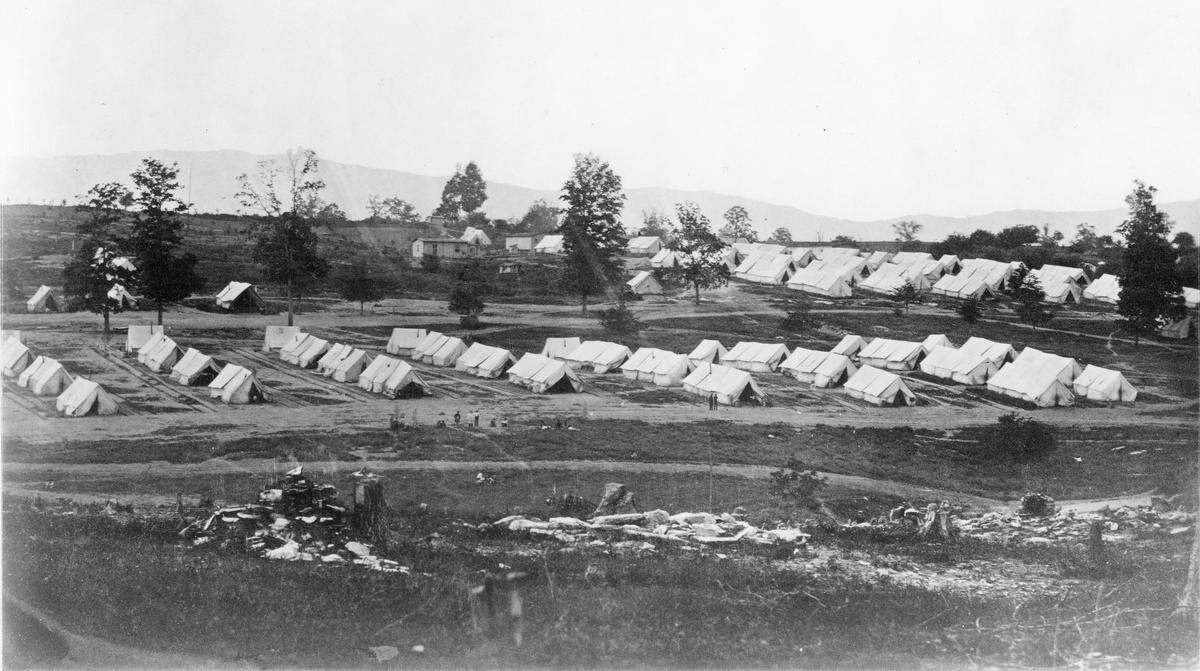
To support those soldiers, the army constructed hundreds of buildings, including barracks, mess houses, a bakery, a slaughter house, a saw mill, woodworking shops, a prison and a hospital.
The army also allowed private merchants to set up businesses at Camp Nelson, including taverns, eating houses, a post office, a billiards parlor, a boot shop, fruit and vegetable stands and a photography studio.
Frames, glass plates and more
Only one merchant, William Berkley, was officially licensed to run a store in camp, although at least six, probably regimental level sutlers and others operating without proper permission, are mentioned in documents.
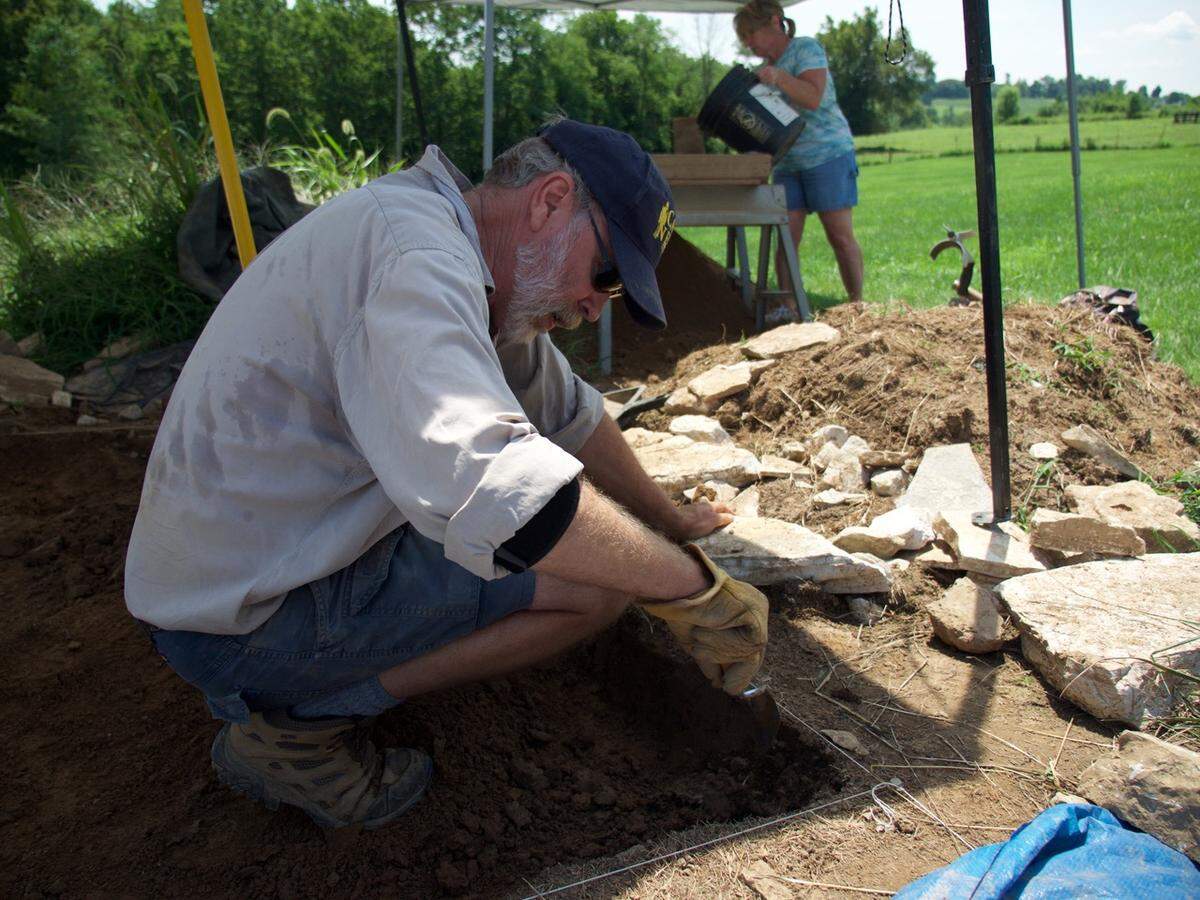
McBride and a field team of Transylvania University students and trained volunteers meticulously sifted through the soil at the William Berkley Sutler site with ice picks and trowels.
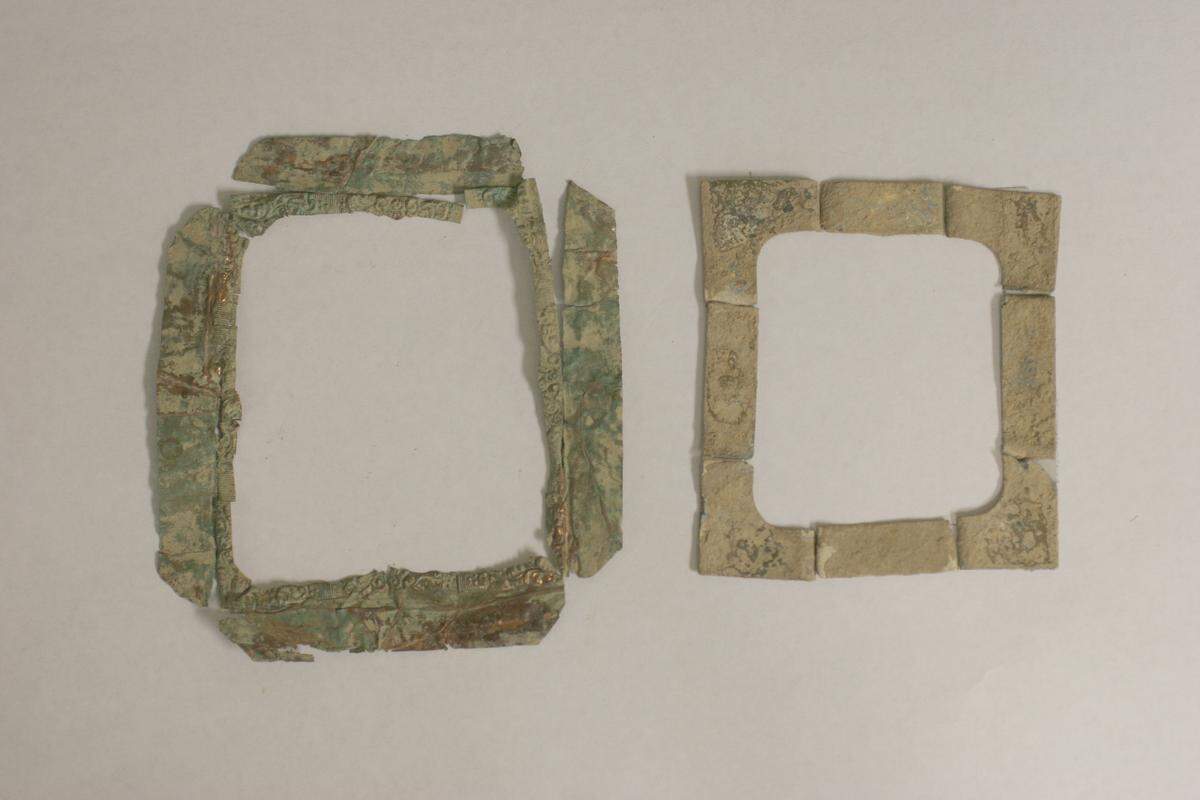
Unexpected items began showing up — small picture frames, glass plates and photographic “preservers” or mats. Chemical bottles used in the photographic development process were also found.
“Photography back in the Civil War era was an incredibly technical and dangerous practice,” McBride said. “It involved many toxic chemicals. You had to know what you were doing as far as the treatment of the plates and the albumen paper.”
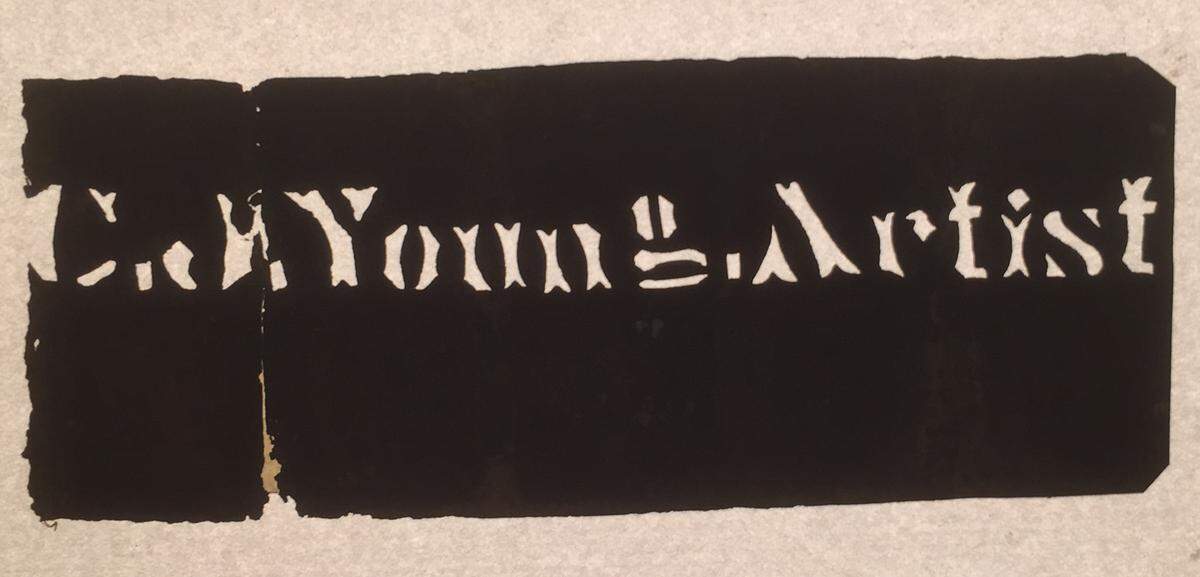
In addition to the photographic artifacts, nine folded brass stencil plates and two folded cut brass sheets were discovered. Stencils, sold with a brush and a bottle of ink, were used to label soldier’s clothing and personal items.
“The documentary records showed that there were photographic studios at Camp Nelson, but it was not known there was one affiliated with the Berkley Sutler Store until these items were found,” McBride said.
The photographer left his name, C.J. Young, in the form of two finished stencil plates that read “C.J. Young” and “C.J. Young Artist.”
Most of the stencils found contained some kind of error, and McBride speculated that the “C.J. Young” stencils were discarded practice plates.
Further research showed C.J. Young was a photographer’s apprentice in 1860 in Lexington. Federal census records put Young’s age at only 15 or 16 when he plied his trade at Camp Nelson.
“Young called himself a Photographic Artist,” McBride said. “Photographers of the time thought of themselves as artists, and in fact C.J. Young’s father was a portrait painter from England.”
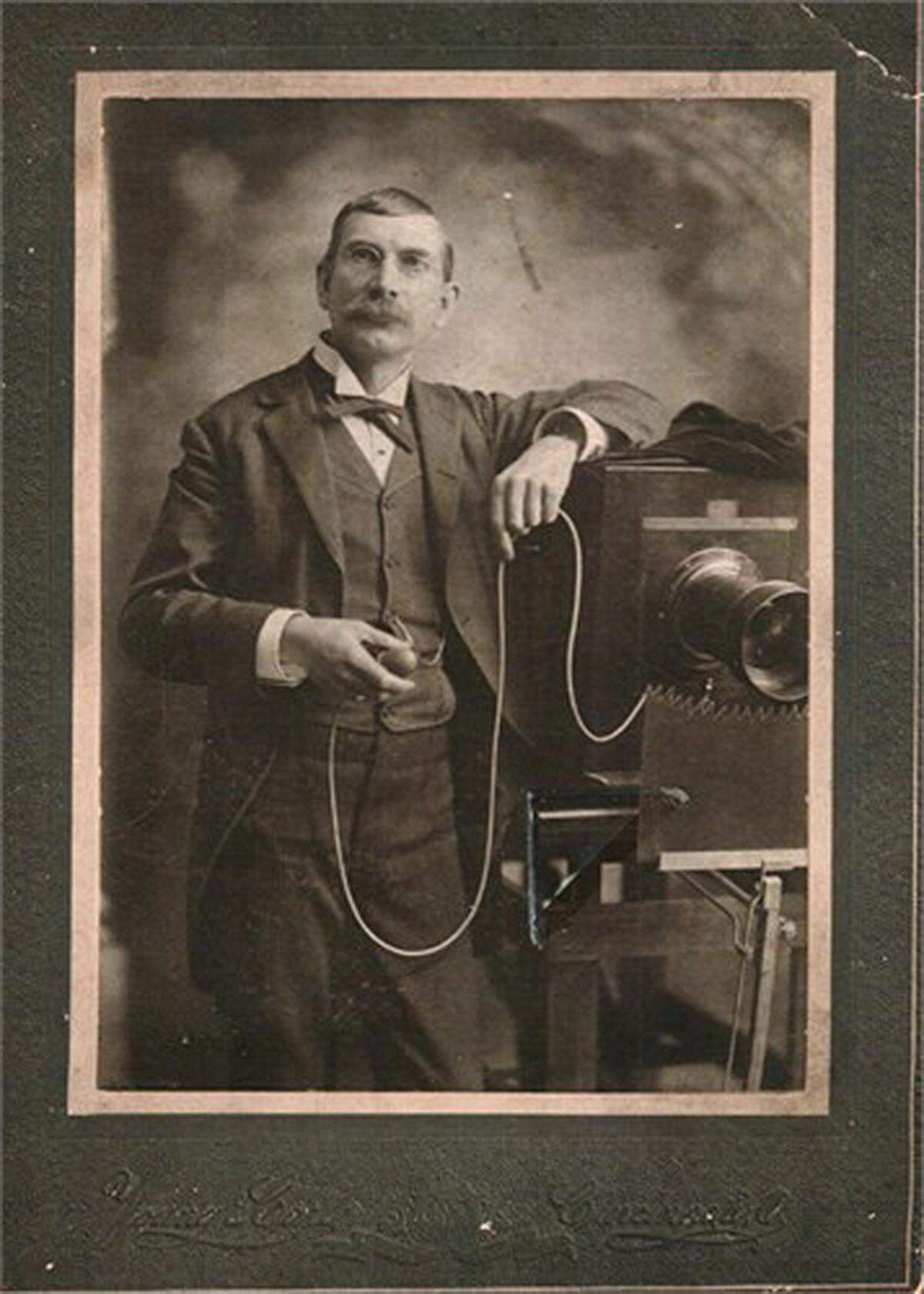
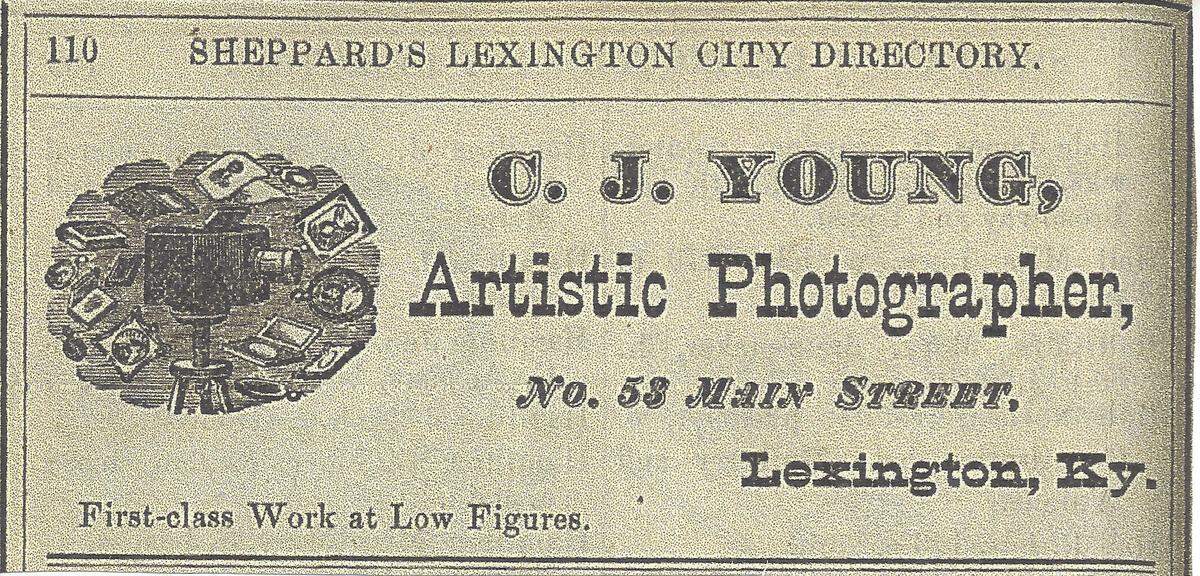
C.J. Young set up a studio in Lexington after the Civil War ended, according to an advertisement from the 1873-1874 Lexington City Directory. He later moved to Cincinnati where he enjoyed continued success as a portrait photographer.
Portraits for the common man
“I think it’s a really exciting find,” said Bob Zeller, Director of the Center for Civil War Photography and author of “The Blue and Gray in Black and White: A History of Civil War Photography.”
“Civil War photographic discovery is still very active today,” Zeller said. “And now we have an archaeological discovery of a Civil War photo studio. As far as I know, it has not happened before.”
Nationally recognized Civil War photographic researcher and collector Keith Brady agrees.
“That’s really neat stuff,” Brady said. “This is the only time I’ve heard of a Civil War photographer site being found by archaeologists.”
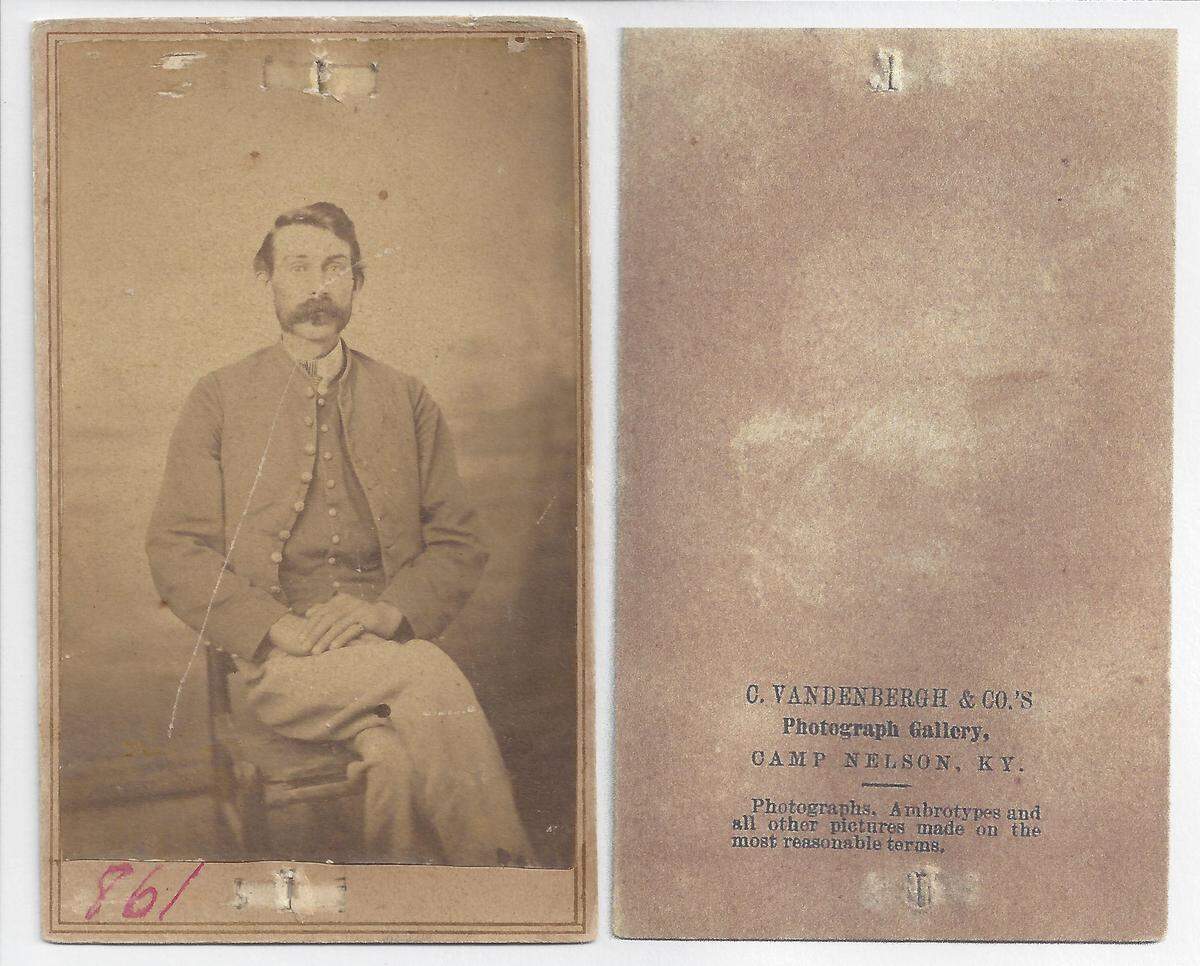
The Civil War was the first war on U.S. soil to be photographed. During the war years, 1861 to 1865, popular demand for photographs soared. As the price of portraits came down, the business of making and distributing photographs boomed.
As abolitionist Frederick Douglass stated in 1861 “What was once the exclusive luxury of the rich and great is now within reach of all,” speaking of the proliferation of inexpensive daguerreotype portraits.
“Being a soldier was and is a special status associated with manhood, bravery and honor,” McBride said about the custom of new enlistees visiting a portrait studio as they were shipped off to war. “The portraits and the identifying stencils were important to the men to illustrate their status as both men and soldiers at that moment, but also for posterity, as they could soon be wounded or killed.”
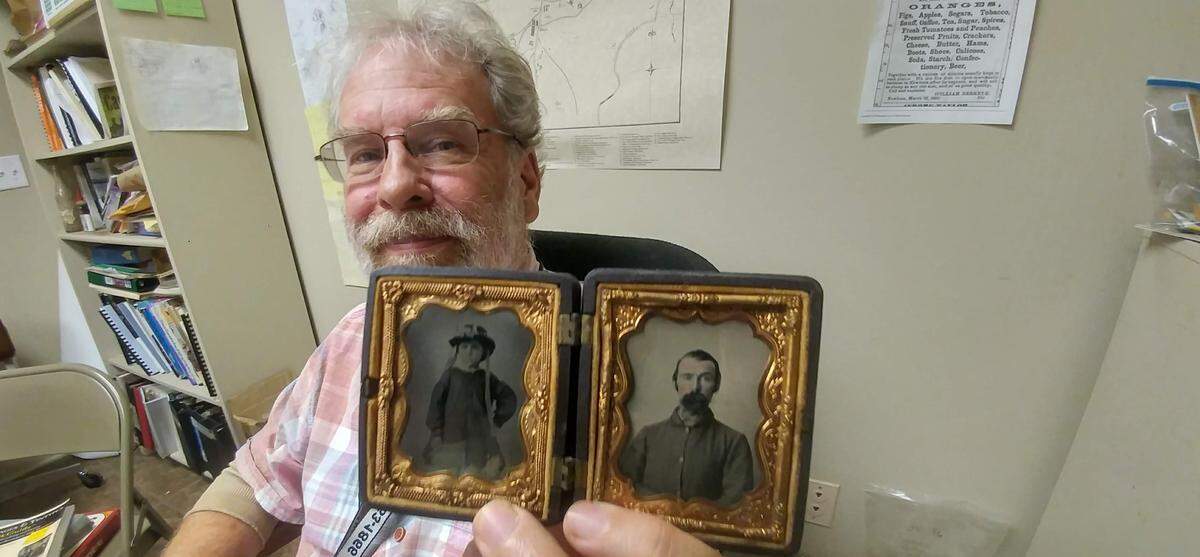
After May 1864, Camp Nelson became one of the nation’s largest U.S. Colored Troop (as African American soldiers were designated) recruitment and training centers in the country.
“The status and experience was transformative for all men, but especially for African American men,” McBride said. “Most of whom had recently been enslaved, and who were only reluctantly allowed to attain this status as soldiers.”
New discoveries
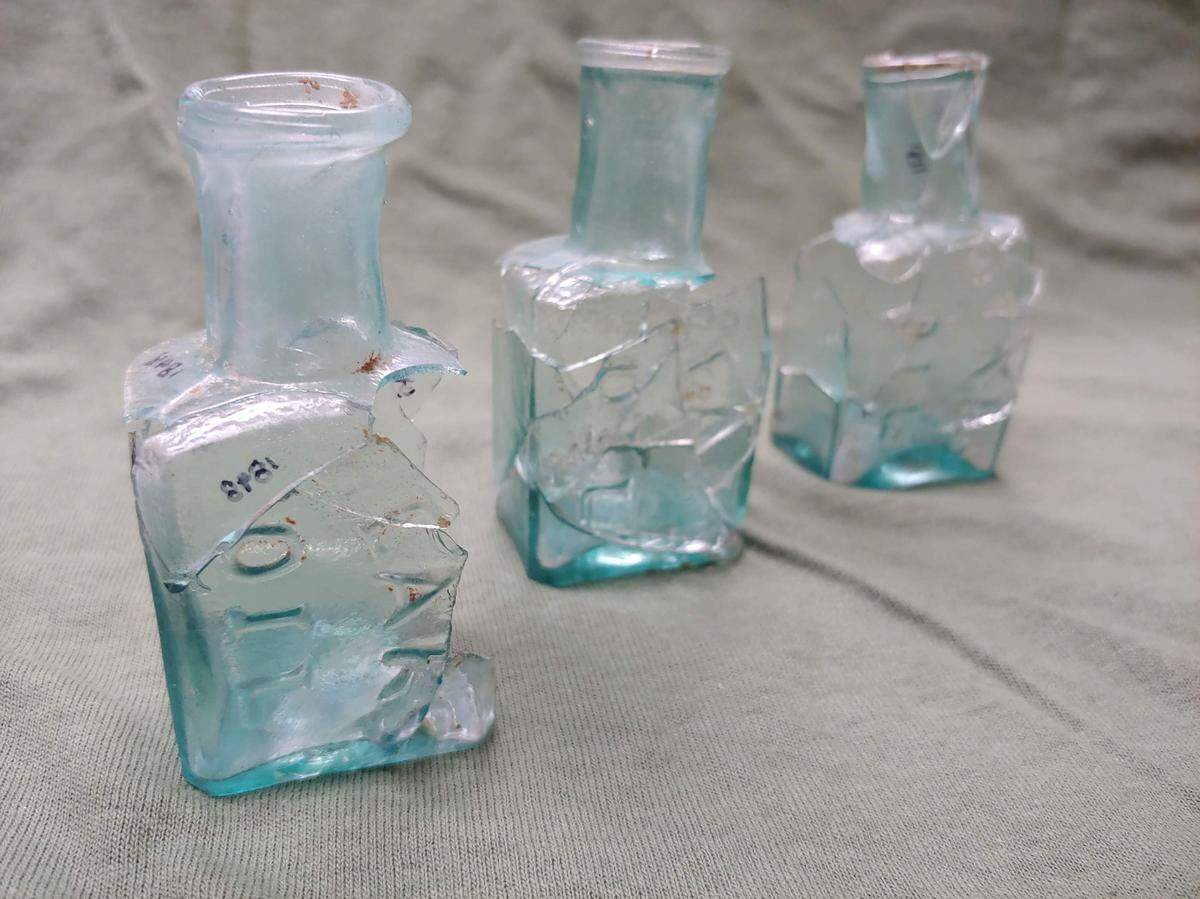
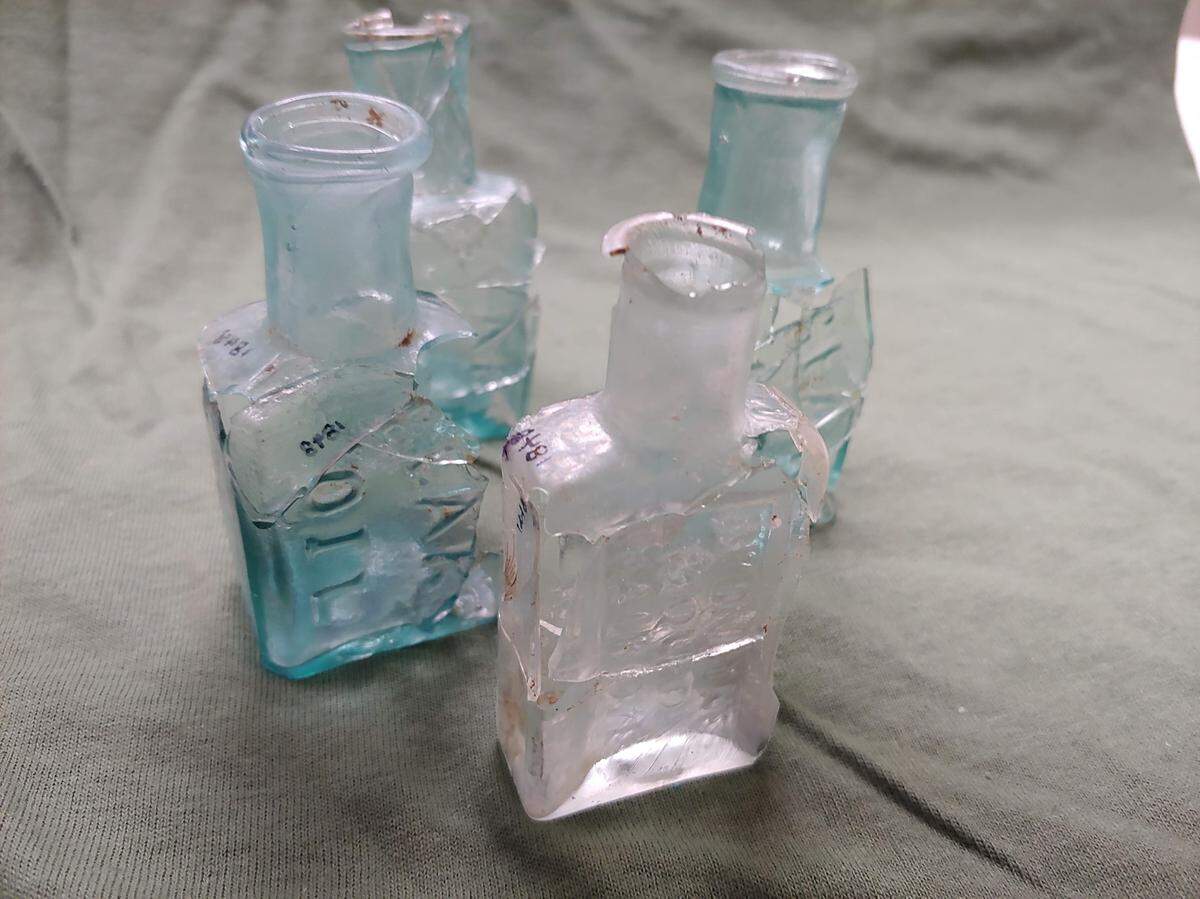
The large number of broken bottles excavated during the Camp Nelson photography gallery dig were initially thought to be medicine bottles.
“When we started reconstructing, some had embossed lettering,” McBride said. There were fanciful names like Bear’s Oil, Christadoro, and Dr. Jaynes.
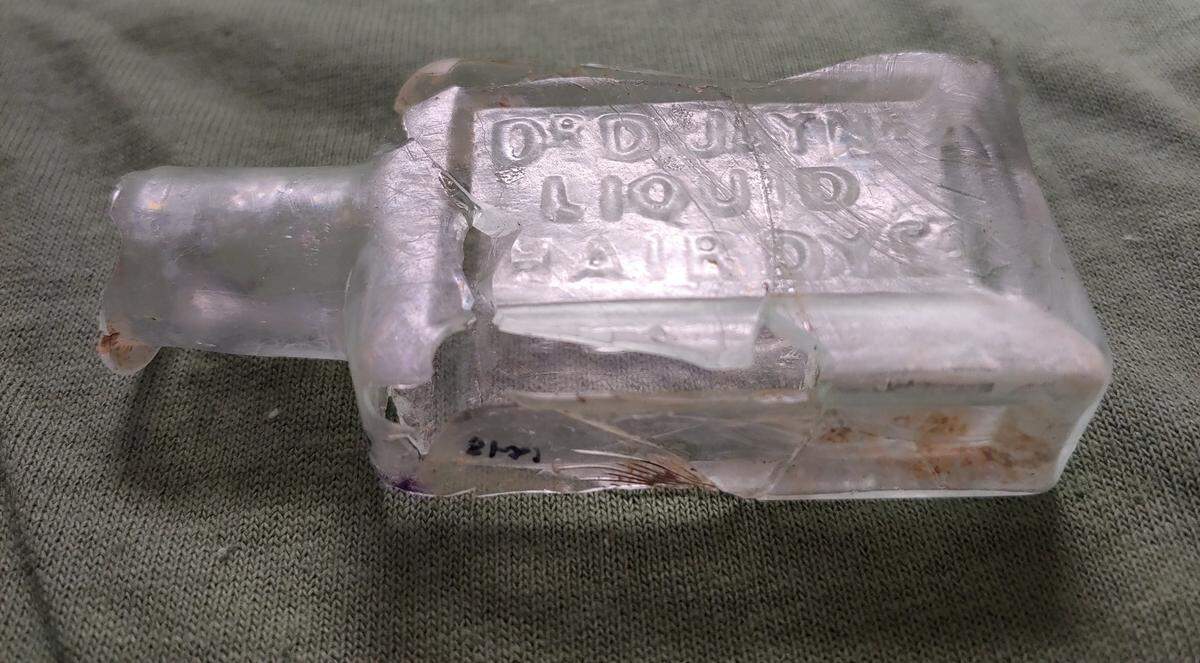
The Bear’s Oil was basically a slick-’em-down product to tame unruly hair. However the Christadoro and Dr. Jaynes bottles proved to be brands of hair dye.
“We found a lot of them. It’s something you just don’t find on other sites,” McBride said.
“The dye is interesting. It suggested that people were fixing up their hair before they had their photograph taken,” McBride said. “So people may have actually been darkening their hair to look better in the photo.”
But perhaps it all wasn’t in the name of vanity.
“One of the things the photographic books mention is if you had light colored or blonde hair, the black and white photography process could make you look like you had white hair or gray hair,” McBride said.
The photography studio evidence has been well-received by archaeology peers as McBride has published his research and given oral presentations at national conferences.
“The photography gallery is one of the most exciting archaeological discoveries that I’ve ever made,” McBride said. “And it was completely unexpected.”
Socializing over sardines?
Camp Nelson’s civilian sutler area has been a rich vein for McBride’s archaeological research.
“The park has kicked around the idea of reconstructing the merchant shops for tourists,” McBride said. “And I was interested in the sutler story anyway, because it speaks to a different and largely untold aspect of camp life.”
Unlike other Civil War Supply Depot sites around the country which have succumbed to development, the grounds of Camp Nelson remain in a relatively pristine condition due to its rural location.
Civil War sutler stores came in many forms. The Berkley store apparently was a substantial wooden building, based on the type of foundation and thousands of nails found at the site.
The stores sold items soldiers wanted but couldn’t get from the army, including sardines and tobacco pipes. Many sardine cans and pipes were found at the store site, indicating that the soldiers not only bought items at the store, but hung out there to enjoy them and probably to socialize.
Camp Nelson National Monument
Where: 6614 Old Danville Rd., Nicholasville
Hours: The grounds are open seven days a week from dawn to dusk. The Visitor Center is open 9 a.m.-5 p.m., Tue.-Sat.
Admission: Free
Online: nps.gov/cane