
After years of planning and controversy, water plant opens
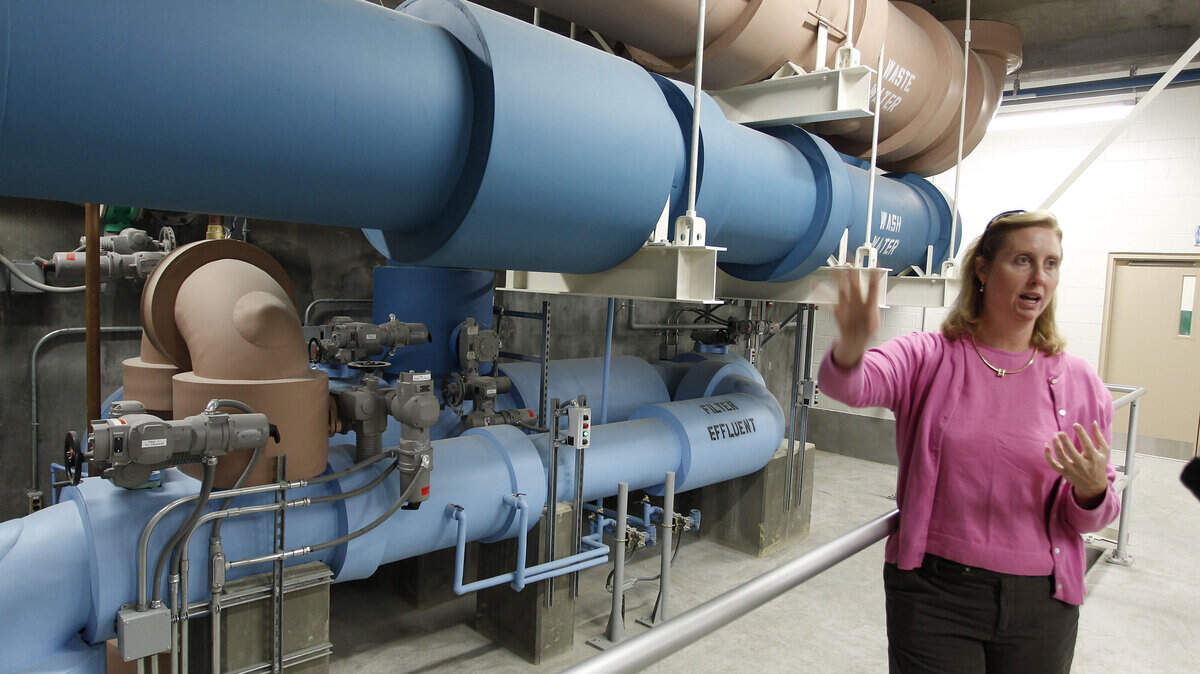
MONTEREY — Kentucky American Water's new treatment plant on the Franklin-Owen county line will be dedicated Friday, officially capping a decades-long quest to augment the water supply for Lexington and surrounding areas.
The controversial $164 million project includes a plant that can treat 20 million gallons of water a day and a 31-mile underground pipeline that carries the water to the northeast edge of Fayette County.
The utility says the plant is expected to meet Lexington's water needs, with restrictions only in the worst droughts, for 20 to 30 years.
The plant started operating Sept. 20. For now, it is treating about 6 million gallons of water a day, said Linda Bridwell, the Kentucky American engineer who was in charge of building the plant and pipeline.
Most of that water is going to the utility's customers in Scott, Bourbon and Harrison counties, and in north Lexington, she said. The rest of Lexington is getting water from treatment plants on the Kentucky River in southeast Fayette County, and on Richmond Road. Those two plants have a combined capacity of 70 million gallons a day.
The Owen-Franklin county project was the subject of a Public Service Commission case that lasted more than a year. The PSC's OK in April 2008 spawned an unsuccessful court challenge by people who lived in the path of the pipeline.
The project also has been an issue in the Lexington mayoral race between incumbent Jim Newberry and challenger Jim Gray, who is vice mayor.
The new plant sits on a bluff 300 feet above the Kentucky River. It is in Owen County, but the intake pipes in the river 1,500 yards away are in Franklin County.
The plant appears to be relatively small, and is barely noticeable from U.S. 127. Utility officials say the small footprint was created by sinking portions of the plant into the rock below.
It is called Kentucky River Station II at Hardin's Landing, after an old steamboat landing just downstream. It is 120 winding river miles from the treatment plant on the river in Fayette County, and represents the region's largest increase in treatment capacity since that plant was completed in the late 1950s.
More water is available at the new plant because several major tributaries enter the river between the two plants. They include the Dix River, which runs out of Herrington Lake, and Elkhorn Creek.
The latter brings, from a considerable distance, Lexington's treated sewage.
Kevin Kruchinski, the new plant's manager, said the water in the river near the new plant has more organics than it does at the Fayette County plant. The treatment method is the same — chemicals are used to make sediment drop from the water, which then is treated with chlorine and run through filters — as is the finished water, Kruchinski said.
Newberry has said he supports the plant but thinks that Kentucky American asked for too high a rate increase to pay for it.
Gray has questioned whether the plant was needed and has attempted to pin the rate increase on Newberry.
The idea for the new plant was born out of meetings and studies by a group of Central Kentucky municipal utilities called the Bluegrass Water Supply Consortium (later Commission). The group was formed during the severe drought of 1999. Its goal: Find more water for the region, and tie municipalities together with a series of pipes.
Kentucky American wasn't a member of the group, but early discussions involved it being a customer for a plant built by the consortium.
In March 2006, Kentucky American announced it couldn't wait for the municipal utilities to act, and would build a plant and offer them a share in it. The plant was built, but the other towns couldn't come up with money to buy a share.
Don Hassall, who was the water supply commission's managing director, said some of the municipalities would benefit, at least indirectly, from Kentucky American drawing water from farther downriver. That leaves more water flowing past the intakes of towns such as Nicholasville, which could be critical in a severe drought, he said.
"I think we all feel like we got half a loaf," Hassall said. "Sometimes half a loaf is better than nothing."
Meanwhile, a rival plan put forth by Louisville Water Co. still hasn't left Jefferson County.
Louisville officials intervened in the PSC case, hoping to persuade commissioners that a pipeline bringing treated Ohio River water to Lexington was a better idea than Kentucky American's proposal for a new treatment plant on the Kentucky River.
The PSC said it weighed both projects and found their costs about equal. It approved the Kentucky American proposal and noted that the Louisville proposal "never evolved beyond a series of concepts."
In February 2008, as the PSC was still studying the case, the Louisville company announced it had put together a partnership of water utilities in Shelby and Franklin counties that would get water from a 36-mile pipeline that would end in Frankfort by 2010. The pipe could easily extend to Lexington, the company said.
Vince Guenthner, the Louisville company's government affairs manager, said last week that "absent that major contribution" from Kentucky American's participation, it will take a driver such as an extreme drought or a new major industrial user to extend the pipeline.
Bridwell said she was disappointed to hear someone from Louisville blame her company for that pipeline not advancing.
"We had to pursue what was best for our customers, and that's what we believe we've done," she said.
This story was originally published October 20, 2010 at 12:00 AM with the headline "After years of planning and controversy, water plant opens."